 APC-CZA on Facebook
 APC-CZA on Twitter
War, Migration, and Child Trafficking – How Many Children Disappear on the Balkan Route and How Can We Protect Them?
- Details
- Category: Vesti
- Created on 04 September 2025


Source: RTS
Photo: RTS
The wars in Gaza and Ukraine continue to have devastating consequences for children, who make up nearly a third of all victims, according to global human trafficking statistics. Over 50,000 children have been killed or injured in Gaza alone. Radoš Đurović from the Asylum Protection Center says that children are also disappearing along the Balkan migration route, where last year there were as many as 22,000 unaccompanied minors. Marija Anđelković from the "Astra" association points out that children separated from their parents during migration are at even greater risk. In many cases, parents have already reached certain European countries, while their children remain on the route. Around two million children fled Ukraine for Europe at the beginning of the war. Currently, there are about six million refugees in Europe, 88% of whom are women and children. Radoš Đurović highlights that around 21,000 children are missing in Gaza. Reports indicate that more than 50,000 children have been killed or injured. Nearly every child has been displaced -homes destroyed, families torn apart, and their childhoods forever scarred by deep trauma. Marija Anđelković stresses that human trafficking is a grim reality, especially in times of war, which, as she explains, is one of the largest "push" factors that force individuals into trafficking networks, alongside poverty, economic hardship, and natural disasters. "The reality is that children make up more than 50% of all identified human trafficking victims," warns Anđelković.
When a Child Goes Missing in a Refugee Camp
In war and exile, whether in Gaza or along the migration route, children are the most vulnerable, and their presence demands special care. However, Đurović points out that it's common for children to go missing even along the Balkan route. The first point of contact in such cases is usually the camp administration. "The organization running the camp and the police, if law enforcement is available, get involved. Then, an international organization, if present at the camp, starts the search process for the child. But very often, when such incidents occur, no results are achieved," explains Đurović. He reminds us that the reasons children go missing in camps, aside from war and violence, include traffickers, lack of information, poor conditions in the camps, separation from primary family members, and children's desire to reunite with them. Sometimes, it is also due to the absence of adequate protection and guardianship. These are some of the main factors contributing to the disappearance of children. Anđelković particularly emphasizes that war zones are often used to hide various illegal activities, including human trafficking, primarily because it's difficult to gather evidence during active conflict. "Thus, what often happens is that women and girls are trafficked as sex slaves in war zones. We also have cases where children are forced to participate in combat, coerced into committing crimes, or exploited for labor," she explains. She adds that children separated from their families are most often targeted by criminal groups.
Can International Organizations Track Every Child?
Đurović explains that international organizations do not have the capacity to track every child, and this is reflected in the daily reality. In this regard, the most significant effort is the International Red Cross, which operates a network to search for missing persons, not just children, and tries to establish corridors along major migration routes. "However, when a child goes missing and is undocumented, many children have no papers and are often in an illegal status, even in the camps. Legally, they are invisible. When such a child goes missing, especially if they are a foreigner, local governments and institutions often lack the resources or time to address the issue. We see this both along the Balkan route and in our surrounding areas," Đurović explains. That said, he acknowledges that there are positive moments when children are found, but the statistics are worrying. In 2015, during the peak of the migration wave, Europol registered over 10,000 missing children who entered our country alone.
Some Children Never Make Contact Again
Anđelković points out that the "Astra" organization runs a hotline for missing children and highlights that during migration surges, reports of missing children increase by 70 She stresses that these children are at an increased risk, as parents try to reconnect with their children. "In many cases, this is successful. Unfortunately, sometimes it's not. In many cases, parents have already reached a European country, such as Germany or Austria, while their children are still on the route. We manage to reunite them through the International Red Cross and other organizations, as well as government institutions, but the issue is still not addressed systemically," she says. Đurović adds that some children never re-establish contact, some end up in criminal exploitation networks, and some tragically lose their lives during the journey, which is deeply unsettling. "This is an institutional struggle. Networking along migration routes, such as the Balkan route, is essential. Last year, over 22,000 unaccompanied minors were identified along this route. This highlights the need for better coordination between institutions, police, and social services to track and report this issue," concludes Đurović.
Reports on Police Violence and Pushbacks in South of Serbia
- Details
- Category: Vesti
- Created on 01 September 2025

In the second half of August, we have met many migrants including unaccompanied migrants reporting apprehension followed by beatings by Serbian police in Southern Serbia. Some were transferred to camps after being mistreated, while others were pushed back by Serbian police to North Macedonia, but attempting re-entry afterwards. Migrants accommodated in both Presevo and Bujanovac transit reception camps reported that this pattern had become increasingly common over past 10 days.
Unaccompanied minors S.D. and S. Z. from Afghanistan entered Serbia from North Macedonia. They reported being pushed back twice by Serbian police before finally succeeding. On their first attempt, they crossed in a group of seven unaccompanied minors. They described how police apprehended them, forced them to lie face down with their heads to the ground, and beat them with batons, including on the soles of their feet after removing their shoes. Police took pictures of them and warned that their photos would be shared with all police units so they could be identified in future attempts. S.D.'s phone was broken after police discovered it had been using GPS location to follow the road. After staying 2 days in North Macedonia, they attempted the crossing again but were caught once more. They said police was brutal, beating them repeatedly with batons while they laid on the ground and they cried out for help. S.D. recounted that police had even held appointed guns to their heads, threatening to kill them if they would return/try again. Both boys showed bruises, with S.Z.'s visible injuries on his face.
Following the second pushback, both returned to North Macedonia for a day and then tried again to enter Serbia. This time, only three continued while the others, frightened by the violence, stayed behind, fearing that police might break their limbs if they were caught again crossing into Serbia. On their third attempt, they successfully entered Serbia and reached Bujanovac reception camp, where they were admitted without delays or problems. They requested medical assistance but reported that no care was provided in the camp.
Minors have been accommodated since 21.08.2025 and said they are relieved to be indoors after spending many nights in forests without food/fire. Despite exhaustion and hardship, both smiled often during the conversation and said they wanted to share their struggles. They also mentioned previous push backs and beatings done by Turkish and Greek police that didn't stop them.
Unlike most minors, they were very talkative and eager to tell their story. Both expressed determinations to continue their journey, one towards Italy, and another to Switzerland. Their families remain in Jalalabad. S.Z. is still in touch with his family, while S.D. contacted his aunt, as he had lost his father years ago and felt responsible as the eldest son to take care for his family. He added that his mother is uneducated, explaining simply, "she doesn't even know how to answer the phone." Before entering Serbia, they stayed 6 days in North Macedonia, 3 months in Greece, and one year and 3 months in Turkey.
Y. M., H., K.S., S.R., S. A. and K. A. from Afghanistan entered Serbia in a group of 5 men, crossing from North Macedonia to Serbia. After entry, they were apprehended by Serbian police, who beat them with batons but did not push them back over the fence to N.Macedonia.
All five of them reached Bujanovac camp by taxi, where they were admitted without an issue. They were accommodated for 3 days in the Bujanovac camp and raised no major complaints, though they mentioned that medical assistance was not provided to them within the camp. Before entering Serbia, they had stayed one day in North Macedonia, 2 days in Greece, and one month in Turkey. They stated their intentions to move forward towards Italy or France. During the conversation, they were talkative, leaning forward, speaking loudly, and often talking over one another.
The Situation at Serbia's Northern Borders with the EU Since the Beginning of 2025
- Details
- Category: Vesti
- Created on 28 March 2025

Source: APC
Photo: APC
Subotica, March 28, 2025 – Overview of the situation at Serbia’s northern borders with the EU since the beginning of 2025.
-Accommodation and Reception Only in Southern Camps – Preševo, Bujanovac, and Sjenica are the only locations where accommodation and reception are provided; there is no reception in the north. Refugees mostly reach these southern camps through relocations following pushbacks or arrests during their movement toward the northern border. Smugglers use private homes in Belgrade for temporary accommodation, which results in many refugees remaining "invisible" and unregistered in official statistics. In the north, refugees are still not visible during the day or in public spaces, as they move only at night, arriving at locations from which they attempt to cross the border with the help of smugglers and criminal groups.
-Increased Entries from North Macedonia Compared to Late 2024, while daily entries from Bulgaria and from Albania via Kosovo continue. Regarding smuggling after entering Serbia, some refugees report traveling first to Belgrade or Obrenovac, where they spend a night or two before being transported to the Hungarian border. Others report being taken directly from the Bulgarian or Macedonian border to the Hungarian border by smugglers, typically in cars. Smuggling fees from Turkey to Serbia range between €3,500 and €4,000, while the full package from Turkey to Germany can cost up to €8,000.
-Smuggling Route Toward Hungary Remains Intense – Most refugees attempt to cross from Serbia into Hungary. Besides crossing in truck trailers, vans, and cars, they also pass through cut sections of the border fence, where smugglers create temporary passageways. A cut-through crossing alone costs €1,500, outside of any package deal. Smugglers operate along the entire green border, from Subotica to Martonoš, frequently changing the transit points where they gather small groups of refugees (6–10 people) for border crossings.
-Significant Increase in Reports of Multiple and Violent Pushbacks (PB) from Hungary in February. Some individuals reported experiencing up to four PBs within a month. Hungary continues daily pushbacks into Serbia. While in 2024 refugees less frequently reported violence by Hungarian police, since the beginning of 2025, dozens—including women—have reported physical violence before being forced back into Serbia. These operations involve joint patrols by Serbian and Frontex police. Reported violence includes baton blows to the stomach, back, and arms, with occasional destruction or confiscation of phones and chargers. Most violence is reported by refugees from Syria and Afghanistan, but also from Morocco, Pakistan, Egypt, Palestine, Iraq, and Turkey.
In the second half of February, Hungary, in cooperation with Serbian police and Frontex, pushed back and prevented the entry of at least 59 refugees per day (over 821 people in total). However, in the first two weeks of March, the number decreased to 467 people.
-Obrenovac – Still a transit point from where smugglers direct refugees toward Hungary or Bosnia and Herzegovina, although in smaller numbers than last year. Refugees often report being denied access to the camp—managed by KIRS—which remains unchanged compared to last year. Refugees typically arrive in Obrenovac after entering from Bulgaria, waiting outdoors near the center for smugglers and vehicles that will take them to the Hungarian border. The transport from Belgrade to Subotica costs between €100 and €150 per person.
-Increased Presence of FRONTEX in the North, along with international cross-border police cooperation to prevent irregular migration. Joint Italian and German police patrols with Serbian police monitor border zones and roads leading to EU border crossings. As of 2025, Polish police forces are also present in northern Serbia under Frontex. Frontex vehicles from Poland and Germany are visibly active, especially between 5 PM and 6 AM. Frequent patrol movements by border police are noted in Subotica and surrounding areas.
-From March 4, 2025 onwards, Hungary deployed 25 police officers to Serbia and 20 to Bulgaria, as announced by Hungary’s State Secretary for the Interior, Rétvári. As part of quadrilateral cooperation on preventing illegal border crossings (now involving Austria, Hungary, Serbia, and Bulgaria), Hungarian officers are patrolling not only border areas but also roads throughout Serbia and Bulgaria using field vehicles, handheld night-vision devices, handheld thermal cameras, and mobile thermal cameras.
-Police Procedures Following Pushbacks – Prolonged Detention in the North. At the Horgoš border crossing, daily police procedures are conducted to prevent crossings, identify individuals, and detain and relocate refugees after pushbacks by Hungarian police. Serbian police continue the trend of detaining individuals (40–50 people) for up to 12 hours in a facility near the Horgoš–Röszke border crossing. Refugees report that men, women, and children are still housed in the same room with a shared toilet. After detention, they are routinely issued orders terminating their stay and are relocated by police vans or buses to reception camps in Bujanovac and Preševo in southern Serbia. If caught just before attempting to cross into Hungary, refugees are taken by Serbian border police and Frontex to the nearest police station (PU Kikinda or PU Subotica), where they are held until appearing before a misdemeanour judge for illegal entry and stay in Serbia. Fines typically range from RSD 7,000–10,000 or 7–10 days in prison if they cannot pay. After serving time or paying the fine, they are relocated to southern camps.
-Increased Movement Toward Croatia, Mostly Hidden in Truck Trailers – Refugees encountered by APC teams in Preševo, Bujanovac, and Obrenovac increasingly report using the Croatia route as an option toward Western Europe. APC estimates that at least 20 people attempt to cross into Croatia daily, often with the help of smugglers waiting at parking lots near the Batrovci border crossing. In cooperation with truck drivers, smugglers arrange for refugees to travel hidden in freight trailers. Refugees who spent hours in the Šid Police Station report that if police catch people near or at the Croatian border, they are taken to PU Šid and then relocated to the Preševo camp. In late February, a group of Syrian refugees reported a violent pushback by Croatian police, including baton beatings and phone destruction, before being handed over to Serbian border police, who took them to PU Šid, processed them before a misdemeanour judge, and then relocated them to Preševo after a fine or jail time.
-Ethnic Composition – Mostly adult individuals from Afghanistan, Syria, and Turkey, with an increasing number from Morocco, Egypt, Palestine, and Iraq.
Creating Migrant Hubs Outside the EU
- Details
- Category: Vesti
- Created on 18 March 2025

Source: RTS
Photo: RTS
Video: RTS
Belgrade, March 18, 2025 – Radoš Đurović, Governing Board Director of the Asylum Protection Center, appeared on Radio Television of Serbia (RTS) Morning Program, where he discussed the European Union’s announcements regarding the establishment of reception centers for migrants outside its borders. These centers are part of new measures aimed at speeding up the return of individuals whose asylum applications have been rejected.
Aforementioned “hubs” could be located in countries such as Albania, as stipulated by a pilot agreement between Italy and Albania, although final decisions have not yet been made. As Đurović explains, these centers would house individuals who have already been denied asylum, while decisions regarding their status would still be made within EU territory.
It is expected also that these centers accommodate vulnerable groups, including families and children. However, their establishment will depend on whether the EU manages to reach suitable agreements with third countries willing to host them. Additionally, questions remain about how human rights and international standards will be upheld within these centers.
The EU is also considering additional measures, such as confiscating documents and banning entry for those who refuse to return, while individuals who return voluntarily may be offered more lenient conditions for potential re-entry. Nevertheless, according to Đurović, in practice, only about 20% of individuals with negative asylum decisions are actually removed from the EU, which highlights the complexity and limited effectiveness of the current system.
Beyond legal and technical challenges, there is also the issue of local resistance in countries that might host these centers. Đurović warns that without clear understanding and support from the public, such agreements may face serious obstacles in implementation. The EU initiative is reminiscent of similar international arrangements, such as the UK’s agreement with Rwanda, and raises important questions about the fair distribution of responsibility in refugee protection, in line with international conventions.
RTS video available at: https://www.youtube.com/watch?v=TvmgpWRYTV4
Initiative for Granting Asylum to Ukrainian Migrants Residing in Serbia
- Details
- Category: Vesti
- Created on 18 March 2025

Source: APC
Photo: APC
Belgrade, March 18, 2025 – Three years have passed since the beginning of the war in Ukraine and the granting of temporary protection to Ukrainians who fled to Serbia and remained in the country (the Government’s Decision on Temporary Protection was adopted on March 18, 2022). As there is no legal mechanism to extend the same temporary protection beyond two years, the question arises as to how temporary protection can be granted in 2025 to those who fled Ukraine and are living in Serbia.
Although the Law on Asylum and Temporary Protection does not provide for the possibility of extending temporary protection beyond two years from the date of the Government’s decision, the Decision on Amendments to the Government's Decision on Providing Temporary Protection in the Republic of Serbia to Displaced Persons from Ukraine (“Official Gazette of the RS,” No. 21/2024), adopted on March 15, 2024, stipulates that temporary protection is extended as long as the need/reasons for its adoption exist. Aforementioned Government Decision’s provision directly contradicts Article 75 of the Law on Asylum and Temporary Protection.
Since a Government decision cannot override or amend a law, which holds a higher legal status, and given that no legal amendments have been enacted, it is important to recognize that the very concept of temporary protection under the law emphasizes its temporary rather than permanent nature. Therefore, we propose that refugees from Ukraine residing in Serbia be granted asylum under the framework of subsidiary protection, as they have fled war and large-scale violence in Ukraine, which has persisted for more than three years. This measure would allow them to permanently regulate their legal status in Serbia.
Additionally, the issue of constant uncertainty and annual extensions of residence and protection creates significant obstacles for Ukrainian migrants in fully integrating into Serbian society and their local communities. Ukrainian migrants do not know whether and when they might have to leave the country, they struggle to extend access to healthcare and education for their children, and they face disruptions in employment due to the uncertainty surrounding their legal status. As a result, they live in constant fear and under significant psychological pressure.
According to the law, temporary protection is granted in extraordinary circumstances when state institutions lack the capacity to respond to a sudden and massive influx of refugees. The purpose of temporary protection is to buy time for institutions to reorganize and prepare for regular asylum procedures.
Since more than three years have passed since the start of the war in Ukraine and the Government’s initial decision to grant temporary protection, State Asylum Office now has the capacity to allow all individuals who fled from Ukraine and are residing in Serbia, to apply for asylum instead of being granted further temporary protection. Asylum should be granted under the scope of subsidiary protection without exception and within a short period. This is especially justified given that enough time has passed for the Asylum Office to improve its capacities and reorganize its operations to ensure that Ukrainian refugees are provided with long-term protection and residence in Serbia, in accordance with the Law on Asylum and Temporary Protection.
Moreover, implementing the asylum procedure for Ukrainian refugees does not require any legal amendments, parliamentary procedures, additional financial resources, or extra operational or other capacity. It only requires the dedicated and professional work of the Asylum Office within the envisaged short time frame of no more than a few months.
The Asylum Protection Center (APC) has submitted this initiative to the Border Police Sector of the Ministry of Internal Affairs, the Office of the Minister of Internal Affairs, and the Office of the Prime Minister of the Republic of Serbia.
Child Trafficking: A Major Risk and Challenge for Regional Institutions
- Details
- Category: Vesti
- Created on 28 February 2025

Source: RTS
TV Photo: RTS
Video: RTS
Belgrade, February 28, 2025 - The issue of child trafficking has suddenly shaken the Serbian and Western Balkan public following the discovery of 31 children confined in a private house in Brčko, suspected of being victims of human trafficking. In RTS’s morning program, we discussed the reasons why and how is child trafficking is so difficult to detect and prevent.
Human smuggling, hidden and well-organized trafficking networks, do not exclude child trafficking, while child exploitation occurs not only along migration routes, but also in destination countries. National institutions face significant challenges due to the speed and organization of smuggling operations, as well as their own national institutions’ limited capacities, lack of resources, and insufficient time to address this issue comprehensively and systematically—especially when the victims are not their own citizens.
Establishing effective cross-border cooperation and coordination remains particularly difficult, playing into the hands of traffickers. With decreasing capacities for sheltering and accommodating migrants and other vulnerable groups, it is expected that detecting such cases of child trafficking and exploitation will become increasingly difficult in the future.
Please watch TV broadcast at: https://www.rts.rs/lat/vesti/drustvo/5663027/brcko-pod-istragom--moguca-uloga-roditelja-u-trgovini-decom.html
Increase in Forceful Pushbacks from Hungary to Serbia
- Details
- Category: Vesti
- Created on 12 February 2025

Source: APC
Photo: APC
Horgoš, February 12, 2025 – Although at reduced pace, Hungary continues to push back refugees into Serbian territory daily, effectively forcing them in Serbia without adhering to legal procedures. While throughout 2024, it appeared that refugees rarely reported violence by Hungarian police, since the beginning of this year, dozens of individuals, including women, have reported experiencing physical abuse before being taken in by joint patrols of Serbian and Frontex police at border crossings between Serbia and Hungary.
During January 2025, 33 individuals reported to APC teams that they had been pushed back from Hungary into Serbia, with as many as 20 of them describing violent pushbacks. These reports include beatings with batons on the stomach, back, and arms, as well as cases of mobile phones and chargers being occasionally confiscated or destroyed. Most of these reports have come from refugees originating from Syria, Afghanistan, Somalia, Morocco, Pakistan, Egypt, and Turkey.
One-third of those who were pushed back reported experiencing multiple pushbacks, meaning they underwent the same violent process at least twice before being forcibly pushed in Serbia. In January, women, families, and single mothers with children report of being pushed backed also.
M.A. from Turkey recounted to APC staff that she was punched in the stomach before being pushed back into She explained that when she was punched, Hungarian police were beating the men in her group, mistakenly assuming she was also a man due to the lack of prior identification. As a result, she also experienced violence. That day, a total of 26 refugees—including 13 men, 3 women, and 3 children—were forcibly returned to Serbia under such conditions.
Z.M., a single mother from Somalia, who is currently in a reception camp in Bujanovac town with her three minor children, described how all four of them were pushed back twice within just a few days. She also witnessed Hungarian police violently assaulting other refugees within their group.
Regarding Serbian police procedures following the handover of refugees at the Hungarian border, reports indicate that authorities continue to detain between 40 to 50 individuals at the Horgoš police station for over 12 hours. According to the refugees’ testimonies, men, women, and children refugees remain confined together in a single room, where the only shared toilet is located within the same space.
On average, Hungarian police—in coordination with Serbian police and Frontex—push back and prevent at least 50 refugees from crossing into Hungary from Serbia each day.
Meloni’s migration deal with Albania fails once again
- Details
- Category: Vesti
- Created on 03 February 2025
February 3, 2025 - The judges’ decisions are fuelling discontent within the government, which now faces an investigation into its recent repatriation of ICC-indicted Libyan warlord Almasri.
The Italy-Albania migration deal has hit yet another wall after a Rome court ordered that migrants be sent back - again.
On Monday, the Italian Navy rescued 49 migrants at sea and transferred them to the Albanian port of Shengjin under the Italy-Albania migrant protocol.
On Friday evening, the Rome Court of Appeal refused to validate their detention, meaning that all 43 remaining migrants were sent back to Italy on Saturday. Six had already been sent back to Italy after arriving in Albania because they were minors or in poor health.
The International Organisation for Migration (IOM), the UN-affiliated agency responsible for pre-screening migrants based on medical assessments, was conspicuously absent this time, according to Democratic Party lawmakers who travelled to Albania for the arrival.
The court followed a lower court ruling in October, which referred the case to the EU Court of Justice for a final decision, expected on 25 February.
Expected blow at EU level
Italian judges have ruled that sending migrants to Albania contravenes an EU court ruling that member states must assess the safety of a country as a whole.
Friday's ruling comes amid a series of blows to the Italy-Albania deal, which has faced repeated roadblocks since day one - just as it did in October and November when two other groups of asylum seekers were sent back to Italy.
After the judicial setbacks, the government pushed for another reversal on 11 January.
Not a single migrant transferred to Albania since the deal was implemented has had their detention confirmed - they have all been sent back to Italy.
The estimated five-year cost of construction, staff management, travel, allowances, police accommodation and recruitment of new judges is €653.5 million.
Trump and Migrants: Is a New Global Crisis on the Horizon? (Audio)
- Details
- Category: Vesti
- Created on 31 January 2025
Novi Sad, January 31, 2025 - In recent years, the world has been steadily shifting towards the right, a trend that has gained momentum since the 2008 financial crisis—one of the most severe economic downturns in modern history. Since then, the concept of social democracy has faced continuous setbacks due to successive crises, while nationalist and populist movements have gained strength, bringing with them increasingly restrictive anti-migrant policies. The return of Donald Trump to the White House would serve as a "tailwind" for right-wing movements across the globe, particularly in shaping attitudes towards migration. How will the White House’s initial decisions on deportations impact the rest of the world?
Trump’s Promised Deportations Spark Alarm in the Region: Thousands of Migrants Stranded "Midway" – Without Entry Visas or Passports
Mexican authorities have begun constructing massive shelters and setting up tents in the city of Ciudad Juárez to prepare for the influx of their citizens in response to the promised mass deportations from the United States. Amid a wave of legal proceedings and raids carried out by the new administration of Donald Trump, children have also been caught in the middle. Sara Márquez is the owner of a Mexican restaurant in New York. Her children are beneficiaries of a program that allows them to qualify as "legally present" in the United States. Now, everything has been brought into question – her family, her business, and the fate of her employees:
"We have been in business for five years. My lease has expired. I had to talk to my landlord and tell him that I don’t know what will happen. I don’t know how much longer I can extend the lease because I don’t even know what awaits me or whether I will be deported. My family runs two businesses, and thank God, we employ people from the community. I try to tell my family, my staff, everyone: 'Hey, you know, we can do this, everything will be fine.' But how can I say that when I don’t even know if Trump will revoke the program in two years?" said this worried New Yorker.
At the end of last week, Colombia was on the brink of a trade war with Washington due to its refusal to cooperate with Trump’s deportation program. Among the first to be affected by the anti-migrant measures were Venezuelan nationals who had just begun their journey to the United States. The cancellation of thousands of so-called security permits, which allow for legal travel and entry, as part of Donald Trump’s first executive orders, has left thousands of migrants stranded in precarious situations—stuck halfway, without permits and without passports that would allow them to return.
"I have been here for 11 months. I think it's time to return to my country, unfortunately. I came here to apply for a safe conduct permit, which was supposedly issued five months ago. Two months ago, I found out that they won’t give it to me and that they are asking for a passport, which costs me $420, $430. I will get it in five months, but how can I live here when I don’t have a stable job?" testifies one of the "stranded" immigrants, whose life has become even more complicated due to Trump's decisions.
 Photo: EPA-EFE/Luis Torres
Based on analyses from the latest population census, there are approximately 11 million so-called unauthorized immigrants in the United States. Among them, around 5 million are Mexicans, with several hundred thousand lacking personal documents. This situation is creating a new crisis and instability on both sides of the American continent. A similar impact was observed during previous crackdowns, such as the construction of the border wall with Mexico, explains Radoš Đurović, Director of the Asylum Protection Center:
“These intensified border measures have only played into the hands of smugglers, who have raised their prices and made border crossings much riskier, yet they have not stopped the tens of thousands of people arriving. The U.S. is now a different society. Once a nation built on immigration and refugees, it is now attempting to seal itself off due to deteriorating living conditions and internal social unrest. These efforts face strong opposition from the American public, particularly the judiciary, which remains entirely independent and acts as a major barrier to Donald Trump’s executive powers and the actions of federal agencies at the border. This will continue to destabilize the situation in the U.S., further radicalizing debates, as a significant portion of the population opposes these measures. Moreover, it will place immense pressure on Mexico and other neighboring countries to prevent migrants from reaching the U.S. border in the first place. This means substantial financial and political investments will be required for Central American countries, which are closer to the U.S. border, to serve as de facto hubs or hotspots for refugees,” Đurović explained to Radio Novi Sad.
Đurović also raises concerns about the feasibility of Trump’s plan, considering that an operation of such scale would likely take years, incur enormous costs, and face strong resistance within American society. While the new White House administration is issuing its first directives to immigration services and law enforcement, institutions, legal teams, and organizations that systematically address this issue are not standing idly by.
Murad Awadeh, Executive Director of the New York Immigration Coalition, delivered an important message: "Lawsuits have begun. The fight will continue, and we have a massive task ahead. But the most important thing is for our communities to know that they have rights. They have the right to remain silent if approached by immigration authorities or any agency that intercepts and questions them on the street. We are fighting for our communities to stay in the state of New York."
Europe Prepares for the Return of Its Citizens While Still Struggling with the Wave of Irregular Migration
Although Latin American countries are the first to be affected, others are also preparing for the return of their nationals—including European states. Among the first to respond was Polish Prime Minister Donald Tusk, who stated that Warsaw is ready to face deportations.
"Following the initial announcements of possible mass deportations of illegal immigrants from the United States, I have asked the Minister of Foreign Affairs to ensure that our consulates and Polish services based in the U.S. are prepared for the potential consequences of these decisions. This could affect Poles who work and live in America with various legal statuses. We currently do not have information on whether and to what extent this operation will impact Polish citizens in the U.S. However, Warsaw’s diplomatic missions must be prepared for an influx of Poles who may feel concerned about Trump's potential actions. Every returning Pole will be warmly welcomed. Everyone will find a place for themselves in their homeland," Tusk assured. At the same time, he announced a stricter policy toward migrants arriving in Poland. Despite the fact that this stance puts Poland at odds with Brussels, the country has already begun investing in stronger border infrastructure in an effort to reduce crossings, guided by its policy of national protection.
However, it seems that Germany has taken this form of extremism the farthest. The country that, under Angela Merkel, welcomed hundreds of thousands of migrants now wants to remove them as quickly as possible. Riding the wave of growing anti-migrant sentiment, the far-right Alternative for Germany (AfD) has risen to prominence, making migration the central issue of its campaign for the upcoming elections. The party's leader and potential future chancellor, Alice Weidel, stated:
"Because we must save Germany, as our homeland has fallen into a clear imbalance. No issue moves people as much as having to watch our cities become increasingly unsafe. I have been criticized for my speech because I used the word remigration. I will repeat it here—now we need remigration in order to live safely."
What is the fate of the Western Balkans?
Has such a policy gained additional momentum with Donald Trump's return to the White House, and is Europe facing a new escalation of cross-border pressure on illegal migrants? Radoš Đurović warns that this development is realistic, yet at the same time, contradictory:
"Trump's rhetoric and measures will certainly give momentum to more radical positions of right-wing and far-right parties in Europe, which are already building their political programs around this narrative and achieving considerable success. Therefore, we can expect to see a rise in anti-migrant policies in the Balkans as well. However, this approach clashes with reality. We see this contradiction even in Germany, which is simultaneously signing agreements to bring in labor from Asia and Africa while advocating for stricter migration controls. These are contradictory messages, yet political elites still believe they can capitalize on fear, the lack of integration, misunderstandings, and isolated incidents to gain political points. Many political leaders recognize that by worsening public sentiment toward migration and increasing antagonism, they can make it even harder for migrants to settle in local communities. But from our experience on the ground, we know that such an approach only leads to greater problems. These people will not simply disappear; instead, they will become further isolated and discriminated against. At that point, they are no longer just victims but also perceived as a source of problems," explains Đurović.
 Photo: Ministry of Interior
It is essential to mention the so-called Balkan route, one of the main migratory pathways into Europe. How complicated is this situation for Serbia? Radoš Đurović warns that the Western Balkan countries, including Serbia, will continue to share the fate of transit states, making it crucial for societies in the region to manage migration effectively:
“These areas will become in a way ‘war zones’ where migrants are expected to be physically stopped and returned to their countries of origin. This raises numerous concerns—ranging from compliance with the legal frameworks of Western Balkan and transit countries, which are now turning into ‘hotspots,’ to human rights issues and the methods used to stop migrants, protection from potential abuses and violence, and the expansion of smuggling networks that exploit these restrictive policies. A great deal will be expected from transit countries. They will be seen as barriers, required to build capacities similar to those in Albania or otherwise assume responsibility for preventing migration from reaching the most developed parts of the world.”
"The people arriving will not stop coming," notes the interviewee for Radio Novi Sad, adding that the only real solution to global migration is to create conditions for a normal life in the countries of origin or in the surrounding regions.
"With all the upcoming restrictive measures—from physical barriers to financial constraints and political pressures aimed at compelling transit countries to be more effective in stopping these people—it will be difficult for local societies to adapt to this issue, especially if the political elite’s narrative begins to shift, mirroring that of destination countries. If the Western Balkans, including Serbia, were to change their stance on refugees and migrants and start blaming them for economic, security, and other issues, we would be fostering antagonism within our societies. I’d like to remind everyone that Serbian society itself has a history of displacement and deeply understands why people flee. If we antagonize society the way it is happening now in Germany, it will be incredibly difficult to reach any kind of agreement. Even those same political elites would later struggle to regain control over the situation."
Donald Trump has declared illegal immigration in the United States a national emergency. This situation is already spilling over to the country’s southern neighbors, while the rest of the world closely watches Washington’s next moves and decisions. Immigration and reform of the system have been a subject of political battles in the U.S. for decades, with consequences felt by all.
More details available in the audio recording: https://rtv.rs/sr_lat/politika/tramp-i-migranti-da-li-je-na-pomolu-nova-kriza-u-svetu-(audio)_1603017.html
Rise of Anti-Migrant Rhetoric Ahead of Elections in Germany
- Details
- Category: Vesti
- Created on 30 January 2025

Source: RTS
Photo: RTS
Belgrade, January 30, 2025 - Radoš Đurović, The Asylum Protection Center (APC) President of the Management Board, commented on the situation in Germany during the RTS Morning Program, focusing on the rise of anti-migrant rhetoric among political elites ahead of the parliamentary elections in February, growing fear and dissatisfaction that is linked with the integration challenges in local communities and the large annual influx of both irregular and legal migrants, which German society and institutions struggle to accommodate sustainably.
Proposals for populist, shocking, and short-term measures, such as declaring a state of emergency or deviating from EU and German laws and constitutional principles, are primarily aimed at winning over voters from the opposing right-wing spectrum, with little real likelihood of these measures being adopted or implemented during the ongoing pre-election period.
Please watch TV broadcast at: https://www.youtube.com/watch?v=T9cnUNS3J1I
World Children's Day – Refugee Children at Risk of Exploitation and Violence While in Serbia
- Details
- Category: Vesti
- Created on 20 November 2024

Source: APC
Photo: APC
Belgrade, November 20, 2024 - We mark World Children's Day in Serbia amidst significant challenges concerning the rights and vulnerable position of refugee children who enter, stay, or pass through Serbia using irregular migration routes across the Western Balkans.
Refugee children make up over 15% of the total refugee population entering Serbia, originating from groups of irregular migrants, asylum seekers, or refugees. These children come from Syria, Afghanistan, Ukraine, Pakistan, and other countries in Asia and Africa. They travel accompanied by parents, often with the help of smugglers, while in more than 4% of cases, they travel alone, without parents or any close relatives.
Most often, refugee children do not have a legally regulated status while in Serbia (they are physically present in the country but lack official residence status). In addition to being accommodated in the few remaining operational centers (only 5 out of the 17 originally established reception centers are still open), they are often beyond the reach of institutional oversight, hidden in irregular accommodations or under the control of smugglers outside the formal reception system. As irregular migration and smuggling bypass the reception system, it becomes increasingly difficult for institutions to identify the needs of these children and prevent potential abuse of those who remain outside the formal reception framework.
This situation creates real challenges regarding the risk of child exploitation by smugglers, criminal groups, and human traffickers while children are still in Serbia. In addition to their unregulated legal status, children's vulnerabilities are further exacerbated by violence at Serbia's borders and the practice of pushing or returning refugees outside the legal framework of readmission procedures (commonly referred to as migrant pushbacks).
Challenges also arise concerning the practice of age determination by institutions, particularly in cases where it is difficult to establish whether individuals are minors or adults. This is due to the absence of a standardized and universally accepted procedure to clearly and unequivocally determine age.
In addition to ensuring that all children in Serbia are granted a legally regulated status (e.g., asylum procedures, return procedures, integration processes, or humanitarian or temporary residence), the appointment of guardians for unaccompanied refugee children emerges as a critical issue that must be addressed within the existing social welfare system rather than through project-based engagements. Guardians should be appointed from among professional social workers employed in locally responsible social welfare centers, rather than being selected from activists or individuals without extensive professional experience within the social welfare system.
When it comes to unaccompanied refugee children, they should be more consistently referred to appropriate social welfare institutions specializing in the care of unaccompanied minors, rather than being placed in migrant reception centers managed by the Commissariat for Refugees. These centers are designed to accommodate adults and are not suitable for housing unaccompanied minors. Furthermore, the staff employed in these centers often lack the necessary expertise and qualifications to address the complex and urgent needs of unaccompanied minors.
Guardians need to demonstrate greater diligence in initiating asylum procedures before the relevant authorities to protect children from discrimination and other risks, thereby acting in their best interest.
The Budapest Process and Serbia's Efforts in Migration Prevention
- Details
- Category: Vesti
- Created on 12 November 2024

Author: APC
Photo: Radio-Television of Vojvodina, Serbia's Ministry of Interior
Budapest, November 12, 2024 - Despite field data and official statistics from the Hungarian police indicating that over the past seven days, 800 individuals from Afghanistan, Syria, Turkey, Iraq, and Pakistan were prevented from crossing into Hungary and were pushed back by Hungarian police into Serbia, Serbian Interior Minister Ivica Dačić stated in the latest meeting with Hungarian Interior Ministers that irregular migration toward Hungary has been halted. "Regarding irregular migration, we have almost entirely succeeded in stopping the flow of illegal migration toward Hungary..," Dačić emphasized.
During the Budapest Process (Budapest Ministerial Conference) held on November 11, 2024, in Hungary, Dačić highlighted that one of the Serbian Ministry of Internal Affairs' (MUP) priority actions is to create a strategy for establishing a safer route for migrant movements and setting up an effective return system for foreign nationals who no longer meet the conditions for legal residence in the Republic of Serbia.
On Tuesday, November 12, 2024, the day after this meeting, the number of migrants prevented and pushed back from Hungary into Serbia significantly dropped compared to previous days, with around 20 individuals stopped from crossing the protective barrier or entering Hungary in truck trailers. By the following day, November 13, over 100 individuals were intercepted and prevented from entering.
In the communities along Serbia's border with Hungary, residents report a noticeable absence of migrants. The nature of smuggling has shifted, now involving much shorter migrant stays in the wooded border areas, which has influenced local perceptions of migrant presence since residents no longer observe people moving through the local community. Each night, from midnight to 3 a.m., dozens of individuals attempt to cross through the barrier within the deep forests surrounding Subotica (from Kelebija, Makova sedmica through Radanovačka Forest and Tresetište). Migrants stay temporarily in “squats,” which are locations where vehicles bring groups from Belgrade, and from there, they proceed on foot with smugglers to the protective barrier, which smugglers cut to enable passage into Hungary.
On the ground, the collaboration between the Serbian police, Frontex, and Hungarian police is evident, especially in the Tresetište forest, where they patrol regularly, exchanging information on potential migrant movements. Following these alerts, MUP officers locate and transport individuals by police vans to the station, then relocate them to the country's south—a practice that has consistently marked this year.
The EU and the Western Balkans Entwined in Migration Policy and Reality
- Details
- Category: Vesti
- Created on 24 October 2024

Source: Tanjug TV Photo:Tanjug
Belgrade, October 24, 2024 – Radoš Đurović, Director of the Management Board at the Asylum Protection Center appeared on the "T.ačka RAZNO" broadcast on Tanjug Television, where he discussed current migration and asylum policies in the EU and the Western Balkans, as well as their effects on Serbia., where he discussed current migration and asylum policies in the EU and the Western Balkans, as well as their effects on Serbia. While the EU accepts Ukrainian refugees, who are expected to integrate more easily, refugees from the Middle East and irregular migrants face restrictive policies due to anti-migration domestic political trends and perceived security and other risks.
Speaking about the difficult and dangerous journey migrants undergo to reach the EU, Đurović highlighted that many displaced people risk their lives crossing war zones and borders, often with the help of smugglers, and face inhumane and almost hostile conditions and treatment. On this journey, thousands of migrants lose their lives each year, particularly when attempting to cross the Mediterranean Sea, but also along land migration routes through the Western Balkans.
Responding to questions about whether a new migrant crisis is on the horizon, what Serbia might expect, and if reception centers will be reopened, Radoš Đurović reflected on the number of people entering the EU via the Balkan route and Serbia. According to estimates from the Asylum Protection Center, over 40,000 people have entered Serbia since the beginning of 2024, which is fewer than the more than 108,000 who passed through Serbia in 2023. Most of this year’s arrivals continued on from Serbia to Bosnia and Herzegovina, though since June, migration has partially redirected toward Hungary and Croatia. Following extensive police actions in Vojvodina during the last quarter of 2023, migration through Serbia toward Croatia, Hungary, and Romania was significantly slowed and nearly halted until May 2024. Despite the intense influx of migrants moving along routes from Turkey and the Western Balkans to the EU over the past two years, the overall numbers of refugees entering the EU as irregular migrants are far smaller than during the 2015 refugee influx and are also fewer than the numbers of Ukrainian refugees since the onset of the war in Ukraine.
Đurović pointed out that the EU and its member states have responded differently to these challenges. For example, although 8.5 million refugees arrived in the EU from Ukraine within just the first two months of the war in 2022, there were no issues regarding their reception or the required solidarity among EU member states. The same cannot be said for the reception of refugees from Asia and Africa since 2015. Đurović emphasized that numerous factors contributed to the successful reception of Ukrainian refugees, notably that when states choose to address problems, they find models and capacities to do so. As entities with the largest resources and capabilities to address macro-level challenges in today’s world, states can tackle complex issues, including migration. Regarding Ukrainian refugees, each EU country was part of a network of reception and solidarity, which yielded results. The motivations behind the EU's successful response to the unpredictable migration crisis in Ukraine are varied and complex, perhaps even offering insights into how similar migration challenges could be managed in the future. As Đurović noted, the EU effectively welcomed Ukrainian refugees partly because the war was on its borders and because the refugees were Europeans, who were not perceived as integration challenges or political threats by European elites or the broader public. Additionally, the EU saw a potential labor force in the migration of Ukrainian refugees.
With the worsening situation in the Middle East, the war in Palestine and Lebanon, and tensions between Israel and Iran, the number of people at immediate risk to their lives and property is rapidly increasing. Over 440,000 refugees have already fled Lebanon to war-ravaged Syria, with others attempting to reach Jordan or to cross the sea to Turkey and Cyprus. Considering the millions of Syrian refugees already in the region and the still-unstable areas in Iraq and Syria, it can be reasonably expected that further escalation of armed conflict could drive a wave of refugees toward Idlib province, which is under Turkish control, as well as to Turkey itself, which currently hosts over 4.5 million refugees. The scope of such a scenario, and any further movement toward Europe, would largely depend on the response and capacity of Turkey, a crucial player in managing or halting irregular migration across the Eastern Mediterranean toward the EU.
EU Member States Want Legal Labor Migration, But Not Irregular Migration
Đurović explains that, broadly speaking, there are two main pathways of migration to the EU: one is legal labor migration, preferred by bureaucracies and developed Western countries, and the other is so-called irregular migration, which, from the perspective of these countries, poses various risks to security and integration and acts as a dangerous precedent and pull factor for further mass migration toward Europe.
However, according to Đurović, both types of migration ultimately bring similar challenges. Western administrations are interested in labor migrants primarily for economic growth, although both labor migrants and irregular migrants often come from similar or related regions. Đurović emphasizes that both groups come from countries with similar religious, cultural, historical, linguistic, and other characteristics, yet legal labor migration is preferred. The stance of elites is clear: they want to select migrants with specific skills and qualifications, but exclusively through legal means.
On the other hand, unclear messages are sent to the broader public and people in the countries of origin, who are either invited or discouraged from coming to the EU. As Đurović points out, what we see on the ground, something our colleagues in other countries also report, is that refugees often do not understand the distinction between legal and irregular migration or the preferences of developed countries and the EU regarding migration. They don’t see that it’s about profit and economic calculation—some people are allowed entry if they have skills and come legally, while others who are vulnerable and lack the means to enter with a work visa are denied. Refugees, often traveling irregularly, see and hear the call for a new labor force and think, “If we must, we will work even harder in a place that waits for us and invites us to come, because we are also labor.”
This creates a significant challenge for European elites in communicating their need for legal labor to the public and to societies in the developing world, where migrants originate.
The EU's Accelerated Fortification and New Arrangements with Third Countries
Commenting on the current EU migration policy and existing plans, Đurović stated that the EU is accelerating its fortification through the construction of physical barriers, walls, and other obstacles. At the same time, it is working to curb migration by negotiating lucrative agreements with neighboring third countries along the migration routes to Europe. He noted that the EU is increasingly turning towards comprehensive, multi-sectoral agreements with these countries, which include economic, financial, trade, political, and other arrangements, all centered on combating irregular migration. These agreements are being signed with countries like Tunisia, Morocco, Turkey, and other transit nations, while action plans are being developed based on similar models for the Western Balkans and for countries along major migration routes leading to the EU (such as the Central Mediterranean route). Time will reveal the specific agreements the EU plans to establish with individual Western Balkan countries, and in this regard, statements from the President of the European Commission have underscored that the EU is closely monitoring the implementation of the Albanian-Italian agreement on migrant reception centers. If successful, this model could potentially be replicated across the EU's external borders, including the Western Balkans and other areas outside the EU.
Another noteworthy development is the unexpected proposal from the European Commission to the EU Council, recommending that member states consider establishing deportation centers (return hubs) outside EU member states but within close proximity to the EU. This indicates a further radicalization of the EU's policies aimed at curbing irregular migration along its external borders.
Legally Contentious Establishment of Asylum Processing Centers Outside the EU
In response to a question about the potential for future EU agreements resembling the Albanian-Italian arrangement for processing asylum applications outside the destination countries, Đurović highlighted that the judiciary plays a crucial role in asylum issues and in upholding fundamental human rights, which can obstruct agreements such as the Italian-Albanian one. Italian courts, for instance, recently ordered the immediate transfer of migrants back to Italy after they arrived in Albanian ports and the newly established triage centers. A similar situation occurred with the UK-Rwanda agreement, which had stipulated that asylum seekers would be relocated and their applications processed in Rwanda. Such agreements, aimed at outsourcing the responsibility of asylum application processing, are legally contentious from various perspectives, including the right of refugees to seek asylum, the exercise of one country’s jurisdiction within another, guarantees of a fair procedure, the right to a hearing in the destination country, the availability of legal recourse, and access to legal assistance—issues that heavily burden such agreements.
The EU's Interest in Establishing Deportation Centers Outside Its Borders, Contingent on Bordering Countries' Willingness
Đurović highlighted that, unlike the Albanian-Italian agreement, which relocates refugees and conducts asylum procedures outside Italy but within Albania, the EU is now advocating for deportation centers to be set up in third countries, outside EU borders. Deportation centers or "return hubs" differ from triage centers like those Italy has established in Albania. According to Đurović, deportation centers are intended for migrants whose asylum applications have been rejected, thus requiring their return to their countries of origin. Recently, the European Commission proposed that the EU Council consider establishing such centers outside the EU. Đurović noted that setting up these deportation centers could occur in the Western Balkans. It appears that some EU member states and the European Commission are inclined to conduct deportations outside the EU, including in the Western Balkans, due to their geographic proximity.
Although the establishment of deportation centers outside the EU is realistic, it ultimately depends on the readiness of third countries to accept such arrangements. While costs are high, such agreements often include financial, economic, and political benefits for participating countries, as seen with Tunisia, Morocco, and Turkey. For many countries, including potentially the Western Balkan states, these agreements could be appealing as they bring benefits and EU partnership status without compromising national security or the welfare of local citizens. Therefore, Đurović stressed that it would not be surprising if the Western Balkans became part of such EU arrangements in the future.
Violence, Fences, Barriers, and Planned Deportations Won't Solve Migration Issues
Đurović believes that migration flows cannot be halted by violence, fences, return centers, or planned deportations. People in desperate situations will continue risking everything to find safety and start anew in Europe. He argues that migration will persist until there is political resolution and stability in the countries from which migrants and refugees are fleeing. The core issue of irregular migration lies in the suffering of refugees trapped in a hopeless situation, unable to return to their homelands. Without safe places for refugees to return to, halting migration is impossible. These individuals will risk their lives and health to reach a secure haven.
Many Politicians Exploit Migration Issues to Score Political Points
Commenting on the integration of Syrian refugees into German society, Đurović notes that, by various accounts, these individuals have successfully integrated to varying extents, with those remaining in the country contributing significantly to the labor market. The demand for labor in Germany remains high, with even Ukrainian refugees unable to fill the need for 5 million new workers.
According to Đurović, these issues should be viewed through the lens of both economics and politics. In the lead-up to the European elections held earlier this year, many political elites identified migration as a topic of particular importance for voters. While migration topped the list of concerns in some countries, social justice, environmental issues, and the Russia-Ukraine war were primary concerns across Europe. In the political arena, migration often presents a wide-open opportunity for politicking, as migrants lack representatives or a voice in political debates and parliaments.
Exploiting the migration issue is achievable through the dissemination of half-truths, unverified, xenophobic, or sensationalist information. Đurović emphasizes that migration is an extremely complex topic that cannot be resolved in its entirety but can be continuously exploited, which explains why migration is now a central focus for right-wing and centrist political elites in Europe.
With Reception Centers Closed, Migrant Families are Housed in Unsuitable Police Facilities
Commenting on the state of refugee reception centers in Serbia, Đurović highlighted that these centers, particularly those located in critical areas along borders with Bosnia, Bulgaria, Hungary, and Croatia, remain closed. For instance, the reception center in Subotica has been effectively closed since the beginning of 2024 and officially since August 2024. According to Đurović, the Asylum Protection Center (CZA) sees an urgent need to reopen the Subotica center as migrants continually attempt to cross borders with the assistance of smugglers, and when pushed back into Serbia, there is nowhere in Vojvodina for them to stay. CZA data shows that around 200 people try to cross into Hungary daily, but Hungarian authorities push these migrants back to Serbia, where they are then brought before Serbian misdemeanor courts and other institutions.
During these procedures, Subotica police temporarily house migrants, including women and children, in police stations due to the lack of adequate accommodations. Police facilities are particularly unsuitable for housing large families with children, highlighting the urgent need to reopen the Subotica center managed by the Commissariat for Refugees and Migration to provide adequate accommodations for refugees. Đurović emphasized that the responsibility lies with the Commissariat to open this center, enabling other institutions to focus on their respective migration-related tasks without accommodation issues.
The CZA has appealed for these reception centers to remain open, noting that the decision to close or open such centers is not always based on on-the-ground needs or the challenges faced by institutions dealing with these issues. According to Đurović, Serbia’s favorable relations with neighboring EU countries, such as Hungary and Croatia, may also influence how these centers operate near EU external borders.
Frontex Could Aid in Establishing a More Effective Readmission System between Serbia and Neighboring Countries
Responding to questions on what can be expected from Frontex in the upcoming period concerning the Western Balkans, specifically Serbia, Đurović pointed out that Serbia has a new agreement with Frontex granting it executive powers and allowing it to operate along Serbia’s borders with non-EU countries. However, in practice, Frontex's presence remains tied to the actions and coordination of Serbian police. Frontex operates along the Hungarian border and occasionally on the Bulgarian border, and under the new agreement, its presence is also anticipated along Serbia’s border with North Macedonia.
According to Đurović, the role of Frontex tends to be overestimated. CZA teams do not see Frontex's presence in Serbia as effectively curbing smuggling, trafficking, or illegal migration. Frontex’s role would be more impactful if it operated in both Serbia and neighboring countries, facilitating a more efficient readmission system. Serbia faces challenges because migrants enter from North Macedonia and Bulgaria without seeking asylum in Serbia. Once they are in Serbia, these migrants cannot be returned, as neighboring countries often do not grant readmission consent, despite existing readmission agreements.
Frontex's presence could facilitate communication, making it harder for neighboring countries to ignore Serbia's readmission requests, which would strengthen Serbia's position in these policies. As Đurović explained, Serbia finds itself in a challenging position: on the northern side, it borders EU countries that are increasingly reinforcing their boundaries with Serbia, while in the south, Serbia has porous borders and lacks consistent cooperation with neighboring states, which also aim to reduce migration pressure on their territories.
On the World Refugee Day, APC Interviewed by the Serbia Radio Television Daily News
- Details
- Category: Vesti
- Created on 20 June 2024

Source: RTS
Photo: RTS
Video: RTS
Belgrade, June 20, 2024 - Radoš Đurović from the Asylum Protection Center (APC) says for the Serbia Radio Television Daily News (RTS Dnevnik), that in the last 10 years, number of internally displaced people doubled from 60 to 120 million. Đurović also points out that there are also three times, as many refugees today with the recognized refugee status. According to him, conflicts and crises are popping up worldwide, hence it is to expect, that the trend of growing number of refugees continues in future, despite the tightening of European policies and decrease in the openness of the developed countries to accept refugees.
On the important occasion of the World Refugee Day, Radoš Đurović was a guest at the RTS daily and he underlined, that it is very difficult nowadays for refugees to exercise their rights. As explained, developed countries fear that accepting large number of refugees might burden their countries capacities and systems, because of which they are exploring the ways of how to stop migration via physical barriers and arrangements with third countries. Developed countries are working to implement these practices, although this approach is of no help.
As Đurović mentioned, migrants’ seeking refuge always find their way, let alone all barriers. Đurović underlined that international community should not focus on barriers, but instead it should preserve on the path of humanity, responsible behavior and respect for international regulations. As stated, if there is anything positive nowadays, it is the fact that the European Court of Justice (ECJ) ruled against the Hungary for country’s behavior against migrants. ECJ issued the verdict against Hungary, ordering of later to pay a fine for violating the EU directives on the asylum procedure and returning people from its borders. According to the Đurović, ECJ verdict is a positive sign and it raises the hope, that earlier will influence Hungary and other member states to behave more responsibly towards the migrants.
Nowadays, EU member states are implementing restrictive policies of deterring migrants from their borders and signing the agreements with third countries to keep migrants on their third countries territory outside of the EU. Aforementioned action questions the principles of humanity and international law.
Difficult access to the asylum procedure contributes to the migrants’ falling into hands of smugglers and being subject to various types of mistreatment
While answering the question of how difficult it is for refugees, migrants, asylum seekers to exercise their rights, considering that the EU is tightening its policy in the area of migration, Đurović says that it is very difficult for migrants to access asylum processes of ruling on migrants’ status and validity of theirs’ asylum request. As he explained, many countries simply refuse to implement asylum procedures or postpone later indefinitely, which leads to the migrants ending up in legal limbo. Đurović mentioned that due to above mentioned actions, migrants find themselves without documents and resolved legal status, hence they become invisible to the legal systems, but vulnerable to possible violence and smugglers exploitation or mistreatment.
On the other hand, "When the asylum procedure gets initiated, it is necessary for migrants to wait for the authorities’ decision on ruling on theirs’ applications. As for, how well are founded migrants’ applications, statistics speaks clearly of that." Last year, 43% of all asylum applications in the first instance were decided positively. This means that almost half of those migrants who came to Europe, indeed had a good reason for coming to Europe, as they really need protection,'' said Đurović.
The ruling against Hungary's migrant policy presents the hope for better treatment of migrants
While answering the question of whether ECJ’s verdict against Hungary changes anything or whether ECJ verdict sends a clear message now, that something will change in future when it comes to migrants treatment - Radoš Đurović replies that he thinks that the verdict is indeed a positive step forward. As mentioned, this ruling has clearly shown, that justice might be slow, but it provides for true verdict in the end.
Đurović reminded that already in 2020, the ECJ assessed that Hungarian state’s behavior as unacceptable, i.e. preventing migrants from entering its territory, pushing people back to Serbia. Back then, ECJ found that such a behavior constitutes a violation of the EU directives and regulations, and therefore even then called on the Hungarian authorities to stop its illegal practices. However, this time, ECJ has also issued a verdict of calling for Hungary to pay a fine of EUR 200 million as well as EUR 1 million for each day of non-execution of the ECJ’s decision. As the interlocutor assesses, "this is now an executive measure, that the European Commission requested, because Hungary refused to change its actions before and I'm afraid that they will have to implement ECJ decision now."
Radoš Đurović concluded that, "This verdict must be harsh, because Hungary undermines the EU’s response to the refugee crisis and the concept of the EU solidarity. Verdict ringed the bell in the other members’ states also and now both world and Europe’s public is informed."
Serbia - not as the EU defense gate, but as a partner that shares the burden in solidarity and receives adequate support
While answering the question of how more restrictive EU policies might affect more specifically Serbia, Đurović explains that the EU Pact on Asylum and Migration envisages the adoption of procedures, that accelerates acceptance of small number of migrants or earlier entails implementation of certain selection process on migrants, while leaving the rest of the migrants to be stationed in Serbia and other countries outside of the EU.
As Đurović explains, Serbia is located at the crucial geographical intersection, that covers all migratory routes from Turkey to the EU. In that sense, Serbia can be called soft underbelly of Europe, hence expecting of earlier to take on the role of defending the EU against the all migrations, is completely unfounded. Unfortunately, some EU member states have such aspirations of seeing Serbia as a defense gate and we see this on the ground through theirs’ efforts to somehow stop migrations. Yet, migrants always somehow find their way to the EU and we witness that migrations still exist and take place through our territory towards the EU and despite all the restrictions.
Đurović concludes that, "in this light of current situation, the EU Commissioner Johansson is coming next week to Serbia, and on that occasion it is expected for a new agreement to be signed between Serbia and Frontex allowing for the operational presence and the work of Frontex in the field. There is a tendency for greater restrictions, attempts to stop migration through physical barriers, but also with the help of third countries, which could accept a certain number of people through a different types of arrangements. Now when we talk about our position, we are very weak and vulnerable, and in this sense we have to insist on the responsibility of the EU. As Đurović further explains, refugees pass through the EU (Bulgaria, Greece) and enter Serbia – hence there is an argument of the EU's responsibility here. Serbia should not be seen just as a place, where people should relocate or from where they should be deported somewhere else''. Instead and as Đurović states, Serbia should be a country, that shares the burden in solidarity and receives the EU support, only in this way can this problem be solved in our country.
Migrations did not stop, but the route only changed
Commenting on the question of whether Serbia’s migratory routes have changed lately, Đurović underlines that indeed routes have changed, thanks to the extensive police interventions. As explained, because of extensive Serbia’s police interventions, it happened that migrants found a new path to the EU, that it goes through southern and eastern Serbia towards the west of the country, and from western Serbia to Bosnia. As Đurović underlined since the beginning of this year and according to APC’s estimation, 18,000 people managed to pass through Serbia in the first six months, so migration has not stopped, but it is smaller in numbers, due to interventions from the direction of Turkey.
"We are witnessing that in the north of Serbia, there are still attempts to cross the EU border, but now these attempts or people being able to pass are measured by tens of people, not thousands as before. Migrants, with the help of smugglers, has gone illegal, now bypassing country’s asylum centers and reception centers. They follow some smuggling routes, moving quickly in the direction of Bosnia. For this reason, refugees are not so visible to citizens in the north of Serbia, as they were before,'' Đurović points out.
With the assistance of smugglers, it takes 4 days for migrants to reach Serbia from Turkey
Đurović explains that with the assistance of smugglers, migrants need about 4 days to reach Serbia from Turkey, which speaks of the failure of the Europe’s restrictive policies and barriers. Migrants who come to Serbia are mainly people from Syria, who have stayed in Turkey for a long period of time, Kurds from Turkey and populations coming from Iraq, Afghanistan, as well as migrants who come, as they say, from Palestine.
Video Link - On the World Refugee Day, APC Interviewed by the Serbia Radio Television Daily
Issued the first Serbian passports for refugees
- Details
- Category: Vesti
- Created on 15 April 2024

Source: APC
Photo: APC
Belgrade, April 15, 2024 - Today, the Serbian authorities handed over the first Serbian passport to a refugee who came to Serbia as a minor without parents in 2018, fleeing from Afghanistan due to the danger to his life and he was granted asylum in Serbia in 2019.
With the legal assistance of Asylum Protection Center, Hari applied for and received asylum as a boy, and now, after more than 6 years, he received the first Serbian passport for refugees!
In this way, Serbia has taken a big step in the protection of refugees, including unaccompanied minors, by adopting the legal framework on travel documents for refugees and by its determination, after many years (more than 17 years since the establishing of the asylum system in the country ), started issuing travel documents to persons to whom it granted asylum, and sent them a message that it accepted and protected them from becoming victims of smugglers and criminals in or outside of Serbia and that after receiving asylum in Serbia, they can, if necessary, temporarily leave Serbia and always return to it because they are under its protection.
According to the UN Convention on the Status of Refugees from 1951, which was ratified by Serbia and according to the Serbian Law on Asylum and Temporary Protection, persons granted asylum have the right to freedom of movement and a travel document.
With the adopted Rulebook on the appearance and content of the travel document form for refugees in November 2023, Serbia presented the appearance of the travel document for persons who have received asylum in Serbia. The same rulebook was adopted on November 24, 2023, and began to apply from February 1, 2024.
Serbian passports for refugees are blue, in other aspects at first glance they do not differ from passports for Serbian citizens. The refugee passport as a travel document, however, does not imply Serbian citizenship, but persons who were given refuge by Serbia, i.e. provided them with protection and stay on our territory, are allowed to travel outside of Serbia if there is a need for that.
Hari, who received a refugee passport today, speaks the Serbian language perfectly and is in no way different from other local citizens, because he came to Serbia as a minor and received asylum, and was also a ward of the social protection system and Serbian institutions for accommodation of unaccompanied minors.
Asylum Protection Center helped him in addition to seeking and obtaining asylum and a passport, in psychosocial empowerment and employment, and continues to help him in the process of complete integration into our society.
Issued the first biometric ID card for refugees
- Details
- Category: Vesti
- Created on 04 April 2024

Source: APC
Photo: APC
Belgrade, April 4, 2024 - Today, the Serbian authorities issued the first biometric ID card for persons who got asylum with an inserted permanent residence.
Until now, persons who got asylum had cardboard ID cards, which differed from Serbian biometric ID cards, which in practice led to doubts among the institutions, whether they are real ID cards for refugees or not.
We overcame this in the field with specific legal interventions in each particular case, but also built practices in working with many specific institutions and their local departments, as well as with many public service providers we encountered.
Finally, persons who have been granted asylum can have an ID card as Serbian citizens and avoid discrimination when exercising their guaranteed rights.
When it comes to the persons who have not been granted asylum yet, but are asylum seekers, we are still continuing the fight for them to receive biometric ID cards as well, instead of the cardboard plasticized ID cards they currently have.
The first refugee received permanent residence in Serbia
- Details
- Category: Vesti
- Created on 29 March 2024

Source: APC
Photo: APC
Belgrade, March 29, 2024 - Today the first refugee received permanent residence in Serbia! The decision itself is dated February 19, 2024. Our legal and integration team helped Ayman from Pakistan to request/obtain asylum and now obtain permanent residence, and after the legislative changes that came into force on February 1, 2024.
Our executive director Jovana Vinčić handed Ayman the decision on permanent residence.
We are very proud of this fact. This is a great progress for the position of persons who have received asylum in Serbia and who no longer have a temporary, but permanent residence in Serbia.
This is a big step for Serbian institutions as well as the Serbian asylum system!
Appeal to expedite protection for Ukrainian refugees in Serbia
- Details
- Category: Vesti
- Created on 03 March 2024

Source: Tanjug
Photo: Tanjug
Belgrade, March 3, 2024- Radoš Đurović from Asylum Protection Center said today that it is necessary to change the existing legal regulations or adopt new ones, if the state wants to extend the measure of temporary protection for Ukrainians in Serbia, which expires on March 18.
Đurović said that the solution can be found in a new legal framework or in providing asylum for refugees from war-torn Ukraine.
"We insisted at an early stage, at the beginning and in the middle of last year, that this measure should be considered in time. We received positive impressions from the representatives of the institutions. This is another appeal to hasten them. Of course, it is not easy to change the law, the procedure is complicated. This is just another reminder to speed things up and to be completed successfully," Đurović told Tanjug.
He noted that on March 18, it will be two years since the decision on the temporary protection of refugees from Ukraine was made, and that it is not legally allowed to extend that protection after the deadline.
Many of the Ukrainians in Serbia, as he stated, joined the labor market and began integration.
"They have the right to health care, to the education of their children in Serbia, to freedom of movement and to an identity document in Serbia. After the deadline, all these rights will be jeopardized and this will be a strong blow for all of them," Đurović pointed out.
Đurović added that there is a trend to stay, and that between 12,000 and 15,000 Ukrainians stay in Serbia every day.
"What is important to people from Ukraine here, and what they often comment on when talking to us, is a warm environment, a culture and language very similar to theirs, as well as the proximity to Ukraine," Đurović emphasized.
As he stated, they do not represent a burden for Serbia considering that they join the labor market and bear the cost of living.
"It is a model that should serve us for accepting other refugees as well, because this model of temporary protection, that you have the possibility to immediately join the labor market, relieves the system a lot," said Đurović.
When asked if the measures to help asylum seekers differ from the EU measures, Đurović said that their concept has been transferred into our legal system.
"On this issue, it has been shown that when the EU countries want to be in solidarity, and that is the case with the Ukrainians, then there are no problems with accepting refugees. They have accepted about four million refugees across the EU and they do not have any, shall I say, headaches" , said Đurović.
Đurović pointed out that there are positive indications when it comes to the new regulations, which will enable the extension of asylum for Ukrainians.
Smuggling over 4,000 euros - the consequence of pushbacks and relocations
- Details
- Category: Vesti
- Created on 01 March 2024

Source: APC
Photo: APC
As refugees and migrants tell APC field teams in the border areas around Šid and along the Serbian-Croatian border, the current price of smuggling services from Šid via Croatia to Germany is more than 4,000 euros.
According to the testimony of refugees, this is a consequence of the constant forced returns of refugees from the EU member states (Croatia, Hungary and Romania) back to Serbia. As they state, the smugglers are now asking for more money because of greater controls and greater violence against the people returned to Serbia across the border by the police.
Likewise, as an argument to increase the price of smuggling, smugglers cite the intense efforts of the Serbian police to set out refugees from Vojvodina - northern Serbia, and to transport and place them in camps in central and southern Serbia and as far as possible from the external EU borders.
In this way, the EU external border is relieved of migratory pressure, but new problems arise, it strengthens and encourages smuggling, because being displaced, the refugees did not find an alternative and safe haven in the isolated camps of central and southern Serbia, but are forced to try again to reach the EU territory and the promised salvation they see in the EU, now only at an even higher price and at an even greater risk to their lives and with the obligatory help of smugglers.
APC supports Ukrainian refugees in integration and communication with various institutions
- Details
- Category: Vesti
- Created on 25 October 2023

Source: APC
Photo: APC
Belgrade, October 25, 2023- APC helps its beneficiaries in exercising various rights and services on the path of integration upon arrival in our country. In addition to helping them regulate their status and obtain documentation, we help them get work permits, find jobs, get health services and health cards, we help refugee children enroll in the education system...
We help them when submitting various requests by informing them, as well as officials in various institutions, to make sure that everything will goes smoothly. In that way we helped Svitlana, a Ukrainian refugee, an entrepreneur, to regulate her legal status, get a work permit, register in the PIO fund and get a health card.
With our help, she went through this entire procedure without major complications. Although most of the officials with whom we cooperated in order to realize the aforementioned rights and services for Ukrainian refugees, had not previously been acquainted with persons with temporary protection and their documentation, with the provision of the necessary information from our side, everything went smoothly.
We are very glad that more and more refugee women from Ukraine decide to take matters into their own hands while staying in Serbia - they get a job, opt for self-employment, thus taking care of their family and loved ones.
The APC organization regularly provides support to Ukrainian refugees throughout the country, providing them with relevant information and helping them to realize their guaranteed rights.
Creative workshop for minors at ZVDO Niš
- Details
- Category: Vesti
- Created on 21 September 2023

Source: APC
Photo: APC
Niš, September 21, 2023- The APC team visited one of the centers for unaccompanied minors, where it held a creative workshop and, as always, handed the children specifically needed humanitarian aid.
The reception center for unaccompanied minors in Niš is one of the places where children are placed in a safe environment and away from the threats of smugglers, criminals or various other dangers that migrants face. The kids are under the twenty-four-hour care of the Center's staff and professionals, but unfortunately, this kind of accommodation capacity is not sufficiently and fully utilized. This is primarily due to the fact that children from reception centers and asylum centers in southern Serbia are rarely sent to this center. The reason for such a practice is not entirely clear, but our officials from the APC regional offices noticed that only after the APC signals to the local centers for Social Work and only after its officials initiate the procedures for the placement of guardians, the local reception centers and their administrations recognize the same children as minors and transfer them to the Center for reception of minors in Niš.
Upon arrival and placement in this institution in Niš, children suddenly find themselves outside the atmosphere of collective camps, outside the world of adults. Very often it is necessary for them to get used to new conditions and peace, but also to overcome the boredom with creative and other kind of workshops and socializing that the representatives of our teams on the field provide them with.
This time the participants of our creative workshop were 15-year-old boys from Iraq and Syria. These kids, who survived many bad experiences and various troubles on their way, as well as troubles and threats from smugglers, are now safe in the Center.
The workshop was one of the APC activities planned for the empowerment of minors along with the provision of informational, legal and psychosocial help. At today's workshop, the children were busy making talismans and symbols of friendship. These brave boys needed time for a short and followed retrospective, to remind themselves that they too can be just kids, that they can put their worries and troubles aside and be carefree, even if only for a moment or a short period of time, in the safe environment of the accommodation center. Through the workshop, we encouraged creativity, thinking, but also strengthened finger motor skills, precision, patience and concentration.
As the kids told our team, they like Serbia, but they are also worried about their future. One of them, who had already spent some time in our country, started learning the Serbian language on his own, lacking the language classes and additional language activities in the same accommodation center. The boys were happy for the clothes provided by our team, knowing that it was one of their immediate needs. Satisfied, because they managed to put a smile on the faces of these little heroes, APC employees kept their personal enthusiasm and motivation to help refugee children stuck in Serbia. Realizing that this process is long and complex, and that it is necessary to achieve continuity and trust, the representatives of our organization do not give up and regularly continue to come and make the kids housed in the Center for minors in Niš happy.
The APC organization regularly visits centers for minors, such as this one in Niš, and holds workshops of a different kind – creative, cultural, integration, hygiene and others, which aim to empower children and help them overcome various challenges while they are in Serbia in the asylum process or waiting for family reunification, voluntary return or the start of integration.
APC provided school books for refugee children from Ukraine
- Details
- Category: Vesti
- Created on 24 July 2023

Source: APC
Photo: APC
Novi Sad, July 24, 2023- This time the APC team is in Novi Sad, delivering books to Ukrainian girls. Our local team has been helping this family, consisting of a mother and three daughters, since their arrival in Serbia. They are even more vulnerable considering that they are women in a foreign country, far from their homeland.
But, our organization supports them in different ways. In addition to helping them to obtain all the necessary documents in Serbia, such as ID cards and temporary protection status, APC assisted in enrolling the girl in a local school.
Of course, humanitarian aid is also one of the ways our organization supports refugees from Ukraine. On this occasion, the APC team provided the necessary books for the upcoming school year.
Our organization continues to help refugees throughout local communities. In today's Europe, they are the ones who really need our help.
APC treats refugees who fall into the vulnerable category, those being women and children, with special attention. The experience of the war left them with many traumas, but our organization makes an effort and contributes a lot to make these refugees feel safe and protected in our country.
Birth and birth certificate with the help of APC
- Details
- Category: Vesti
- Created on 05 October 2023

Source: APC
Photo: APC
Belgrade, October 5, 2023- The Ukrainian family, Namiscukov, who have been supported by APC since their arrival in Serbia, can now rely on our organization with regards to giving birth and obtaining a birth certificate for the baby.
Namely, N.M, the wife, managed to ensure that her pregnancy was regularly monitored by doctors at the local city hospital in Zvezdara, with the help of our colleagues. Despite the administration and initial doubts, N.M, like other Serbian pregnant women, had regular medical checkups with the assistance of APC colleagues, and when the time came, she was placed in the maternity hospital, where she gave birth very quickly and without complications.
After giving birth, the baby had to be registered in the Registry of Births and also to obtain a birth certificate, which was not easy at all for refugees from Ukraine, in the special regime of temporary protection. Since they left their country with only the documents they had at hand, the Namiscukov family did not have all the necessary certificates and evidence that were initially requested by the administration. However, with the help of APC lawyers and with the cooperation of the local registry office and the Center for Social Welfare, the baby got a birth certificate, and the parents were satisfied and safe, because they had completed an important administrative matter. The certificate contains basic information about the birth and identity of the child, so it also serves as a kind of evidence for later, if the baby and parents need to present the information from the certificate to the competent institutions wherever they happen to be.
APC assists asylum seekers, refugees, and persons with temporary protection to register births and obtain domestic and international birth certificates for their babies born in Serbia.
APC's support to Ukrainian refugees in various areas throughout Serbia is very significant, because numerous services are not familiar with the status of these people, they are not sure if and how to provide them with their health, social, educational and other services, and refugees remain stranded without professional help within the framework of complicated local bureaucracy.
APC is regularly engaged in helping refugees to realize their rights in Serbia, through regular and sixteen-year cooperation with numerous institutions throughout the country.
APC helps the most vulnerable refugees
- Details
- Category: Vesti
- Created on 27 October 2023

Source: APC
Photo: APC
Date: October 27, 2023
APC strives to provide our vulnerable refugees with adequate support and assistance, according to their needs. Among them there are also those who are particularly vulnerable and need special attention and help.
Habib, our beneficiary from Afghanistan, suffered a spinal injury last year, after which he was diagnosed with paraplegia, which requires frequent visits to various doctors, so that his condition does not deteriorate further. In order to ensure that Habib receives appropriate treatment in health and social institutions and that he will be provided with adequate care and appropriate information about his current condition, we pay visits to doctors and social workers together with him.
We provide Habib with legal representation in the asylum procedure, and strive to protect his basic human rights and the rights of an asylum seeker before the Serbian institutions. It is not at all an easy task for a foreigner who suffers from a serious body injury and does not have basic and relevant legal information.
This support is also very important for Habib, considering that he is completely alone in Serbia, far from his family and does not speak the Serbian language. Moreover, the APC psychologist helps Habib to overcome sadness, despair and to continue to fight with his health condition.
Due to the fact that his condition requires the daily use of catheters, diapers, orthotics, various supplements and medications, APC provides him with all of these on a regular basis, supplementing the scanty and insufficient support systems.
The APC organization provides constant help and support to all refugees, and special attention is paid to the most vulnerable. These are mostly women and children, but also refugees with health problems, just like Habib.
In the majority of cases, they are left on their own, in a foreign country, which language they do not speak, and nobody is working on their integration. Nevertheless, APC strives to help its beneficiaries in every segment and make their lives at least a little easier, because they are the ones who need our help the most.
APC visits refugees and migrants on the field across the country
- Details
- Category: Vesti
- Created on 27 October 2023

Source: APC
Photo: APC
Date: October 27, 2023
Work in the field is an integral part of the support that APC provides to refugees, and this is the best way to find out about their needs and problems, in order to help them. These people often do not have relevant information about their legal prospects and the asylum procedure in Serbia. We then inform them about all legal steps, their rights, obligations, procedures that are provided to them during regular field visits to various camps and areas throughout Serbia.
Through legal, psychosocial and integrational help and various services provided by the APC, we try to adequately respond to their specific needs and problems. Having fled from the war, far from their homes, invisible to different institutions and the system, these people value every opportunity to be heard, seen and to be helped. APC knows this, and its staff and volunteers do their best to help refugees with their capacities and expertise.
The APC organization regularly goes to the field with its teams, visiting different places in Serbia. APC staff talk to these troubled people, who face many challenges on their journey and are exposed to numerous dangers.
Providing support to people, often exhausted by constant struggle and problems, is a very important thing in the broad scope of our organization's work.
APC provides legal and psycho-social help to refugees from Ukraine
- Details
- Category: Vesti
- Created on 12 June 2023

Source: APC
Photo: APC
Date: June 12, 2023
Our staff is helping Ukrainian refugees living in Serbia to renew their temporary protection status, after the government extended it for another year. Given the new bureaucratic challenges and apparent limitations imposed by local police offices, increasing number of refugees from Ukraine need free APC legal help and information, in order to obtain their temporary protection status and get documents.
One of the refugees is Olena, who contacted the APC after she faced rejection and problems to be registered. She found out about our organization by searching the internet. Also, she heard numerous positive recommendations from other Ukrainian refugee friends with whom she is in contact.
After the first phone call, Olena visited one of our offices and since then she has been getting legal support. Moreover, she has also started working with our psychosocial staff.
Our local offices are places refugees can access to seek and get reliable information and support. In those offices, in a safe environment, they can also talk to psychosocial staff and initiate regular psychological counseling when they need it. The goal of this is overcoming the cultural and social difficulties they face while trying to start a normal life as much as possible in Serbia.
APC understands the problems and needs of refugees, who fled their homeland to save lives. That is why they are provided with all the necessary help and support, so they can overcome the hardships and difficulties that refugees are constantly surrounded by as soon as possible.
The APC organization provides help and support to refugee families
- Details
- Category: Vesti
- Created on 28 October 2023

Source: APC
Photo: APC
Date: October 28, 2023
Hungary pushed back a family of six from Syria four times in the last 7 days. The father was beaten every time by the Hungarian border police in front of his wife and children, aged two to seven. This family from Aleppo lives in the open, scared, exposed and at risk of violence from smugglers and criminals and they desperately need help.
They are suffering, but they are left with no other solution, because they have nowhere to return. We informed them about the way to access the existing family camp, about the available health care, and provided the children with the necessary humanitarian aid during this field visit.
The next steps involve informing the local center for social work and the local management of the camp, in order to provide them with access to accommodation.
Unfortunately, the APC teams have recently encountered an increasing number of similar cases along Serbian border with the EU member states - Hungary, Croatia and Romania. In this situation, we try to inform families and other vulnerable refugees about important procedures and other relevant information, encouraging them, helping them to access health care and accommodation and dealing with all their urgent needs.
It is often a persistent struggle that implies a humane and dedicated attitude of the APC staff towards refugees, but at the same time it involves a struggle with institutions, local politics and bureaucracy so that the system starts functioning in the cases of endangered refugees. We are trying to establish control in such circumstances, knowing that APC field teams are almost the only local people working on the field and helping refugees along the border areas.
There are many examples like this, but the APC organization tries to reach as many people as possible, talk to them, advise them and help them solve at least some of the many problems they face day by day.
APC claims that the policy of fences and pushback creates and strengthens smuggling
- Details
- Category: Vesti
- Created on 30 September 2023

Source: APC, RTS, BBC
Foto: Armend Nimani/AFP
Belgrade, September 29 - Hungarian Prime Minister Viktor Orban recently stated that migrants attacked the joint border patrol of Serbia and Hungary using automatic weapons. He also stated that migrants have crossed the Rubicon and that the Brussels Migration Pact has failed.
After this, Hungary organized an emergency meeting with Austria, Slovenia, the Czech Republic and Slovakia in Vienna. Peter Szijarto, head of Hungarian diplomacy, emphasized that pressure has increased on the country's southern border and that smugglers and migrants are shooting at border guards with automatic rifles. He stated that European politicians have been delusioned since 2015, and that migrants should not be distributed among EU countries, but should be stopped at the border.
Orban points out that instead of encouraging migration, Europe should strengthen border protection.
The area around Serbia's borders with Hungary and Croatia is "affected by violent and cruel clashes between criminal gangs", explains Radoš Đurović from Asylum Protection Center. He also adds that some citizens of Serbia are also involved in this crime, through logistics, transportation and organization.
He emphasizes that it is necessary to make a distinction between migrants and criminals, that is, migrants are not criminals, but bandits from criminal groups who are from the migrant population are clashing.
Đurović states that criminal gangs, in which there are also some migrants, actually got stronger thanks to pushbacks, i.e. the wall policy of the Hungarian authorities.
He points out that the Hungarians are "pushing people over the fence, without the right to seek asylum and any help, to the Serbian side, in violation of the readmission agreement and legal regulations, in violation of international and bilateral regulations."
In this way, the migrants were pushed into the hands of smugglers, considering that Serbia does not have enough space for their reception.
Đurović says that in the reception centers in the north of the country, in Subotica and Sombor, there is space for only 300, 350, and 250 people, respectively.
Smuggling has been going on since 2015 and is linked to the Hungarian fence. When the Hungarians built a wall towards Serbia, along the entire length of our border, and since they started returning people who want to seek asylum in their country them back to Serbia, then those people need someone to transfer them further, and then smuggling is created and strengthened, which is showing its peak at the end of last year and this year.
Since last year, the number of people who are coming has increased. Because of this, as well as because of pushbacks from the Hungarian side, enormous smuggling is also increasing. Those smuggling groups are getting so strong that in the middle of 2022, and especially intensively this year, emerge conflicts between them. Such conflicts were present before. However, the predominant use of firearms is now present.
Asylum Protection Center reacts to the misconceptions of Hungarian Prime Minister Orban through objective information in numerous media and TV shows, such as Tanjug, Radio Belgrade 1, BBC, Politika, RTS, Nedeljnik, SRNE, Danas, N1, RTCG, as well as a guest appearance on Kurir TV and the show Uranak on K1...
It is clear that this is only the beginning of the regional APC/CZA and European campaign, all with the aim of sending a picture of the actual development of events to the public, as well as to decision makers. In other words, informing the general public about the completely wrong policy of the wall and pushbacks implemented by Hungary, which has the serious consequence of creating and strengthening the smuggling of refugees.
Smuggling as the result of fences and refugees' despair
- Details
- Category: Vesti
- Created on 05 December 2023

Source: RTS
Photo: RTS
Belgrade, December 5, 2023 - The President of Asylum Protection Center, Radoš Đurović, told RTS that at least 50 people come to Serbia every day from the direction of Bulgaria and North Macedonia, and there are no criminal activities along the border with Hungary after "unprecedented" police actions. However, after some actions, smuggling quiets down, but after a few months it gets stronger, noted Đurović and added that it is difficult to stop migration with one-time actions.
The president of Asylum Protection Center, Radoš Đurović, said, in a guest appearance in RTS's Dnevnik, that most of the people now are in the centers, but they no longer have enough places, except Krnjača, all other centers are overbooked.
"Our capacity is 6,000 places, and we already have many more people in the camps. On the other hand, the influx of people from the direction of Bulgaria, and North Macedonia, is not dwindling. According to our estimates, we have at least 50 people entering from the direction of Bulgaria every day, from the direction of North Macedonia similar number, maybe even a little more. And in that sense, the global migration that passes through the Balkans and Serbia has not been stopped," noted Đurović.
There are no refugees in the belt along the border with Hungary
According to him, in the area along the border with Hungary, there are currently no refugees, nor those criminal activities that were occuring until recently.
This is all due to, as he states, a large-scale action that was unprecedented in terms of the number of people involved, the police and the capacity.
"But, on the other hand, some other places in the country are burdened - where are reception centers for these people, but also in Šid and Adaševci we have a large number of people who are accommodated in the centers and who now increasingly want to reach the EU through Croatia," Đurović pointed out.
The price of smuggling increased
Answering the question whether this means that Hungary will no longer be the main exit point, Đurović says that it is difficult to say whether this situation will remain or not.
"Smuggling received a strong blow with this kind of action, but criminal groups need some time to consolidate again. This is a process that we have seen before in the field - that after some actions, smuggling quiets down, but after a few months it is already strong again," said Đurović.
In addition to that, the data provided by refugees show that the prices have been increased in order to reach the smugglers, to reach the northern border, and thus 1,700 euros are requested from Sjenica to transport people back to the north of the country by taxi or in some other way.
One-time actions can hardly stop migration
As he says, it should be taken into account that global migration can hardly be stopped by one-time actions in this way.
"Obviously, there is a large concentration of people on the Serbian-Croatian border, but in order for them to continue through Croatia, they need smugglers who know the terrain, who have developed their activities there. So it is still very difficult to assume that migration will now turn around towards Croatia, without people trying to reach the EU through Hungary again," underlined Đurović.
He reminds that Croatia and Hungary are also Schengen countries, which means that after the border with Serbia, as a rule, refugees do not have further border controls and through those countries can reach Western countries, where everyone wants to go.
Turkey, Greece and Bulgaria fail to stop migration
"On this way just some time is bought and to some extent they are trying to slow down the flow of people temporarily. But if Turkey or the whole European Union, Greece or Bulgaria, fail to stop the migration, more than 41,000 people came from Turkey to Greece, then it shows that migration cannot be stopped globally, especially not in the middle of the Balkans, where Serbia is also located," explained Đurović.
We should not be tricked that it is a global phenomenon and this exceeds the Serbian capacities to fight against irregular migration, notes Đurović.
A kind of absurdity and a specific situation
He also reminds that from the direction of the south, from the European Union, which means from Bulgaria, people come every day, and continue towards the EU.
This, he points out, is a kind of absurdity, a specific situation where the responsibility of the European Union is obvious. "I think we could insist that for such issues we get helped, that they are being resolved on the level of the European Union, and not that only our country deals with them, because in that way real results cannot follow fighting against irregular migration," said Đurović.
Speaking about the structure of migrants, Đurović points out that Syrians are dominant since last year, that is, a few months after the devastating earthquake in Turkey, they lost their homes, the most affected were the provinces in the east and south of Turkey, which received millions of people, around two million refugees were there.
Unaccompanied minors in camps for adults
Among the population of refugees there are many unaccompanied minors who are often accommodated in camps for adults.
"It is difficult to determine who is an older minor and who is not, because these are children over 15 years old, and this creates additional problems because smugglers are especially focused on abusing them and blackmailing their parents in order to get more money. So these are all some problems that go together with this migration and that make it difficult for people to work in the field and further complicate the situation", Đurović points out.
Engaging third countries like Rwanda
Đurović says that it is being talked about new concept in European countries, above all the wealthy destination countries that want to get rid of the burden of refugees by engaging third countries.
When you look at the English example, it is clear that the judiciary and regulations respecting rights stop this, Đurović states.
"The idea is to move asylum seekers refugees from the UK to Rwanda, to have asylum procedures there and stay there, as the assumption is that Rwanda is a safe country for refugees. However, the English Supreme Court said that without proof that Rwanda is safe country and without eliminating the risk that these people could be returned to the countries they came from, there is no question of England sending these people and that it is against customary international law," explained Đurović.
Đurović concludes that the fight against smuggling through fences and violence does not give enough results, but creates a situation like it was in Serbia.
"And that means that smuggling groups are only getting stronger because someone has to help those people, that is, take their money so that they can continue," Đurović said.
Đurović: The Hungarian fence on the border with Serbia only strengthened the gangs that smuggle migrants
- Details
- Category: Vesti
- Created on 07 November 2023

Source: RTS
Belgrade, November 7, 2023- Radoš Đurović from Asylum Protection Center tells RTS that the problem of smuggling gangs and their mutual conflicts in Serbia has been going on for years, and that Serbian citizens are also involved in the conflict. He sees a direct connection between the Hungarian policy of putting up a fence on the border with Serbia and strengthening the influence of smuggling organizations. However, he says there is no link between the new wave of migration and terrorist attacks in Europe.
On November 6, the Serbian police found 165 irregular migrants on the territory of Pirot, Kikinda, Subotica and Sombor. An automatic rifle frame with 30 bullets was also found, and three vehicles and a small sum of money were also taken.
Radoš Đurović from Asylum Protection Center says that in the north of the country there is a "war between smuggling gangs" and that the problem has been present for many years. He states that the conflict culminated in late 2022 and early 2023, through the armed clashes of groups.
"These are organized gangs that are not made up exclusively of representatives from the migrant population of criminals, but also those groups in which our citizens are also involved. They transfer people across the border and take huge amounts of money," says Đurović.
Đurović: The wall policy is wrong
He points out that the conflicts of smuggling groups take place along the borders of Serbia with Hungary, Croatia and Romania, and that their goal is to control the territory. Đurović also notes a direct connection between the Hungarian policy of building a fence on the border with Serbia and the strengthening of smuggling groups.
"It's been like that since 2015, when the fence was built up, and since then refugees and immigrants have been flocking to the hands of those who provide them with another attempt to cross the border," says Đurović.
He also points out that the ultimate goal of the migrants is unchanged, most of them want to go to one of the countries of the European Union (EU).
Đurović states that the majority of refugees are from Afghanistan and Syria, and that Serbia is their last border, or vestibule, towards the EU. Many of them find help right at Asylum Protection Center.
"People want to come to us and use their last efforts – paying smugglers – to get to the EU. Many of them are disoriented and misinformed," Đurović points out.
There is no connection between terrorist attacks and the latest wave of migration
Radoš Đurović believes that terrorist attacks in Europe have no cause in the most recent wave of migration or with the conflict in the Middle East.
According to him, refugees from Gaza are unlikely to reach the shores of Europe, unless Egypt withdraws its barriers and allows people to leave the Gaza Strip.
"It is difficult to imagine that refugees go through Israel. However, if the entire Middle East enters into a conflict, we can expect a new influx of refugees, primarily in Turkey. The events from Belgium and France are not the same. We are talking about the first, second or third generation of migrants. Many of them are citizens of those countries," says Đurović.
He says that most EU member states are using populist or short-term goals to stop a process that is timeless. As he points out, terrorism does not come from migration either, stating that terrorist groups are much more seriously organized.
The security situation in the region - politics does not correspond to the nature of migration
Radoš Đurović says that the security situation in the region is not ideal. Slovenia has strengthened security measures at border crossings. Austria and Bosnia and Herzegovina (BiH) raised internal measures to a higher level.
"For me, these are short-term and political goals. They do not influence migration in any way," Đurović points out.
He also says that migration "does not take place" through the border crossing. Đurović says that Hungary tried to justify its policy of building up fences towards Serbia, and so far one and a half billion euros have been spent, while the results lack and do not correspond to the nature of migration.
Link: https://www.rts.rs/lat/vesti/drustvo/5305378/rados-djurovic-migrantska-kriza-granice-.html
Assistance of the APC team in the Sombor hospital for a Syrian woman
- Details
- Category: Vesti
- Created on 01 August 2023

In the middle of July, while visiting locations around PC Sombor, the APC team met a family from Syria with two small kids and during the briefing learned that they had tried to cross the Hungarian fence the previous evening, that mother F.S. (35) fell from a height of 4 meters and has been suffering from intense pain in her right shoulder ever since, and hence can't move her arm.
The members of the APC team first advise the family to seek the help of the doctor on duty in the camp, in order to get a referral to the hospital. However, they state they are afraid that she can't enter and be accommodated in the camp for she is a woman. After that, the APC staff stops and informs the worker of the Commissariat for Refugees and Migration (KIRS), who runs the camp, about the urgent need for accommodation and medical examination. He then calls his boss and informs that according to KIRS procedures, they can't accommodate the woman nor can they allow her to be examined in the camp, because Sombor is a camp for singles.
Our APC team highlights that the family is sleeping outside and insists that the woman is in severe pain and is scared, so the officer says that the emergency department should admit her, even though she doesn't have a camp card.
Since they were decisively rejected again, the APC team immediately goes with the injured woman to the emergency center in Sombor, where the APC lawyer at the counter insists that this woman should be admitted. The nurse takes the data and the injured woman is examined by a doctor. After that, she gets a referral for an X-ray, where she goes to have an image of her injured shoulder, and in order to receive adequate therapy afterwards.
This perturbed Syrian woman was very cooperative all the time with the representatives of our mobile team and with the staff of the emergency reception in Sombor, and during the whole medical assistance, the APC psycho-social staff provided her with psychological help, strengthening this woman who was crying from pain and the feeling of helplessness.
After the completed health intervention and appropriate therapy, i.e. her arm was splinted and she was prescribed medications for pain and inflammation, the APC team continues with attempts to place the woman and children in the reception camp in Sombor. The same efforts were continued the next day, while the entire family stayed outdoors, right next to the fence of the camp. APC officials understand that this way refugees are exposed to smugglers who then take money from vulnerable refugees to place them somewhere and organize further smuggling over the Hungarian wall/fence.
All routes of migrants - high smuggling tariff for leaving Serbia
- Details
- Category: Vesti
- Created on 15 August 2023
Source: RTS
Belgrade, August 15, 2023- Radoš Đurović, executive director of Asylum Protection Center, points out for RTS that there are around 5,000 migrants in Serbia at any given time, most of them from Syria. Sooner or later, they leave our country with the help of smugglers. About a hundred smugglers are active in the border area with the north. Because of the fence that exists and the pushing of those people back from Hungary, Serbia has a big problem, because this way smuggling only gets stronger. In addition to the border with Hungary, Croatia and Romania, Đurović points to the migrant direction that goes towards Bosnia and Herzegovina, often via Kosovo and Metohija, Raška, and then western Serbia further towards Bosnia. It is an alternative route for migrants.

The migrant crisis does not stop. In the UK, it is being considered for migrants who are located on the Channel coast to be relocated to Rwanda and other remote countries. Last week, 41 migrant died in a shipwreck off the Italian island of Lampedusa, and in the latest accident off the coast of Tunisia yesterday, five died while seven migrants are missing. At the same time, clashes between migrants near Subotica occured again.
Đurović says it is difficult to estimate at any given time, but according to estimates, between 100 and 150 migrants enter Serbia daily from the direction of North Macedonia, and a similar number from the direction of Bulgaria. At least 150 people come to the north of the country by bus, even by official public transport.
"So we don't include those who are transported to the northern border with the help of smugglers and according to rough estimates, somewhere around 5,000 people are in the country at any given time. A large number are entering and a large number are trying to leave. In the end, the conclusion is that sooner or later they all leave Serbia with the help of smugglers," Đurović specified.
In addition to Subotica, the north of the country, Sombor, Horgoš and places along the border with Hungary and Croatia and Romania, it indicates the direction that goes towards Bosnia and Herzegovina, often via Kosovo and Metohija, Raška, and then western Serbia further towards Bosnia and this is an alternative to migration across the north.
Why smugglers clash
He points out that the conflicts are between those who smuggle people and that these are groups of smugglers who earn huge money by transferring people across our border to EU countries.
"Absurdly, the more unsuccessful these attempts are, the more money these people make. Illustratively, on the example of Hungary and Serbia. People try to reach Hungary every day. The Hungarian authorities catch them and then push them over the fence back to Serbia. This happens even in hundreds. When those people come back, there is not enough capacity in the north of the country to accept all those people," Đurović points out.
He explains that smuggling chains are very complex, highly organized groups that have different levels of their work and types of people involved in them. And among the migrants there are those who recruit for those smuggling groups.
"I would say that several hundred of them are active in the area of our border with the north. And what we see in public, we only see shootings and those incidents that seem odd and unexplainable to people who are not on the field. It has its own explanation. Absurdly, because of the fence and pushing people back from Hungary, we have a big problem with smuggling, because it is getting stronger," Đurović pointed out.
What the smugglers offer
He states that there are often several thousand people along the border of the area in the north and then they end up in the forests, but there can be also found smugglers who offer them help.
The help, he explains, is in the form of alternative accommodation, food and, the most important, the smugglers try again to transfer them back.
"Of course, all of this costs money and people give money to smugglers every day. Unlike drug or arms smuggling, where the goods end up somewhere finally, you can smuggle the same people, you can smuggle them as many times as necessary. So in the end, based on the the conclusion from the field, these people succeed. There is almost not one person who has been stuck in Serbia and has not been able to cross the border. Only the price is high," emphasizes the executive director of Asylum Protection Center.
Often, this does not mean that people pay with money, he says, because they often do not have it, so in that case smugglers exploit them.
"When people cannot pay immediately, they yet end up in destination countries. Either by working for years on the gray market, or by being involved in chains of exploitation, sexual exploitation, prostitution. Either by boys or minors being involved in criminal gangs who operate in the Western countries, in big cities. So there is always a way to pay for this costly and risky service of smugglers," Đurović states.
Most of the migrants are from Syria
Compared to previous years, when most migrants were from Afghanistan, he points out that now the majority of people who reside in Serbia are from Syria, about 60 percent.
These people, he says, do not come here directly from Syria, but often stayed in Turkey for a long time.
"And according to statistics, Turkey has over 3.6 million refugees that it accepts. Those who can, pay for children, for minors, so that they can move on at first, or with their families they often try to reach Serbia as well. This is a novelty compared to before, when most people were from Afghanistan, who are the second largest population, around 30 percent," says Đurović.
He also adds that the rest, a small percentage, are mostly from North Africa, but from Iran, Iraq, and the countries of the Middle East as well.
The EU is not unique with regards to granting the right to asylum
The EU reached a certain agreement with Tunisia, which is worth several million euros, and which should change the situation for the better to the certain degree, which concerns the regulation of border crossing and the situation with smugglers.
That agreement, according to Đurović, is often harshly criticized, because not all its determinants are known.
"It has this strong economic component, in order to, in fact, enable Tunisia to function. It is a country, let's say, that has a turbulent political apparatus and a change of government, and they have big financial problems. In that sense, the first aid package is aimed at Tunisia, in order for it to survive as a society and as a state, and the second package is the one related to the fight against smuggling," says Đurović.
He adds that the agreement is very controversial from the aspect of human rights, because it is not known what all the guarantees are for these people, whether they can seek asylum at sea, whether they can receive adequate protection in Tunisia.
"And what we see in the public, and what the media reports, is that from the first moment of the agreement, the conclusion of such an agreement, Tunisia began to apply violent methods to refugees and people in its southern parts of the country towards Saharan Africa, who come fleeing war ", Đurović concludes.
Last year, many people came to Serbia, including from Tunisia, using the visa-free regime, which has now been stopped. It is estimated that more than 50,000 people from Tunisia, Burundi, and India came here and did not return to their countries last year, and that was one of the reasons why the number of asylum seekers in EU countries increased in people coming from exactly these countries.
One of the key rules of the European Union plan, which more closely regulates the rights to asylum and migration, is that each country will have to receive a greater number of asylum seekers and migrants, in accordance with the number of inhabitants. Those who do not want to do so will have to pay about 20,000 euros into the common European fund for each migrant rejected.
The plan was adopted at the beginning of June, but it showed that the EU is not united in this matter, because Hungary and Poland opposed it. In the last three years, the European Union has recorded a constant increase in illegal migrants in its member countries.
Link: https://www.rts.rs/lat/vesti/drustvo/5254663/srbija-sukobi-krijumcarenje-migranata-sukobi.html
Visit to the camp in Subotica
- Details
- Category: Vesti
- Created on 07 July 2023

The APC team regularly visits camps and asylum centers throughout Serbia. Almost no camp can boast of adequate conditions for accepting refugees, which they absolutely deserve. Although the majority of migrants and refugees stay in our country for a very short time, their existence here is not facilitated at all, on the contrary. Firstly, they face a lack of relevant information.
This time our team visited the camp in Subotica. The people living in and around the camp are coming mostly from Afghanistan and Syria. They fight and persevere despite many problems. Many refugees are forced to sleep outside, around the camp, since the camp management does not issue them cards, and therefore they do not have access to beds, nor do they have the possibility to get a meal. As a result of the lack of means for hygiene or insufficient accommodation capacity, people suffer from skin infections.
Also, one of the big problems that many people have experienced is the frequent relocation from camp to camp. Most often from the north to the south of the country, according to the testimonies of the refugees. As they told our team, some experienced multiple relocations. Unfortunately, police violence is very frequent, in the form of physical punishment or confiscation of personal belongings.
The APC organization with its legal team talks to people, gives them legal advice and relevant information. Documenting the stories of migrants and refugees, contacting competent institutions, seeking reactions and demanding improvement of their work in specific cases, our team provides constant support to these tortured people. APC also documents their problems on social networks, spreading awareness of the enormous challenges that refugees constantly struggle with. Also, our humanitarian aid is never missing in a specific case, and it is of vital importance, especially for people who stay and sleep outside.
APC contributes EUAA’S Annual 2023 Report
- Details
- Category: Vesti
- Created on 25 July 2022

European Union Agency for Asylum (EUAA) has published its annual report on the state of affairs in asylum and the reception of refugees in the countries of the European Union.
Our Asylum Protection Center contributed to the process of writing this annual EUAA report with a report on the state of asylum and reception in Serbia and on the borders with the European Union (https://www.asileproject.eu/wp-content/uploads/2022 /08/D5.2_WP5-Serbia-Country-Report-Final.pdf) which the representatives of our organization wrote together with professor Thomas Spijkerborger from the University of Amsterdam, within the ASILE project (https://www.asileproject.eu/). Our report was of particular importance for European Union Agency for Asylum in the part related to the situation and respect for the right to asylum at the borders of the EU with Serbia as a third country at the external borders of the EU.
In the EUAA's annual report, it is emphasized that over 5 million people arrived in the European Union in 2022, of which over 4 million refugees from Ukraine and over 966,000 people from other countries of the world who requested asylum. Most people sought asylum in Germany (244,000 applications), France (156,000), Spain (118,000), Austria (109,000) and Italy (84,000).
The main countries of origin of refugees are Syria (138,000), Afghanistan (132,000), Turkey (58,000), Venezuela (51,000) and Colombia (43,000).
Over 42,000 unaccompanied minors sought asylum, most of them from Afghanistan and Syria.
Over 93% of all refugees from Syria who sought asylum in the EU were granted the same.
Over 39% of all first-instance decisions were positive and granted protection to refugees who requested it.
APC in EUAA’s meeting on protection of children in Malta
- Details
- Category: Vesti
- Created on 01 June 2023

To contribute to strengthening the protection of children’s rights in transnational procedures APC took part in a joint thematic meeting of the EUAA Vulnerable Experts’ Network (as one of the members) and of the EUAA Network of Dublin Units in EUAA’s Headquarters in Malta at the end of May 2023.
The exchanges helped identify the challenges that children face in transnational procedures and how the different actors and partners can contribute to strengthening the protection of children’s rights. The meeting brought together experts of thematic networks to combine the expertise in transnational procedures and include different perspectives related to transnational procedures, such as the Dublin procedure, voluntary relocation, and the application of the temporary protection directive.
The meeting allowed for identifying challenges, good practices, and solutions in the three areas and contributed to a general understanding of each of the processes.
Together with other experts, the APC representative highlighted the lack of guardians, lack of documentary evidence, and lack of recognition of different methods of age assessment as main challenges of age assessment, while harmonisation of practices and appeals procedures in age assessment was recognized as necessary.
Regarding relocation, the guardians’ involvement is key, both in the sending and the receiving country and it would be useful to ensure that the guardians in both countries can communicate. Guardians and children should receive legal information and assistance both before decision making on the relocation procedure itself (and Dublin procedures if they may have application) and to assist children with their applications for international protection post transfer. Cooperation and exchange of information via a secure platform between the Member States over best interest assessment, guardianship and taking care of the child is needed. Up-to-date and relevant information should be provided to children and their expectations should be managed.
On temporary protection, it was highlighted that there were several good practices from Member States in their response to the situation: civil society organisations were invited more to facilitate the process of building trust and Member States relied on their work more. With regards to family reunification of persons benefitting from temporary protection, participants underlined the usefulness of the temporary protection platform.
World Refugee Day - only 6 granted protections by June in Serbia
- Details
- Category: Vesti
- Created on 20 June 2023
Serbia celebrates World Refugee Day with many challenges regarding the protection of refugees who come from different hotspots and are subject to different protection regimes, but also with the opportunity to arrange their reception and protection while they are in Serbia. They are working to build a system that can withstand the constant influx of new refugees, but also possible unforeseen situations such as getting stuck and staying in the country for a shorter or longer period of time.

1.The majority of refugees in Serbia still have an unregulated legal status; it is not known who needs refugee protection and who does not. Access to important legal information and free legal aid is significantly more difficult for refugees. Out of over 30 000 people who, according to the estimates of our center, entered the country this year, only 440 people managed to express their intention for asylum by May, only 30 interviews were conducted and only 1 refugee protection and 5 subsidiary protections were granted in the same period: the other refugees were legally invisible to our institutions. That is why institutions and local authorities have problems with how to treat whom and which rights and obligations each category of refugee has while residing in our country.
At the moment, according to the estimates of the Center, between 150 and 250 refugees enter the country daily from Bulgaria, North Macedonia and Kosovo. Since the beginning of the year, over 30 000 refugees have entered the country, which is still less compared to the same period last year, when around 50 000 people passed through Serbia in the first half of the year. Airport migration and the use of the visa-free regime with Tunisia, Burundi and India also contributed to this.
The majority of refugees in Serbia are still from Afghanistan, and refugees also come from Burundi, Iran, Pakistan, Iraq, Cuba and other countries.
Syrian refugees are coming to us in greater numbers than last year, which is a consequence of the situation in Turkey. Anti-immigrant sentiment, cuts to support programs and the earthquake that provoked a humanitarian crisis in Turkey's eastern provinces, in which more than 1.9 million Syrian refugees lived, have led to increasing challenges for refugees to stay and live in Turkey. After leaving Turkey, they take routes through the Balkans and Serbia towards the EU. We are still not talking about dramatic numbers.
As of this year, ending on June 1, over 36,500 Ukrainians entered Serbia, and 7437 of them registered their stay. Regarding the Russian citizens, between 30 000 and 40 000 of them are currently living in Serbia. Ukrainians have the right to temporary protection while the citizens of the Russian Federation are trying to resolve their status in Serbia mainly outside the asylum procedure.
2. The actual pushing (pushbacks) of refugees from neighboring EU countries back to Serbia continues, and these people then flock to the hands of smugglers who, with money and great risk to their lives, enable them to cross the borders again and continue their journey into the depth of the EU. Absurdly, the policy of pushback and the Hungarian fence encourages and develops people smuggling in Serbia by sending people back to Serbia because it does not finally resolve the issues of their position or return.
3. Our system currently meets the short-term humanitarian needs of refugees, but it does not have the capacity to sustainably accept a large number of refugees if they were to stay in Serbia and live here, and if they could not reach further and move to the EU.
We have between 5 000 and 6 000 beds in the camps, but it is questionable whether, in addition to emergency accommodation, the system could enable an efficient asylum procedure, social care, health care, education and integration for the same number of people. Institutions are casual and expect these people to move on, no one believes that it is possible for them to actually stay here (either stuck or pushed back from neighboring EU countries).
We cannot expect the EU to cover the running costs of accepting refugees indefinitely, we have to build our own capacities for an unforeseen scenario where people remain stuck here for a while, perhaps even longer.
4. Unfortunately, we cannot talk about sustainable integration. A handful of people manage to apply for asylum, and only a few dozen manage to get asylum each year (only 30 people in 2022, and only 6 people by June in 2023). People seeking asylum can only work after 9 months from the submission of the asylum application. Refugees have problems paying for a stay in private accommodation, obtaining and paying for work permits, covering basic living expenses, obtaining health care in local health centers, making social contacts and integrating into the local community. Without the intervention and help of our Center and a few other small organizations, it is almost impossible for them to do it alone.
Integration is only successful in the case of Ukrainian refugees, and in their case it is directly related to the fact that:
1. they can work immediately after receiving temporary protection and then live in local communities, and not in isolated camps;
2. they speak a similar Slavic language and quickly learn Serbian;
3. they look like us and have similar habits;
4. they often have friends or relatives in the local environment, who are the support;
5. our Center provides them with legal and integrational support.
Refugees from Ukraine, on the other hand, face problems in obtaining relevant information and obtaining temporary protection, as well as in exercising their guaranteed rights, primarily the right to health care.
Migrant crisis - who comes, who passes, and who stays in Serbia?
- Details
- Category: Vesti
- Created on 21 December 2022
Source: RTS
Belgrade, 12/22/2022- Asylum Protection Center was a guest on the RTS show "Thursday at 9" together with representatives of the police and the academy, in an attempt to shed light on the complex nature of migrations, current events and trends, position and the needs of refugees, the problems Serbian society and the system are facing with, as well as to offer possible solutions both in the short and long term.
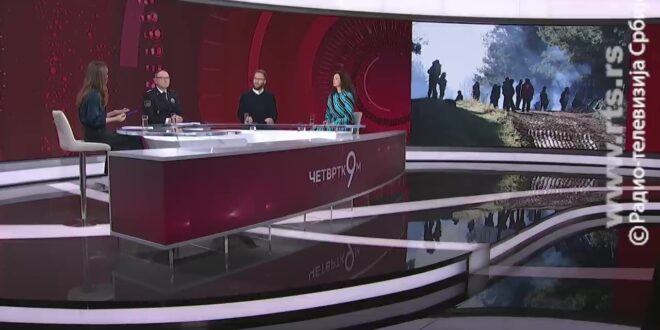
This year, more than 90,000 migrants passed through Serbia, according to data from Asylum Protection Center, which is twice the number of 2021, and the highest number since 2016. The show also discussed whether 2015, the year of the great migration crisis, could be repeated, when more than a million people passed through Serbia; as well as what the arrival and staying of migrants means for Serbia and the labor and real estate market.
What is the situation in Horgoš after the conflict between the two groups of migrants when weapons were also found, and what is the situation like at the borders with North Macedonia and Bulgaria, which are crossed by up to 4 times more migrants than before?
Can 2015, the year of the great migrant crisis, be repeated, when more than a million people passed through Serbia? What does the arrival and staying of migrants, above all the large number of Russians, mean for Serbia and the labor and real estate market?
That is what colonel Dragan Vasiljević, assistant director of the police, Radoš Đurović from Asylum Protection Center and demographer Danica Šantić talk about on Thursday at 9.
Raste broj izbeglih u Srbiji, smeštaj nedovoljan
- Details
- Category: Vesti
- Created on 23 August 2022

Izvor: Euronews.
Beograd 23.08.2022. - U svakom trenutku u našoj zemlji boravi više od 10.000 izbeglica, mahom iz Azije i severne Afrike, a od početka godine, za sedam meseci kroz Srbiju je prošlo više od 65.000 ljudi, od čega je najveći broj uspeo da ode dalje na zapad, rekao je Radoš Ðurović, izvršni direktor Centra za pomoć tražiocima azila.
Ðurović za Tanjug navodi da su smeštajni kapaciteti Komesarijata za izbeglice 4.500 ljudi, te da iz tog razloga mnogi pronalaze privatni smeštaj, ali ima i onih koji ostaju bez krova nad glavom. Ističe da je posebno teška situacija na severu zemlje, gde je svakodnevno više od 3.000 ljudi na otvorenom.
Uz to, kako kaže, imamo i situaciju da Mađarska svakoga dana "gura" nazad u Srbiju minimum 600 ljudi mimo sporazuma o readmisiji, a vikendima ta brojka bude od 1.000 do 3.000 ljudi.
"Pritisci se na tu granicu povećavaju, u takvoj situaciji ni smeštajnog mesta u kampovima nema dovoljno, ograničeni su. Na teritoriji Vojvodine kapaciteti su ograničeni, čak i kada se ljudi prime u kampove, oni borave u šatorima u kampovima gde veoma mali broj ljudi ima uslovan smeštaj za ovu situaciju i vremenske prilike, a posebne za period koji sledi, a to je jesen i zima. Samo Sombor, Kikinda i Subotica su kampovi na čijoj teritoriji borave stotine ljudi koji nisu u čvrstom smeštaju, nemaju krov nad glavom, već su u šatorima na teritoriji kampova i pored toga u šumama, oko tih centara se nalazi stotine ljudi", ispričao je Ðurović.
Najviše izbeglica u Srbiju dolazi iz Avganistana, oko 40 odsto, zatim iz Sirije između 18 i 20 odsto, 15 odsto iz Pakistana, 10 iz zemalja severne Afrike, ostali sa Bliskog i Srednjeg Istoka, Afrike i iz drugih zemalja.
The first ever research on Serbia’s COVID19 challenges in refugee health care protection published.
- Details
- Category: Vesti
- Created on 19 June 2022

APC undertook and successfully completed the first ever country research on response of Serbian health system to the COVID-19 challenges in protection of migrants, asylum seekers and refugees that was conducted in parallel to similar country researches in N. Macedonia and Bosnia under the common researching project “COVID19 Challenges within Refugee and Migrant Response in Western Balkans”, supported by Balkan Trust for Democracy.
APC collected and analyzed relevant data and the statistics, undertook interviews with relevant stakeholders and with representative number of migrants who experienced health challenges regarding COVID-19 pandemic, to conclude that successful implementation of COVID-19 measures was questionable in practice and even impossible in some of accommodation centers. Unexpectedly, number of migrants officially recognized to be infected with COVID-19 was surprisingly low in spite of limited living space, overcrowded camps, initial lack of protective gears, partially because migrants and camps management staff didn’t recognize initial symptoms as signs of COVID-19 and medical assistance and COVID-19 testing were not sought.
In line with the COVID_19 measures introduced worldwide, Serbia was among the first countries to impose restrictions on movement in the form of suspending or restricting cross-border mobility, as well as internal mobility, chiefly by imposing curfews of varying duration. Same lasted during the declared state of emergency period to get different modalities afterwards, on course of the general pandemic duration in Serbia.
The study showed that number of migrants who had received information on COVID-19 virus and protection methods in Serbia was alarmingly low. APC further found that a third of the respondents were not familiar with the mechanisms for accessing the right to health care in case of suspected COVID-19 infection; Many of these were respondents staying out of reception and asylum centres or private housing. Access to the health care system through health clinics in reception centres clearly did not suffice, instead, it was essential to ensure access in local communities, through primary health care centres, COVID clinics, hospitals and other health care institutions. The number of those who were provided with information on vaccines and those who had been offered vaccination in Serbia was extremely low, although they were entitled to it. Almost all respondents staying in centres reported that the anti-COVID-19 measures existed, but the successful implementation of those measures was questionable in practice and even impossible in some centres. The number of migrants, asylum seekers and refugees recognized to be infected with COVID-19 was surprisingly low; Given the expected higher risk of infection in collective facilities, involving more difficulty in implementing prevention measures, including physical distance, the real figure of COVID-19 infected migrants was suspected to be far higher in reality. It was assumed that the COVID-19 symptoms as fever, cough, fatigue, very similar to the symptoms of common cold, were simply not recognized by migrants nor by camps running CRM staff as COVID-19 and medical assistance and testing were not sought.
Nevertheless, access to the health care system for migrants was not significantly hindered by the COVID-19 challenges, while the centralization and project-based funding of overall health care for irregular migrants, asylum seekers and refugees in Serbia by the European Union covered almost all services needed by this population. In addition, same EU health project provided a better system for referrals to health care institutions, access to therapy or hospitalization when needed. Nevertheless, despite health system improvements and smoother access to health care, it is worth recalling that system’s project-based funding raises the issue of long-term sustainability of such an important and institutionally formed system.
You can download the whole research here.
Increasing access to vaccines and education for refugees
- Details
- Category: Vesti
- Created on 16 June 2022

In Serbia, Asylum Protection Centerlaunched a national campaign in 2021 to ensure refugees and asylum seekers could get COVID-19 vaccines. The organization is also working to protect migrant children and help them enroll in schools.
When COVID-19 vaccines first became widely available in Serbia in early 2021, they were only offered to Serbian citizens. Refugees staying in camps, where the living conditions increased the risk of getting infected with the virus, did not have access to this lifesaving protection.
In response, Asylum Protection Center (APC) as a local nonprofit that provides legal, psychosocial, integration and humanitarian assistance to refugees and asylum seekers – launched a media campaign.
“We initially reacted in the media to inform the public about the needs of refugees who were neglected in all this chaos,” explained Rados Djurovic, APC’s Executive Director. In media interviews, the APC team stressed that refugees living in camps were vulnerable to COVID-19 and argued that they should be prioritized for vaccination.
APC lawyers also analyzed the government website to register for vaccine appointments and determined that nothing on the site legally prevented asylum seekers and refugees from signing up. APC began to help asylum seekers and refugees living in private accommodation living outside the camps to register for appointments and accompanied their benefitiarieswhile also explaining to hospitals why they should inoculate this population. The organization then publicized these efforts on social media. With support of APC, first refugees started to receive vaccines setting the steps for others to follow.
In the face of mounting public pressure, the Serbian government made vaccines collectively available to refugees in camps in March, just a few months after they had first been offered to Serbian citizens. Once the vaccines were approved for younger age groups, refugee families were also able to vaccinate their children.
Despite the pandemic, tens of thousands of refugees entered Serbia in 2021, fleeing conflicts and a lack of economic opportunities in Afghanistan, Syria, and other countries. Many traveled north through Serbia in an effort to reach neighboring Croatia, Hungary and Romania which are part of the European Union. A smaller number have stayed in Serbia to build a new life.
COVID-19 is far from the only danger refugees face on their journey. Children, particularly unaccompanied minors, often experience violence and exploitation. They risk falling into the hands of smugglers and traffickers and sometimes experience mistreatment in refugee camps.
Of the more than 60,000 migrants and refugees who entered Serbia last year, according to APC figures, at least 6,000 were children and youth below the age of 18. Since the beginning of its work, APC supports both the children passing through the country and those staying to apply for asylum. For all these years In addition to providing young people with psychosocial support and legal aid, APC hosts social inclusion events – including soccer matches, cooking, photography, etc – to make the first contacts between local and refugee population and help refugees feel more integrated in Serbian society. The organization have been organizing workshops for kids on a range of topics including the Serbian language and preparing for school.
For the children who stay in Serbia, one of the biggest challenges is access to education. In an effort to keep refugee families from remaining in the country, Rados said, the Serbian government tries to prevent their children from enrolling in school hoping they would eventualy leave for EU. In addition, local schools sometimes don’t know how to enroll refugee children and don’t have interpreters. APC provides families with legal assistance and information to navigate these challenges and offers support to teachers so they can better help refugee students.
“We try to fill in those gaps and to be someone who is collaborating and facilitating that communication with parents, while supporting children their integration into educational system and local schools” explained Jovana Vincic, an APC Program Manager.
APC was founded in 2007 by young local lawyers, psychologists, and social workers who had experience working with refugees abroad, in other countries. At the time, the asylum system in Serbia did not yet exist. Serbia implemented an asylum law in 2008, and during this period the first refugees began arriving in the country. Many of them received help from APC, which grew quickly to meet increasing demand for its services.
In addition to offices in Belgrade, Presevo, and Subotica, APC has mobile teams that deploy across the country and a network of more than 150 volunteers.
“We can move fast when there is a need,” Rados said. “We are ready to reach people where they are and respond almost immediately.”
Today, Rados and Jovana said, refugees in Serbia face more challenges than ever before, and APC’s work has become increasingly difficult in the face of anti-immigration policies. But the APC team still finds lots of reasons to hope.
“Every time when a kid learns Serbian, when they share that they have Serbian friends, that they are invited to some gatherings, that they started their new life here, it’s something that’s confirming that this is really great work,” Jovana said.APC Bakery provides food and trains refugees.
- Details
- Category: Vesti
- Created on 16 June 2022

Our bakery provides food and trains refugees
APC Bakery is a separate sector in our organization (APC/CZA) dealing with food production and aiming to provide additional food rations to refugees and their children across Serbia. Among others refugees, APC Bakery periodically provides food and sweets to unaccompanied children accommodated in Centres for Unaccompanied Minors in Niš and in Belgrade upon request from those institutions. We prepare falafel, fatayer, shishtaouk, rice, hummus, as well as other traditional home-made pastries and cakes typical of the Near East and Middle East, the regions from which refugees mostly come to Serbia. Moreover our activities are aiming to help refugees staying outdoors or in reception camps across the country.
Poor nutrition and unfair treatment in the reception transit camps are leaving refugees in dire and uncertain situations, struggling to cope with the existing challenges and trying to maintain a modest and decent diet.
During the COVID_19 pandemic, our APC Bakery served thousands of refugees staying in the open, in private accommodation or in the collective camps and contributed to their more regular and nutritious diet.
Moreover, our food production sector not only aims to provide additional meals to refugees where they are needed, but also serves as a place where refugees are trained in the production of pastries, cakes and food through professional training and internships.
In this way, APC Bakery helps refugees learn new skills and train in occupations that are deficient in the country, which later benefits refugees to easily and quickly get a job and start a normal life.
Very important segment of our APC Bakery work is support and opportunity provided to enrolled refugees in establishing contacts and communication with local colleagues and local citizens/customers throughout their engagement. Thus APC bakery is helping them to strengthen their self-confidence and to create better conditions for refugees to integrate more easily into the local environment and make their integration in local community as painless and successful as possible.
APC: Potrebno ubrzati dodeljivanje privremene zaštite za izbeglice iz Ukrajine.
- Details
- Category: Vesti
- Created on 27 April 2022

Izvor: Beta
Beograd, 27.04.2022. - Centar za zaštitu i pomoć tražiocima azila (APC) ocenio je danas da je neophodno ubrzati izdavanje rešenja o dodeljivanju privremene zaštite ukrajinskim izbeglicama koje imaju prijavljen boravak u Srbiji i izrazio zabrinutost zbog, kako smatraju, sporog reagovanja Kancelarije za azil po tom pitanju.
"Zabrinjava nas i neizdavanje ličnih karti za privremenu zaštitu Ukrajincima. Samim dolaskom i boravkom u Srbiji izbeglice iz Ukrajine ne ostvaruju privremenu zaštitu po automatizmu. Potrebno je da se registruju, podnesu zahtev, dobiju rešenje o dodeljivanju privremene zaštite i ličnu kartu za privremeno zaštićena lica. Mi do prošle nedelje nismo zabeležili da su Ukrajinci posle registracije uspeli da podnesu i zahteve za privremenu zaštitu, niti da je Kancelarija za azil ljudima uručila rešenja o privremenoj zaštiti, niti da im je uručila lične karte za lica koja su dobila privremenu zaštitu", navodi se u saopštenju.
Ta nevladina organizacija dodala je da bez ličnih karti i pozitivnog rešenja nema govora da ti ljudi mogu da ostvare svoja prava po zakonu i odluci Vlade o privremenoj zaštiti raseljenim licima iz Ukrajine u Srbiji.
"Institucije prosto ne prepoznaju da oni imaju status privremeno zaštićenih u Srbiji i bez rešenja i lične karte Ukrajinci ne mogu da ostvare nikakva prava iz Zakona o azilu i privremenoj zaštiti. To znači da nema zdravstvene zaštite, nema obrazovanja za decu, nema prava na rad...", dodaje se.
U saopštenju se navodi i da su države u susedstvu daleko brže i agilnije od Srbije, pa je tako Madjarska dodelila 17.690 privremenih zaštita, Slovenija 1.225 a Hrvatska više od 4.000 privremenih zaštita, od ukupnog broja Ukrajinaca koji su došli u tu zemlju.
"Rešenje za sporu birokratiju vidimo u podnošenju zahteva za privremenu zaštitu prilikom registracije namere da se traži privremena zaštita. Tada bi trebalo da po automatizmu Kancelarija za azil donosi pozitivna rešenja o privremenoj zaštiti i izdaje lične karte kao i da iste uruči izbeglicama u roku od nekoliko dana, a u istim tim policijskim stanicama gde su ljudi registrovali svoju nameru da traže privremenu zaštitu. Drugo rešenje je da Kancelarija za azil formira punkt za podnošenje zahteva za privremenu zaštitu i izdavanje rešenja o privremenoj zaštiti, a gde bi izbeglima iz Ukrajine uručivala i pozitivna rešenja o privremenoj zaštiti i lične karte za privremeno zaštićena lica", dodaje se.
Important info for Ukrainian refugees, APC helps in gaining temporary protection.
- Details
- Category: Vesti
- Created on 20 April 2022

Asylum Protection Center provides free legal aid and assistance to Ukrainian refugees in obtaining temporary protection or in seeking asylum in Serbia, all in the context of raising influx of Ukrainian refugees (entering and/or temporarily staying in Serbia), inquiring how to obtain relevant information or how to reach temporary protection in Serbia.
Unfortunately, temporary protection is not available to Ukrainian refugees solely by entering and staying in Serbia.
In order to exercise your rights in scope of temporary protection in Serbia, you need to take a number of legal steps in which lawyers of our Centre can help you, in accordance with the Law on Asylum and Temporary Protection and the Law on Free Legal Aid.
Asylum Protection Center is envisaged by the Serbian Government’s Strategy for Migration Management (Official Gazette No. 59/2009), as an organization protecting the rights of asylum seekers and refugees in Serbia.
APC/CZA, Asylum Protection Center,
Contact numbers:
Office +381 11 3233 070, +381 11 4079 465;
Mob: +381 63 7047 080, +381 63 7047 090.
Who are persons from Ukraine who have been granted temporary protection in Serbia
- Details
- Category: Vesti
- Created on 24 March 2022

In Serbia, temporary protection has been approved to exiles from Ukraine, i.e.:
1) Citizens of Ukraine and members of their families* who have resided in Ukraine.
2) Asylum seekers, stateless persons and foreign nationals who have been granted asylum or equivalent national protection in Ukraine and members of their families* who have been granted residence in Ukraine.
3) Foreign nationals who have been granted valid permanent or temporary residence in Ukraine and who cannot return to their country of origin under permanent or long-term circumstances.
4) Citizens of Ukraine and members of their families* who legally resided in the Republic of Serbia at the time of making this decision on temporary protection and whose right of residence ceased during the validity of the decision, all until its revocation.
* Family members are:
1. Spouse with whom the marriage was concluded before coming to the Republic of Serbia;
2. Extramarital partner in accordance with the regulations of the Republic of Serbia;
3. Their minor children born in or out of wedlock, minor adopted children or minor stepchildren;
4. Other persons, exceptionally, taking into account particularly the fact that they were supported by a person granted asylum or temporary protection in Serbia, their age and psychological dependence, including health, social, cultural or other similar opportunities.CONDITIONS FOR ENTRY FOR UKRAINIAN REFUGEES TO SERBIA
- Details
- Category: Vesti
- Created on 15 March 2022

1. According to the law, citizens of Ukraine can enter Serbia with a travel document and have a stay of 90 days without a visa.
2. In special circumstances, and for humanitarian reasons (which is now the situation regarding the war in Ukraine and the position of refugees coming from Ukraine as persons fleeing war), the border police will make exceptions and allow Ukrainian citizens to enter Serbia without passports or other travel documents.
In that situation, refugees from Ukraine will be issued a decision at the border crossing on a special form, with indicated their address of stay, reason for stay and length of stay in Serbia.
3. Refugees from Ukraine do not need a COVID certificate to enter Serbia.
Đurović: Milion izbeglica iz Ukrajine je tek prvi talas u Evropi, apelovali smo na Vladu Srbije da se pripremi
- Details
- Category: Vesti
- Created on 03 March 2022
Izvor: Euronews
Beograd, 03.03.2022. - Za samo osam dana od izbijanja rata u Ukrajini više od milion izbeglica napustilo je zemlju i uputilo se u susedne zemlje - Mađarsku, Slovačku, Poljsku ili Rumuniju.
Radoš Đurović iz Centra za zaštitu i pomoć tražiocima azila za Euronews Srbija upozorava da su to tek prvi talasi i da bi Evropa mogla da se suoči sa prilivom pet do sedam miliona izbeglica samo iz Ukrajine.
Prihvatni centri u zemljama koje se graniče sa Ukrajinom za sada izgledaju veoma privremeno, u njima su ljudi smešteni u školama i ad-hok smeštajima, ali u pitanju su i prvi talasi izbeglica i prve reakcije država, a adekvatan odgovor na ovakve krize mogao bi da se očekuje za okvirno tri nedelje, kaže Đurović.
"Definitivno niko nije očekivao ovako snažan razvoj događaja i ovako velik priliv izbeglica. Podsetiću da je u 2015. i 2016. milion ljudi došlo iz Sirije kod nas, a ovde već imamo ogroman broj samo za sedam-osam dana rata. Ako se ratna dejstva nastave mnogo će veći broj ljudi nastaviti da dolazi", navodi naš sagovornik.
On tvrdi da je potrebno da Evropska unija aktivnije učestvuje u pomaganju, ali naglašava da se pojedini mehanizmi sada aktiviraju radi pomoći država koje pretežno prihvataju izbeglice.
"Danas ćemo videti da li će postojati dogovor na evropskom nivou oko privremene zaštite ljudi koji dolaze iz Ukrajine. U konkretnom slučaju su pogođene susedne zemlje sa ogromnim brojem ljudi, iako mnogi odlaze kod svoje rodbine dalje na Zapad. Opet su to ogromne brojke - u Mađarsku je 140.000 ljudi danas ušlo, računajte i da ima odliva. Ipak, jednoj Mađarskoj je izazov da se nosi sa više od 100.000 ljudi. Definitvno ostaje da se vidi kako će se dalje razvijati kriza", upozorava Đurović.
Ukoliko se dođe do jednog zajedničkog plana, navodi, postavlja se pitanje koje će to zemlje biti domaćini i da li će pristup biti drugačiji u odnosu na izbeglički talas koji i dalje nije zaustavljen sa Bliskog istoka.
Je li Srbija spremna za ovu krizu?
Đurović naglašava da Srbija mora da poveća broj dostupnih mesta u prihvatilištima, i da je Centar za zaštitu i pomoć tražiocima azila već apelovao na Vladu da se to uradi
"Kapaciteti moraju da budu do 10.000 mesta kao odgovor za eventualne probleme sa izbeglicama iz Ukrajine. Od 6.000 mesta koje trenutno imamo, 4.000 su popunjena ljudima iz Azije i Afrike. Srećna okolnost jeste da ljudi dolaze do rodbine, ali naredni dani će biti značajan indikator", ističe on.
Kako dodaje, retko ko traži institucionalni smeštaj u Srbiji već je većina usmerena na smeštaj kod prijatelja ili porodice.
"Oni imaju tri meseca boravka kod nas bez vize imaju vremena da razmisle šta će. Mnogi putuju dalje iz naše zemlje, ka Hrvatskoj ili Crnoj Gori gde imaju prijatelje ili imovinu", zaključio je Đurović.
To legally protect everyone who is coming from Ukraine to Serbia
- Details
- Category: Vesti
- Created on 08 March 2022
Source: RTS
Beograde, 08.03.2022.
Rados Djurovic, as a guest on the RTS morning program, said that in the coming period it can be expected that the number of refugees from Ukraine will be between five and seven million. According to the records of the Asylum Protection Center , more than 700 people came to Serbia.

"They entered and stayed here with friends and relatives, in private accommodation. Over 5,000 passed through our country on the way to Croatia, one part to Montenegro, but the MUP, the border police, which he keeps very detailed records of that, "Djurovic said.
It is important, he adds, to say that these people organized their stay in our country themselves and that the system of reception in refugee camps has not been started.
"We currently have 6,000 places, of which 4,000 are filled with refugees from Asia and Africa. It can be started somewhere between 1,700 and 2,000 places according to the emergency plan, but that, I'm afraid, is not enough capacity. Not everyone is usable at the moment. "We would have to raise those capacities, because the circumstances are not calming down and the refugees are coming," Djurovic said.
He refers citizens who want to help to the Serbian Commissariat for Migration and Refugees, especially if they have conditions for accommodating those who arrived.
"In Hungary, 'Airbnb' offered the first answer because people still don't know where they will go, what they will do.. Temporary accommodation in isolated centers may is not the solution," says Djurovic.
Djurovic adds that those who came to our country, as well as those who are still on the road, are interested in whether they can continue their normal life in Serbia.
"What will they get from the protection here, because many of them do not want to leave their home forever, that is a specific situation, they are waiting for the war to end and they want to be as close as possible to their country," Djurovic points out.
He notes that organized systems for the reception of refugees have not been launched in the region yet, and that a lot of that is on the basis of volunteerism and the initiative of local self-governments. That is why, he notes, it is necessary to provide state protection.
"It is crucial that you do not have a crisis, to protect those people, reduce their stress ... It is important that the legal status is resolved. Now that the refugees come from Ukraine, they have a stay of three months. However, at that time they do not have any special In addition to that stay in Serbia, it is necessary to think about the temporary protection act adopted by the EU, but also some neighboring countries such as Croatia and Hungary, which would automatically give everyone fleeing Ukraine the right to accommodation, the right to to work and to education ", explains Đurović.
He notes that, according to the information they receive from the Serbian Commissariat, those rights will be provided to refugees who came to our country, but it is necessary to foreseen it legally.
As for direct humanitarian aid, he adds that the system is considering distributing aid at border crossings and in places where refugees have arrived.
"Humanitarian aid is crucial, people are running out of money, they are calling and appealing because the money they have is not enough and the friends who support them will not be able to do that for a long time," says Djurovic.
He points out that mostly women and children come, and that it is difficult to expect them to avoid turning to bread immediately because they have to take care of each other.
"It is difficult to expect that in this wave, although the temporary protection would have foreseen that. We have not adopted that act yet, it should be passed as the number of people in our country increases," says Djurovic.
Vlada hitno treba da donese odluku o privremenoj zaštiti izbeglica iz Ukrajine
- Details
- Category: Vesti
- Created on 12 March 2022
Izvor: Tanjug
Beograd, 12.03.2022.
Centar za zaštitu i pomoć tražiocima azila apelovao je danas na Vladu Srbije da donese akt o privremenoj zaštiti izbeglica iz Ukrajine, kojim bi se regulisala prava i položaj ovih lica dok su u našoj zemlji.
Tako bi trenutno više od 2.000 izbeglica koje bježe od rata u Ukrajini imalo pravo na boravak, smeštaj, zdravstvenu zaštitu, obrazovanje za svoju decu, pravo na rad, lična dokumenta.
Radoš Đurović iz Centra za zaštitu i pomoć tražiocima azila rekao je danas za Tanjug da će se u narednom periodu povećati broj izbeglica iz Ukrajine i istakao da je neophodno hitno regulisati njihov položaj.
"Oni imaju pravo da borave 90 dana bez vize, ali nemaju druga prava i njihov položaj nije drugačije regulisan. Apelujemo na zdravstvenu zaštitu i da se prijem organizuje u blizini ili u urbanim mjestima u Srbije, gde ljudi mogu da se oslone na postojeću infrastrukturu“, rekao je Đurović.
On je istakao da situacija u Evropi ukazuje da su i druge zemlje spremne da postupe na sličan način i da su mnoge u regionu već donele zakone o privremenoj zaštiti izbeglica.
"U regionu već imamo Mađarsku, Hrvatsku i Crnu Goru, koje su donele svoje akte, a pokrenuta je i direktiva o privremenoj zaštiti na nivou EU", rekao je Đurović i dodao da je oko 15 žena i dece trenutno smešteno u stambenoj jedinici. kamp u Vranju.da stotine pa i hiljade izbeglica ulaze i prolaze kroz našu zemlju.
Kako napominje, Srbija ne treba da gubi vreme, jer će, kaže, doći u situaciju da su ljudi u opasnosti, pa čak i ako im je položaj ugrožen.
„Zbog toga smo hitno tražili da se apel razmotre i da se što pre donese odluka koja će olakšati boravak izbeglica iz Ukrajine u Srbiji, kao i institucijama da se na adekvatan način pozabave ovim problemom. "Đurović je rekao. statično".
On navodi da je glavna odgovornost Komesarijata za izbjeglice i migracije, koji, kaže, nije proaktivan.
Sada kada bi svi ovi ljudi, njih više od 2.000, podneli zahtjev za azil, sistem ne bi mogao da obezbedi efikasno odlučivanje o njihovom zahtevu”, rekao je Đurović.
On je naveo da su nam izbeglice iz Ukrajine kulturno i temperamentno bliske, te da osećaju da su u prijateljskom, slovenskom okruženju.
"To je novina i razlika u odnosu na izbeglice iz Azije i Afrike, koji su izgubili sve u svojim zemljama i idu na zapad EU da se spasu. Ovde to možda nije slučaj, jer ljudi imaju imovinu u Ukrajina”, rekao je Đurović.
Na pitanje kako im se trenutno pomaže u Srbiji, Đurović je odgovorio da je to na nivou pravnih informacija i pomoći Centra za zaštitu i pomoć tražiocima azila, kao i zahvaljujući fokusiranoj humanitarnoj pomoći onima kojima je to potrebno.
"Razvili smo mehanizam direktne humanitarne pomoći za ugrožene, odnosno one koji traže pomoć. Prvi smeštaj u Komesarijatskom smeštaju počeo je juče, pa je sada na Komesarijatu da obezbedi taj smeštaj i osnovne uslove za život u centre”, dodao je Đurović.
Kaže da su izbeglice kod prijatelja, rodbine, neki u hostelima, dok se neki snalaze sami.
Međutim, postavlja se pitanje koliko dugo mogu finansijski izdržati takav život.
"Pre ili kasnije, ti ljudi će morati da dobiju pomoć države, važno je da im se obezbedi smeštaj u urbanim mestima, teško ih je smestiti u kampove koji su veoma udaljeni od urbanih mesta", rekao je Đurović i dodao da postoje 6.000 mesta širom zemlje u kampovima, od kojih je oko 4.000 popunjeno izbjeglicama iz Azije i Afrike.
Đurović ističe da se pomno prati situacija u regionu, te navodi da se, na primjer, u Mađarskoj i Rumuniji sistemi tek sada uspostavljaju.
"Najveći teret prihvatanja snose građani, privatne kompanije i lokalne samouprave u Mađarskoj i Rumuniji, a mi moramo biti spremni jer neki ljudi mogu da ostanu sa nama", rekao je Đurović, koji je rekao da rat povećava priliv izbeglica.
"Brojke su izuzetno velike za veoma kratak period. Kroz Mađarsku je do juče prošlo više od 225.000 ljudi, preko 100.000 je ušlo u Moldaviju, preko 80.000 je prošlo kroz Rumuniju, preko 150.000 u Slovačku...", naveo je Đurović.
Ukrajinsku krizu opisuje kao brzu i bez presedana u evropskoj istoriji.
"Ukoliko izbeglice nastave da dolaze i ako ne budu imali sredstava da sami snose svoje troškove, situacija će postati veoma ozbiljna", rekao je Đurović odgovarajući na pitanje da li Srbiji preti opasnost od većeg broja izbeglica.
Report on pushbacks on the northern borders of Serbia in 2021.
- Details
- Category: Vesti
- Created on 08 December 2021
Illegal and mostly violent pushing of refugees back to neighboring Serbia, the country from which they entered, has been established on almost all northern borders that Serbia shares with neighboring countries.
In the first half of 2021, 527 pushbacks from Hungary, Croatia and Romania were recorded by APC/CZA officials alone, while it is estimated that on average at least 200 people are pushed back to Serbia every day.

Every person interviewed who tried to continue was returned to Serbia at least once, while most had that experience on average twice, a small number 10 to 15, and the largest number of pushbacks experienced by one person is up to 30 times.
The total number of people along Serbia's northern borders was between 2,000 and 3,000 refugees a day, with half of them staying outside reception centers, although it is estimated that more than 27,000 people passed through Serbia in the first six months of 2021.
The capacities of the reception centers are different and according to the official statistics of the Commissariat for Refugees and Migration for the border area with Hungary and Romania total 1295 places (PC Subotica - 280, PC Sombor - 495, PC Kikinda - 520), while they often accommodate more people. The average time of detention of refugees in this part of Serbia, in the territory of Bačka and Banat was up to 2 months.
When it comes to the western border of Vojvodina towards Croatia, the official accommodation capacities of the reception centers in the area of Srem are 1705 (PC Sid - 205, PC Principovac - 500, PC Adasevci - 1000) and were mostly not fully filled.
The number of people living outside the centers is much lower than in the border areas with Hungary and Romania, and it is estimated that about 100 people a day were in the border area in forests, squats and other informal settlements in Srem.
Up to 50% of the total number of refugees in northern Serbia live outside and around reception centers, in forests, squats, and informal settlements.
Sombor stood out as a hot spot for refugees of mostly Arab origin. The reception center, private accommodation, as well as the tents around the reception center and the forest next to the camp, are estimated to accommodate up to 1,500 people.
In June 2021, there is an increase in the number of children of Arab origin aged 6-12 who travel without parents, with adults who introduce themselves as their relatives or older brothers, and who stay in tents in front of the fence of the reception center in Sombor, where they were not allowed to enter. They do not have any access to any form of protection, nor have the camp managements reacted them in any way.
It is estimated that over 300 people crossed the border with Hungary every day, and that up to 250 people were pushed back from Hungary to Serbia every day. On average, there are about 1,000 people a day in the border zone with Hungary trying to cross the border, at a total of 11 locations from Sombor to Maidan.
It is estimated that at least 50 people a day try to cross the border with Romania, then wait a few days for the opportunity to cross to Hungary, and there are days when up to 100 people are pushed back.
It is estimated that at least between 300 and 400 people a day actively tried to cross the border with Croatia at more than 5 locations along the border, and that in some cases up to 100 people were pushed back from Croatia to Serbia every day.
The ECtHR confirmed Croatia’s responsibility in Madina’s case
- Details
- Category: Vesti
- Created on 19 November 2021
In 2017, a little girl, named Madina Hussiny from Afghanistan, was struck and killed by a train after being illegally pushed back with her family by Croatian police to Serbia, without giving them opportunity to seek asylum in Croatia. Afterwards, the whole case was obstructed by Croatian authorities that was imposing de facto and unlawful pressures not only to Medina’s family but to civil society organizations and lawyers trying to help and seek justice before Croatian and European institutions.
After four-years-long proceedings before European Court for Human Rights, the Court concluded that Croatia collectively expelled six years old Afghani child Madina Hussiny, her mother and five other siblings, from Croatian territory to Serbia in the middle of the night and outside of any legal procedure and without considering their individual situation. Concrete pushbacks eventually led to Medina’s death on the same occasion.
Moreover, the Court found that Croatia did not carry out effective investigation on the circumstances that led to the six-year-old girl’s death and thus violated the procedural limb of the right to life of little Madina.
Legal struggle before Croatian institutions and before ECtHR in this case, was done by Croatian Centre for Peace Studies (CMS), their legal department and their attorney at law Ms. Bezbradica Jelavic, while initial legal cross-border cooperation between CMS and APC proved to be highly important in terms of collecting decisive legal proofs, testimonies and information, crucial for the further legal steps before Croatian institutions and ECtHR. Having in mind that both organizations were legally representing Madina and her family in their respective countries – Croatia and Serbia, CMS’s and APC’s swift legal coordination and communication significantly contributed to the difficult legal struggle that has resulted with the final positive judgment before ECtHR.
Moreover, strong support of Balkan situated CSOs (Belgrade Centre for Human Rights, Rigardu, CMS, APC) before ECtHR, via their third party interventions, additionally added to the legitimacy of applicant’s claim.
APC's intervention reported widespread practices of unlawful and violent expulsions of migrants from Croatia to Serbia and Bosnia and Herzegovina. Such returns were being conducted outside official border crossings and without any prior notification of the authorities of the country to which the migrants were being returned, and thus in breach of the readmission agreements. The police usually ordered migrants to follow railways or roads, or cross rivers, as a result of which many of them had sustained accidents and died.
Unfortunately, the judgement of the European Court of Human Rights cannot restore the lost child's life but it is an important turning point for the future behavior of countries in Europe when it comes to the practice of illegal expulsion of refugees - pushbacks, to neighboring countries!
APC teams continue monitoring Serbian southern and northern borders, reporting hundreds of migrants walking snowy paths of the Balkan routes daily, in an attempt to reach central Europe. Most are stopped by the border police of Hungary or Croatia or Romania, searched, robbed, physically assaulted, insulted and violently pushed back into Serbia, where, thousands of asylum seekers have been stranded in freezing conditions, often in the open along borders.
Novo spajanje porodice u 2021. godini
- Details
- Category: Vesti
- Created on 27 April 2021
Kancelarija za azil Republike Srbije donela je u 2021. godine novo rešenje o spajanju porodice. Za razliku od slučaja spajanja porodice iz Avganistana od prošle godine, kada je u Srbiju došlo šestoro članova porodice državljanina Avganistana, ovaj put nije bilo prelazaka granice, već se radi o novorođenom detetu Libijske porodice. Libijska porodica je u Republici Srbiji dobila supsidijarnu zaštitu 2018. godine, a 2021. godine im se rodilo dete u Srbiji koje je, u skladu sa načelom jedinstva porodice i pravom na spajanje porodice iz Zakona o azilu i privremenoj zaštiti, dobilo isti status u Republici Srbiji kao i njegovi roditelji, odnosno supsidijarnu zaštitu.

Centar za zaštitu i pomoć tražiocima azila ovom prilikom izražava zabrinutost zbog činjenice da je proces naturalizacije izbeglica u Republici Srbiji onemogućen iz razloga neusklađenosti propisa u oblasti azila, stranaca i državljanstva, te da ne postoji način da osobe kojima je priznato pravo na azil, podnesu zahtev za prijem u državljastvo i na taj način steknu državljanstvo Republike Srbije. Navedeno iz razloga jer osobe kojima je priznato pravo na azil ne mogu steći stalno nastanjenje u skladu sa Zakonom o strancima jer se taj zakon na njih ne primenjuje, a što je uslov za podnošenje zahteva za prijem u državljanstvo. Zakon o državljanstvu na drugi način ne reguliše uslove pod kojim osobe kojima je priznato pravo na azil mogu aplicirati za prijem u državljanstvo Republike Srbije.
Sa druge strane Vlada još uvek nije, u skladu sa Zakonom o azilu i privremenoj zaštiti, donela podzakonski akt kojim bi propisala uslove, način i postupak za naturalizaciju osoba kojima je priznato pravo na azil u Republici Srbiji, na koji način se krše prava izbeglica garantovana Ženevskom konvencijom o statusu izbeglica iz 1951. godine.
Upravni sud potvrdio povredu prava na prevođenje.
- Details
- Category: Vesti
- Created on 12 February 2021
Upravni sud je presudom 16 U 9284/2020 usvojio tužbu Centra za zaštitu i pomoć tražiocima azila i ponovio da je došlo do povrede prava na upotrebu i vođenje upravnog postupka na jeziku koji stranka, u ovom slučaju azilant S.A. iz Avganistana, razume, kao i da su službenici postupajuće Uprave za strance povredili načelo pomoći stranci, s obzirom da je u postupku otkaza boravka licu koje je izrazilo nameru za azil, korišćen engleski jezik, a postupak sproveden bez prisustva prevodioca, te da je azilantu S.A. nakon toga uručeno rešenje o otkazu boravka na srpskom jeziku koji on ne razume.

Povodom navedenog slučaja, Upravni sud je još 22.02.2018. godine doneo presudu br. 9 U 19932/17 kojom je odbio navode Uprave za strance da ekonomičnost postupka opravdava upotrebu engleskog jezika od strane postupajućih službenika Uprave i naložio ponavljanje postupka, u kom bi se azilantu iz Avganistana omogućile procesne garancije vezane za upotrebu svog jezika u postupku. Međutim, u ponovljenom postupku Uprava granične policije nije postupila prema pravnim shvatanjima i primedbama suda u vezi sa postupkom, već je ponovila svoje prethodno rešenje, na koji način je povredila načelo obaveznosti pravosnažne sudske presude u upravnom sporu, što je Upravni sud konstatovao 17.12.2020. godine u presudi 16 U 9284/2020.
Centar za zaštitu i pomoć tražiocima azila, čiji pravnici su kroz ovaj slučaj strateške litigacije zastupali tužioca S.A. iz Avganistana, kao lica koje je izrazilo nameru za azil u Srbiji i koje je smatralo da mu je boravak neosnovano otkazan, se nadaju će nakon druge presude Upravnog suda, Uprava za strance Ministarstva unutrašnjih poslova postupati u svemu u skladu sa zakonom u pogledu poštovanja prava na prevođenje i načela pomoći stranci, kada je reč o licima za koja se osnovano može predpostaviti da su izbeglice, da ne govore niti razumeju srpski jezik, da su neuke stranke i da su u posebno osetljivom položaju kao stranci koji traže boravak i zastitu u Srbiji.
Zahtev za azil nedostupan izbeglicama
- Details
- Category: Vesti
- Created on 10 February 2021
Još od stupanja na snagu Zakona o azilu i privremenoj zaštiti i donošenja Pravilnika o sadržini i izgledu obrasca zahteva za azil i sadržini i izgledu obrazaca isprava koje se izdaju tražiocu azila i licu kojem je odobren azil ili privremena zaštita, juna 2018. godine, obrazac zahteva za azil nije zvanično preveden na jezike tražilaca azila, niti javno dostupan.

Naime, sastavni deo Pravilnika je obrazac br. 1 zahteva za azil koji je sačinjen i objavljen jedino na srpskom jeziku. Iako Pravilnik navodi da se obrazac zahteva za azil može prevesti na druge jezike (maternji jezik tražilaca azila ili jezik koji razumeju), od danas zvaničan prevod tog formulara nije objavljen, na koji način su tražioci azila u Srbiji uskraćeni prava da sami popune i podnesu zahtev za azil, te pokrenu postupak azila.
U praksi se međutim dešava da tražioci azila smešteni u prihvatne centre i centre za azil, u pojedinim slučajevima dobiju od strane Komesarijata za izbeglice i migracije, odštampani obrazac zahteva za azil ali obično na engleskom jeziku, a retko na farsi ili arapskom. Međutim, tražioci koji ne govore ili ne razumeju ni jedan od tih jezika (npr. iz bivših francuskih kolonija Afrike), bivaju u potpunosti onemogućeni da samostalno pristupe postupku azila, popunjavajući obrazac zahteva za azil.
Prema navodima Komesarijata za izbeglice i migracije, takve prevedene obrazce je njima prosledila Kancelarija za azil Ministarstva unutrašnjih poslova koja je nadležna za odlučivanje o zahtevima za azil, te ostaje nejasno zbog čega takvi prevodi nisu i javno dostupni i objavljeni, na koji način bi se omogiućilo da tražioci azila lakše pristupe postupku azila.
Panel u Beogradu „Pristup zapošljavanju izbeglicama i azilantima. u Srbiji
- Details
- Category: Vesti
- Created on 22 December 2019
Beograd, 06. Decembar 2019. - U okviru APC/CZA međunarodnog događaja „Dani integracije 2019.", u Hotelu Zira, a u okviru projekta „Support to asylum seekers and persons granted protection in entering the labor market" u Srbiji, koji finansira Švajcarska Konfederacija, Državni sekretarijat za migracije (SEM),

APC je organizovao panel „Pristup zapošljavanju izbeglicama i azilantima. u Srbiji: iskustva, izazovi i naučene lekcije ", okupljajući međunarodne i domaće praktičare na polju integracije i zapošljavanja izbeglica. Među panelistima bili su predstavnici institucija, poslodavaca, izbeglica, lokalnih i stranih organizacija civilnog društva i lokalnih vlasti (npr. Zavod za zapošljavanje, lokalne filijale iz Loznice, poslodavci restoran „Dva štapića", fabrika proizvodnje hrane „Froneri", UNHCR, JRS, People in Need, Check Republic, Liga za ljudska prava, Slovačka, Vaša prava, Bosna i Hercegovina, Menedek Hungary, Conzirtio Italiano Solidarieta - ICS -Ufficio Rifugiati, Italija, Beogradska otvorena škola - BOŠ, NIRAS, i dr.)
Neki od najistaknutijih zaključaka koji su proizišli sa panela bili su: postoji veliki potencijal i vrednost u tome da izbeglice postanu aktivni i progresivni deo naših društava i tržišta rada; nije dovoljno samo pomoći izbeglicama da dobiju poslove, moramo da kreiramo prostor za interkulturalni dijalog i međusobno razumevanje u okviru lokalne sredine; samozapošljavanje i preduzetništvo su vrlo bitni za stvaranje izbeglica koji su samostalni i u stanju da doprinesu lokalnoj sredini i postanu njen integralni deo, dok država mora da obezbedi više prilika da se to i ostvari.
Mnogi drugi učesnici podelili su svoje iskustvo, a mnoštvo misli bilo je vezano za zaštitu radnika, obuku i sprečavanje eksploatacije. Takođe je podvučeno da mi kao domaćini u lokalnim zajednicama ne smemo zaboraviti radna prava izbeglica, osigurati im legalan status na poslu i izbegavati da u budućnosti izbeglice dovedemo u situaciju da imaju teške probleme, postanu beskućnici i siromašni sloj stanovništva bez prava na penziju i socijalnu zaštitu.
Nakon panela i oslanjajući se na projekat "Support to asylum seekers and persons granted protection in entering the labor market" i na dugogodišnje iskustvo APC/CZA u zapošljavanju izbeglica i tražilaca azila, APC/CZA je dovršio preporuke institucijama / poslodavcima / sistemu, a za unapređenje / poboljšanje zapošljavanja izbeglica i azilanata koji su podeljeni partnerima, koje možete preuzeti sa PREPORUKE_U_OBLASTI_ZAPOŠLJAVANJA_TRAŽILACA_AZILA_I_LICA_KOJA_SU_DOBILA_AZIL
"Za više o Švajcarskoj podršci u Srbiji, posetite sajt Švajcarske Ambasade"
APC/CZA zapošljava izbeglice u proizvodnji hleba i peciva
- Details
- Category: Vesti
- Created on 30 November 2019
Beograd, 22. Novembar 2019. - U okviru integracijske podrške koju pruža Centar za zaštitu i pomoć tražiocima azil (APC/CZA), naš tim pravnika i socijalnih radnika pomaže azilantima i izbeglicama u procesu zapošljavanja u lokalnoj sredini, a u okviru programa „Support to asylum seekers and persons granted protection in entering the labor market” u Srbiji, koji finansira Švajcarska Konfederacija, Državni sekretarijat za migracije (SEM).

Pored mnogih aktivnosti kojima pomažemo izbeglicama da stanu na svoje noge, ostvare pravo na rad i pronađu zaposlenje, naša organizacija zapošljava izbeglice i u pekari koju je pokrenula. Tako im dajući šansu da pronađu zaposlenje, ali i da steknu neophodna iskustva i ispeku zanat proizvodnje hleba i peciva. Jedan od izbeglica koji radi kod nas kao pekar je i Emin, Sirijac koji je pobegao iz vrtloga rata u Siriji i koji se 2015. godine obreo u Srbiji. Došao u našu zemlju sa rekom ljudi koja ga je nosila daleko od svog doma, ali je tu i ostao. Sam, bez prijatelja, porodice, novca, budućnosti, zatražio je azil. Međutim, posle duge procedure azil Emin je i dobio utočište uz pomoć naše organizacije u Srbiji. Od tada se stvari polako menjaju za našeg Emina. Uz podršku naših pravnika smo prvo uspeli da omogućimo da Emin dobije radnu dozvolu i pristupi tržištu rada, ali i da bude oslobođen od za njega visokih administrativnih taksi za dobijanje radne dozvole.
Posle ove faze usledio je i sledeći korak, da zajedno sa našim pomoćnikom u zapošljavanju razmotrimo koje su sve opcije pred Eminom i koje su njegova želje i očekivanja u traženju posla. Zajedno smo sagledali realnost, razmotrili opcije za zapošjavanje koje su postojale i zaposlili Emina u jednoj lokalnoj pekari. Pošto je bio pekar u Hami, u Siriji, taj zanat je imao u svojim rukama. Ipak, trebalo je naučiti pravljenje srpskih peciva. Međutim, posle mnogo izazova i kako je vreme prolazilo, Emin nije bio zadovoljan. U jednoj pekari je radio dve smene, u drugoj nije našao zajednički jezik sa gazdom. U međuvremenu. naša organizacija je pokrenula sektor proizvodnje peciva gde se odmah ukazala prilika za Emina da se oproba i okuša sreću. On je oberučke prihvatio naš poziv za rad u pekari još krajem septembra i danas je glavni pekar u našoj proizvodnji. Još malo i Emin planira da uz našu pomoć uzme pripravnike i učenike, takođe izbeglice, koje će dobiti priliku da svoje prve korake u procesu pravljenja testa, peciva i hleba načine u našoj organizaciji. Pod Eminovim nadzorom, oni će imati priliku da uče i sebi obezbede posao i budućnost u Srbiji, a do tada će i Emin biti pravi srpski majstor u pravljenju gibanica i mantija.
"Za više o Švajcarskoj podršci u Srbiji, posetite sajt Švajcarske Ambasade"
Porodica iz Irana se uz pomoć APC/CZA zapošljava u Loznici
- Details
- Category: Vesti
- Created on 03 November 2019
Loznica, 02. Novembar 2019. - U oktobru prošle godine našem timu se obratila porodica poreklom iz Irana, smeštena u centru za azil u Banji Koviljači, navodeći da žele da traže azil u Srbiji. Kao stigmatizovana etnička manjina u Iranu, gotovo na svakom koraku su se suočavali sa diskriminacijom.
Pravnici Centra za zaštitu i pomoć tražiocima azila su im pomogli da započnu azilnu proceduru, suoče se sa svim izazovima izbegličkog života u kampu tokom prethodnih meseci, uz redovnu pravnu i psihološku podršku i savetovanje.
Kao tražioci azila u Srbiji, nedavno su ostvarili pravo na rad. Imajući u vidu koliko je pravo na rad važan segment integracije u društvo, integracijski tim je APC/CZA pomogao ovoj porodici u procesu dobijanja radne dozvole, kao i prilikom prijave na Nacionalnu službu za zapošljavanje u Loznici, a potom i u procesu zapošljavanja.
Porodicu čine majka, pet ćerki i dva sina i svi se nadaju da će uspeti da se i formalno uključe u lokalnu zajednicu, pronađu posao i počnu da zarađuju. Tokom prijave na Nacionalnu službu za zapošljavanje, socijalni radnik i pedagog APC/CZA su razgovarali sa majkom porodice o njihovoj želji da što pre počnu da rade jer su svesni da je to jedan od važnih koraka u procesu uključivanja u društvo za koje se nadaju da će postati njihov dom ukoliko dobiju azil u Srbiji.
Uz asistenciju našeg tima, cela porodica je razgovarala sa savetnicima iz Nacionalne službe za zapošljavanje o njihovim prethodnim radnim iskustvima i veštinama koje su stekli, a koje će im olakšati nalaženje adekvatnog posla. Njihovo iskustvo je raznoliko, pa su tako tu krojačica, instruktorka vožnje za žene, kuvarica, domaćica, vozač... Sa savetnikom NSZ su razgovarali i o poslovima koje bi prihvatili, imajući u vidu trenutne okolnosti, kao što je njihovo znanje srpskog jezika, poznavanje lokalnih zakona, običaja, odnosa prema poslu, radne etike, zatim činjenice da žive u kampu. Sve su ovo elementi koji utiču na spektar poslova koje bi mogli da obavljaju, ali su pokazali da su izuzetno motivisani i spremni da rade bilo koji posao koji bi im omogućio pristojan život, dalje učenje jezika i komunikaciiju sa lokalnom sredinom. Cela porodica smatra da će im pronalaženje posla dati neophodnu stabilnost i osećaj sigurnosti koji im je neophodan radi započinjanja novog života na koji su se odlučili posle dugog i teškog puta iz Irana.
Čekaju na svoju radnu dozvolu i intenzivno vežbaju srpski jezik, sa željom da konačno stanu na svoje noge i započnu novu fazu u svojim životima.
APC/CZA je ovoj porodici pomogao u pristupu tržištu rada, ostvarivanju prava na rad, pronalaženju poslodavca i zapošljavanju u okviru programa „Support to asylum seekers and persons granted protection in entering the labor market” u Srbiji, koji finansira Švajcarska Konfederacija, Državni sekretarijat za migracije (SEM).
"Za više o Švajcarskoj podršci u Srbiji, posetite sajt Švajcarske Ambasade"
Serbia and EU signed the agreement on border management cooperation
- Details
- Category: Vesti
- Created on 20 November 2019
Source: European Western Balkans Portal Photo: Frontex logo; Photo: Christian Charisius
Brussels, November 20, 2019 – European Union and Serbia signed the agreement on border management cooperation today in Brussels.
According to a statement from the European Commission, the agreement will allow members of the European Border and Coast Guard Agency (Frontex) to assist Serbia in border management, to conduct joint operations and deploy its teams in border areas between Serbia and the EU.

The agreement was signed by EU Commissioner for Migration, Home Affairs and Citizenship Dimitris Avramopoulos and Minister of Interior of Finland Marija Ohisalo and by Interior Minister Nebojsa Stefanovic, on behalf of Serbia.
Commissioner Avramopoulos thanked Serbia for its efforts and commitment to ensure close co-operation with the EU in the area of border and migration management.
"The agreement we signed will further strengthen our relations with partners in the Western Balkans and brings our neighbors closer to the EU," Avramopoulos said.
Finnish Minister Maria Ohisalo believes that cooperation with partners from the Western Balkans is key to successfully securing common borders.
"With this agreement, Frontex will be able to coordinate the operational cooperation between EU Member States and Serbia and provide the necessary support and expertise," concluded Ohisalo.
The European Union has already signed similar cooperation agreements between the European Border and Coast Guard Agency with Albania and Montenegro. The finalization of the agreement with Bosnia and Herzegovina and Northern Macedonia is currently pending.
PRESS RELEASE - The asylum draft bill violates international, EU and national law and exposes thousands of asylum seekers and refugees, the majority of whom are women and children, in high risk
- Details
- Category: Vesti
- Created on 23 October 2019
Photo: Reuters
Athens, October 23, 2019—On the evening of October 21, and mere hours after the just 5 day-long public consultations were concluded, the draft bill "on International Protection" was submitted to Parliament through the urgency procedure.
The Greek Council for Refugees (GCR) underlines that the proposed draft bill leads to the blatant undermining of fundamental guarantees and rights of refugees and asylum seekers, in violation of international, EU and national law, as well as the principle of non-refoulement.
More specifically, with the submitted draft bill:
-Basic guarantees about the "fairness and effectiveness" of the asylum procedure are abolished, especially given the completely insufficient system of free legal aid and the systemically dysfunctional administration (indicatively: the shortening of deadlines within which asylum seekers can exercise their rights, fast-track procedures of application examinations, limiting of the applicant's opportunity to consult a lawyer before the examination of their application, abolishing of the right of continuation of the procedure, the interruption of which is often due to inadequacies of the administration etc.)
-Τhe automatic suspensive effect of the appeal against the first instance decision is abolished for extended groups of asylum seekers, exposing them to the risk of being returned to countries where their lives are in danger, before the asylum procedure is completed, in direct violation of EU legislation.
-Τhe right to an effective remedy is removed, as procedural and substantial obstacles prevent applicants from exercising it (among other things, the applicant is required to cite specific reasons for appealing, on pain of inadmissibility, something which cannot happen without legal aid).
- Issues of constitutional legality are raised with regard to the Appeals Committees consisting exclusively of judges, as well as the delegation of single-member body administrative duties to a member of the judiciary, according to the case law of the Greek Council of the State (The Greek Administrative Supreme Court).
-The imposition of detention is generalized, indiscriminately, even on vulnerable people, victims of torture and violence, sick people, even children, and the automatic judicial review of the decision to impose/prolong detention is abolished, "to relieve the burden of administrative authorities and courts".
-The geographical restriction of asylum seekers is generalized, for the implementation also of the EU-Turkey statement, without any individualized assessment regarding the possibility of imposing this measure and without the possibility of a judicial review of the imposed measure, in violation of EU law and Art.13 of the ECHR.
-Asylum seekers are asked to accomplish the impossible, as they are required to comply with "duties to cooperate" with the authorities, duties which they cannot possibly fulfill, on account of existing dysfunctions in the system, under penalty of their applications being rejected even on their merits.
-Among other things, the following should also be noted: the complete lack of provisions for integration, the attempt to legislate the push of refugees to homelessness, the restriction of the asylum seekers right to labor, the undermining of the right of beneficiaries of subsidiary protection to remain in the country and the violation of the right to family unity for recognized refugees.
With the submitted bill, not only are the real and systemic problems of the Greek asylum and reception system not resolved (for example understaffing of competent services, with delays to the asylum procedure as a consequence), but the rights of asylum seekers and refugees are also circumvented, while the increase of returns is prioritized, without safeguarding the guarantees imposed by international and EU law.
The Greek Council for Refugees calls on the Greek state to re-examine the suggested provisions and to safeguard the rights of asylum seekers and refugees, respecting its obligations which derive from international, EU and national law, in the context of the rule of law.
For GCR's full comments on the draft legislation follow this link:
https://www.gcr.gr/media/k2/attachments/GCR_on_bill_about_International_Protection_en.pdf
For more information, please contact:
Danae Leivada-Communications Manager
Τel.: +30 210 3800990 -E-mail: This email address is being protected from spambots. You need JavaScript enabled to view it.
Joint Statement on push-backs practice across EU-Balkans migration routes
- Details
- Category: Vesti
- Created on 18 October 2019
October 18, 2019. – Joint statement of the Coalition for Rights and Wellbeing of Forced Migrants along Euro-Balkan's Routes
In the Balkan countries, along the migrant routes, pushing of people from one to another neighboring country and more often chain pushing backs of people through more states, have become common practice.
So-called pushbacks are happening on a daily basis across Balkan's countries, often with the use of force, seizure of personal belongings, harassment and humiliation of refugees and migrants.
Especially concerning issue presents the fact that children and unaccompanied minors are victims of above-mentioned practices, who are together with other asylum seekers often denied access to fair asylum procedure.
These actions are usually conducted by the border police, during the night, but also more and more often in the daytime.
According to the APC data, from the beginning of the year until September 19th, it is recorded over 1256 individual pushbacks to Serbia from neighboring countries, mostly from Croatia (over 472) and from Hungary (over 485).
The public is almost completely unaware of this practice. It is not much spoken about that in the local media either. Due to the scale of inhuman and illicit treatment towards one of the most vulnerable group of people, such as refugees and migrants, that exceeds experiences from the previous years, it is necessary to make an urgent appeal concerning competent institutions to halt actions in which refugees and migrants are becoming not only victims of the smugglers, but also victims of the state officials.
Many of the refugees are coming to the Balkans and are moving along the Balkan routes in search of protection from the violence and persecution in their countries of origin. They don't have a place where they can return because their homes are destroyed and their lives endangered due to the violence and persecution done by various armed groups. Among them, there is a multitude of children and women, but also teenagers and young people chasing better and more peaceful life.
None of them deserves to be exposed to the violence, brutality, nor to the cruel and humiliating behavior from anyone and certainly not from the state representatives.
The mentioned conduct of the border police can be seen as the unlawful attempt of controlling migrations. Nevertheless, the alternative does exist, and lies in implementation of the existing laws and legal procedures, that comprise free access for the migrants, functioning asylum system and functioning asylum procedure.
We appeal to the state institutions to respect their domestic and international laws and to implement them.
We appeal to the international organizations to strongly condemn same unlawful, violent, inhumane "push-back" and "denial of access to asylum" practices and to initiate all available mechanisms in order to support mentioned governments to take measures to prevent and stop these practices confronting European civilization values the and values of the time we live in.
Add:
According to the Asylum Protection Center data, in the first half of 2019, more than 16 000 migrants and refugees entered Serbia with 37% being women and children. In any moment, more than 5000 migrants are located in Serbia, out of which about 3000 accommodated in the state centers while others staying in alternative accommodation, in the open, along borders, in urban areas. Hundreds of migrants are daily entering Serbia from North Macedonia, Kosovo, Montengro, while hundreds of migrants are at the same time trying to leave Serbia northwards and westwards to Croatia, Bosnia, Hungary and even Romania. In the period from 01/01/2019 to 31/08/2019, 7396 persons expressed asylum intention in Serbia, while 14 persons were granted refugee and 15 persons were granted subsidiary protection.
In Croatia, according to data that Centre for Peace Studies obtained from the Ministry of the Interior, 3463 persons were evidented entering country and 482 persons were returned, in the period from 01/01/2019 to 25/07/2019. Moreover, 1198 persons sought asylum and 134 persons were approved with international protection in the first 9 months of 2019.The discrepancy between the statistics collected by the MoI is visible and the question arises as to what happened with the difference of more than 1000 people in these statistics. This also supports the testimonies of refugees and warnings from domestic and foreign organizations and institutions about illegal expulsions (pushbacks) and violence perpetrated by the Croatian police. There are no effective investigations or sanctions on those responsible.
In the Republic of North Macedonia, according to the data from NGO Legis, 15 695 refugees were prevented to enter in the country and were pushed back to Greece in the period from 01/01/2019 to 31/08/2019. More than 3025 persons were detected in the country being irregular in the same period, while the total number of smuggled people is estimated to be significantly higher.
In Italy, data collected by ICS in the Friuli Venezia Giulia region shows that, from 01/01/2019 to 15/09/2019, 5526 migrants asked for asylum entering Italy from Slovenia and using Balkans routes. During the period from January to July 2019, ICS recorded worsening of the psycho-physical conditions of the people who were coming via the same route. Many of them reported being abused (physically and verbally) by police forces who they came across in the Balkans, especially by Croatian police forces. Some of the refugees testified to be subjected to chain push backs from Slovenia and Croatia towards Bosnia and Herzegovina.
Asylum Protection Center
Centre for Peace Studies
ICS Trieste
Legis
UNCHR: Evropa mora da učini više da zaštiti decu izbeglice
- Details
- Category: Vesti
- Created on 13 October 2019
Pripremio: APC Foto: Rojters
ŽENEVA, 13. oktobra (Tanjug) – Agencija UN za izbeglice objavila je danas izveštaj "Putevi očajnika" u kojem iznosi najnovije podatke o broju izbeglica koji su do septembra stigli u Evropu i apeluje na evropske zemlje da ulože više napora da zaštite decu izbeglice i migrante i pruže im pomoć.

U izveštaju se navodi da je oko 80.800 ljudi stiglo u Evropu prek Mediterana od januara do septembra 2019.godine, što je manje nego u istom periodu 2018. godine kada je stiglo 102.700 osoba.
Više od četvrtine onih koji su došli su deca, mnoga bez pratnje roditelja, navodi se u izveštaju.
"Evropske zemlje moraju intenzivirati napore da zaštite decu izbeglice i migrante koji su prešli ne samo težak i opasan put, već se i po dolasku u Evropu suočavaju sa opasnostima i nedaćama, među kojima su nebezbedan smeštaj, pogrešno evidentiranje starosti, odsustvo adekvatne nege", apelovao je UNHCR.
„Ova deca su možda izbegla od sukoba, izgubila članove porodice, provela mesece, pa i godine daleko od kuće, a neka od njih su preživela zastrašujuće zlostavljanje tokom puta. No, njihova patnja ne prestaje na granici," poručila je Paskal Moro, direktorka Biroa za Evropu UNHCR-a.
Širom Evrope, deca bez pratnje se često smeštaju u velike centre u kojima postoji minimalan nadzor i tako bivaju izložena daljem zlostavljanju, nasilju i psihološkim pritiscima što povećava opasnost da nastave svoje putovanje ili nestanu, navela je ona.
Kako se navodi, većinu onih koji su došli preko Mediterana ove godine primila je Grčka – više nego Španija, Italija, Malta i Kipar zajedno.
Do sada je više od 12.900 dece stiglo u Grčku preko mora, uključujući i blizu 2.100 dece bez pratnje ili odvojene u putu, od kojih su mnogi iz Avganistana, Sirije i drugih zemalja u kojima vladaju sukobi i nasilje.
Uslovi u pretrpanim i nehigijenskim centrima na Egejskim ostrvima Grčke su izuzetno zabrinjavajući, konstatuje se u izveštaju.
Grčke vlasti su najavile da će preduzeti mere da rasterete centre i ima pozitivnih modela dobre prakse koji se sprovode, uključujući i udomljavanje u zajednici.
Međutim, prema podacima od kraja septembra, većina dece bez pratnje u Grčkoj i dalje je boravila u neadekvatnom smeštaju.
Imajući u vidu krajnje rizične uslove s kojima se suočavaju, UNHCR apeluje na evropske zemlje da otvore mesta za njihovo preseljenje kao gest solidarnosti, te da ubrzaju transfer dece koja mogu biti spojena sa svojim porodicama.
Neke od preporuka izveštaja su poziv evropskim zemljama da hitno obustave praksu imigracionog pritvora za decu, imenuju obučene staratelje ili socijalne radnike i da obezbede obrazovanje dece izbeglica i migranata.
Širom Evrope postoje problemi vezani za utvrđivanje godišta dece, pa izveštaj poziva na korišćenje holističkih i multidisciplinarnih metoda procene starosti.
Preduzimajući intervencije navedene u ovom izveštaju, zemlje će moći da povećaju stepen zaštite dece u pokretu i biti spremnije da odluče kako zadovoljiti njihov najbolji interes, što mogu biti i rešenja van Evrope.
Celokupan izveštaj UNHCR-a možete pronaći na sledećem linku: https://data2.unhcr.org/en/documents/details/71703
Smanjuje se broj migranata na severnim granicama Srbije zbog pojačanog fizičkog nasilja mađarske policije nad migrantima
- Details
- Category: Vesti
- Created on 17 October 2019
Tekst: APC Foto: APC
Subotica, 17. oktobar 2019. – Mobilni timovi APC/CZA redovno obilaze kampove i otvorene lokacije u blizini granica Srbije sa Mađarskom i Hrvatskom gde migrantima pružaju informacije i azilnoj proceduri, registraciji i smeštaju u kampovima.
Prema informacijama sa terena, u prethodne dve nedelje veliki broj ljudi je dolazio iz drugih kampova na otvorene lokacije duž zelenog graničnog pojasa, posebno na granici sa Mađarskom, pokušavajući svakodnevno da pređe na njihovu teritoriju. Početkom oktobra u Subotici i okolini je boravilo i do 300 lica koji su u grupama od 3 do 20 ljudi pokušavali prelaske u Mađarsku, u vagonima, ispod vagona, ili preskačući zaštitne ograde. Među izbeglicama koje se boravile u Subotici najviše je bilo migranata iz Avganistana, od kojih je najmanje trećina maloletnika bez pratnje. Primetno je bilo i prisustvo više porodica iz Irana i Avganistana, koje su takođe ovde boravile radi pokušaja ilegalnog prelaska granice.

Tokom poslednjih desetak dana, migranti koji su prilikom ilegalnih pokušaja prelaska granice gurnuti nazad u Srbiju izjavili su kako mađarska policija koristi različite vrste fizičkog nasilja, kao što je prskanje biber spreja u oči, puštanje pasa da jure i ujedaju migrante, kao i uništavanje telefona i oduzimanje novca. Svakodnevno je više desetina migranata, među kojima i maloletnici bez pratnje izloženo fizičkom nasilju ali i drugim vidovima poniužavanja i nasilja, kao što je ležanje licem ka zemlji u bari vode po kiši, ili čučanje u dužem vremenskom periodu. Kako se broj pokušaja prelazaka povećavao, tako je i rastao broj nasilnih pushback-ova sa upotrebom prekomerne upotrebe fizičke sile.
Tokom prethodnih nedelju dana, nakon više neuspelih pokušaja prelazaka, iscrpljenosti, nedostatka redovnih obroka i izloženosti različitim formama fizičkog nasilja, izbeglice većinom napuštaju Suboticu, te je primetan drastičan pad u broju izbeglica koje borave na otvorenim lokacijama u Subotici i trenutno taj broj ne prelazi 80. Većina izbeglica, poreklom iz Avganistana odlazi u kampove u Srbiji ili odlazi u Bosnu i Hercegovinu, kako bi odatle pokušavali da pređu u Hrvatsku.
Na granici sa Rumunijom je od početka oktobra takođe povećan broj ilegalnih pokušaja prelazaka. Prema saznanjima sa terena, rumunska policija je pojačala prekomernu upotrebu fizičke sile prema migrantima, i pored toga uništava telefone, pa čak i novac. Migranti poreklom iz Bangladeša navode da ih rumunski policajci šutiraju dok leže na zemlji, te udaraju pendrecima po leđima i nogama. Navode da se ovakvo nasilje dešava svakodnevno. Između 30 do 50 migranata svakodnevno pokušava ilegalno da pređe u Rumuniju, a veoma mali broj uspe da pređe do Mađarske.
Da li je realan scenario novog masovnog priliva izbeglica?
- Details
- Category: Vesti
- Created on 15 October 2019
Izvor: RTS
15. oktobar 2019. – Nemački ministar unutrašnjih poslova Horst Zehofer dramatično je upozorio na opasnost novog izbegličkog talasa u EU koji bi mogao da premaši onaj iz 2015. godine, ukazavši na potrebu da se pomogne zemljama koje čuvaju spoljne granice Unije. Šta će se desiti ako turski predsednik Redžep Tajip Erdogan ostvari pretnje i otvori granice Turske prema Evropi za oko tri miliona izbeglica i hoće li na njihovom putu pored Grčke biti i Srbija?
Radoš Đurović iz Centra za pomoć tražiocima azila upozorava da bi Srbija u slučaju scenarija koji najavljuje Zehofer bila tampon-zona EU i time veoma ugrožena izbegličkom krizom dramatičnih razmera.
Ipak, indikatori sa terena ne daju za sada povoda za najgori scenario.
"Teško da ćemo doći do situacije od 2015. godine, jer Evropa sprema odgovor duž cele rute i pokušavaće migraciju da zaustavi u Grčkoj", rekao je Đurović.
Poslednjih meseci migranti iz Turske odlaze na grčka ostrva, a odatle prelaze na kopno. Zatim preko Makedonije, Kosova, Albanije i Crne Gore ulaze u Srbiju.
"Ulaze svakodnevno iz Makedonije, i to najmanje 100 ljudi dnevno. Isto tako pojačana je ruta preko Kosova. Svi putevi, nažalost, vode kroz Srbiju i odavde pokušavaju da dođu do Hrvatske, BiH i Mađarske", rekao je Đurović.
Iz tih zemalja ih tzv. puš-bekovima vraćaju u Srbiju, ali ipak veliki broj njih uspeva da nastavi put.
"U Srbiji nikada nema više od 6.000 migranata, što znači da je i odliv intenzivan", dodao je Đurović dodajući da je do 1. septembra 7.300 ljudi tražilo azil u Srbiji.
Najveći broj migranata zadržava se u Srbiji 24 do 48 časova.
Read more: Da li je realan scenario novog masovnog priliva izbeglica?
APC/CZA informiše i savetuje migrante na otvorenim lokacijama
- Details
- Category: Vesti
- Created on 08 October 2019
Tekst: APC Foto: APC
Šid, 08. okotbar 2019. – Severni tim Centra za zaštitu i pomoć tražiocima azila (APC/CZA) redovno obilazi kampove i otvorene lokacije na severnim granicama Srbije, pružajući izbeglicama informacije o azilnoj proceduri u Srbiji, o registraciji i smeštaju u kampovima, kao psihosocijalnu podršku, naročito maloletnicima bez pratnje.
Na otvorenim lokacijama u Šidu u okolini železničke stanice i u napuštenim objektima se trenutno nalazi oko 200 lica poreklom iz Avganistana i zemalja severne Afrike (uglavnom Alžir i Maroko). Sa dolaskom hladnijeg vremena, vidljivo je smanjen broj lica migranata koji borave na otvorenom. Određeni broj izbeglica je zatražio smeštaj u kampovima Principovac i Adaševci, dok je jedan deo migranata ilegalno otišao do nekih od zemalja Evropske unije.

Službenici APC/CZA su prilikom obilaska informisali i savetovali migrante iz Avganistana i Alžira, a sa maloletnim izbeglicama je realizovana procena stanja i informisani su o načinima na koji mogu potražiti smeštaj u kampovima, za šta su i sami zatražili pomoć od pravnika i psihologa APC/CZA.
APC/CZA pruža zdravstvene asistencije izbeglicama kojima je potrebna pomoć lekata, pa je tako sedamnaestogodišnji Zhan iz Pakistana posetio kancelariju APC/CZA u Subotici u pratnji međunarodnog volontera. Zhan se požalio da ima poteškoća u komunikaciji sa lekarima, te da je prilikom poslednje posete lokalnom domu zdravlja 3 sata pokušavao da ubedi dežurne lekare da ga prime kako bi mu previli ranu. Njemu je potrebno svakodnevno previjanje rane na ruci, na kojoj su mu amputirana dva prsta prilikom nesreće ispod voza dok je ilegalno pokušavao prelazak u Mađarsku pre 3 meseca. Tim APC je sa Zahnom posetio bolnicu, a potom i ambulantu, u kojoj su mu nakon naše asistencije i objašnjenja zdravstveni radnici previli ranu i zakazali previjanje za naredni dan.

Nastavljamo da pratimo njegovu situaciju, te i dalje na terenu savetujemo migrante i pružamo im asistencije, posebno maloletnicima bez pratnje koji žive na otvorenom.
Saladin – "street wear" prodavac u renomiranoj gradskoj brand prodavnici
- Details
- Category: Vesti
- Created on 07 October 2019
05.Oktobar 2019
U okviru integracijske podrške koju pruža Centar za zaštitu i pomoć tražiocima azil (APC/CZA), naš tim pravnika i socijalnih radnika pomaže azilantima i izbeglicama u procesu zapošljavanja u lokalnoj sredini, a u okviru programa „Support to asylum seekers and persons granted protection in entering the labor market" u Srbiji, koji finansira Švajcarska Konfederacija, Državni sekretarijat za migracije (SEM).
APC/CZA tim je upoznao Saladin kada je imao 17 godina, kada je uz pravnu podršku Centra za zaštitu i pomoć tražiocima azila podneo zahtev za azil. Saladin je poreklom Avganistanac, ali je živeo u Iranu koji je morao da napusti. Kada je stigao u Srbiju, doneo je odluku da će tu biti kraj njegovog mučnog puta iz Irana i da je Srbija zemlja u kojoj će pokušati da izgradi svoj život.
Saladin je nedavno napunio 18 godina i jedan od prvih maloletnih dečaka u Srbiji, koji je uz pomoć APC/CZA dobio radnu dozvolu kao tražilac azila u Srbiji.
Najvažniji segmenti integracije u društvo, pored učenja jezika su svakako obvrazovanje i posao. U tom smislu, pravnik, socijalni radnik APC/CZA su ukazali Saladinu na njegova prava kao tražioca azila u Srbiju i pomogli mu prvo da upiše srednju školu, a zatim i da ostvari pravo na rad, dobije pristup tržištu rada i nađe posao, dok ga je naš facilitator u zapošljavanju pripremao za razgovore sa poslodavcima, izradu CV-ja, pripremao za traženje zaposlenja, pronašao mu poslodavca, i sve verme vodeći računa o njegovim interesovanjima.
Saladin je vrlo brzo naucio srpski jezik, svestan značaja koji poznavanje jezika ima za što bolje povezivanje sa sredinom u kojoj živi. Njegova želja je da živi u Srbiji i da se bavi modnim dizajnom kroz koji pokušava da izrazi svoju kreativnu prirodu.
Takođe, njegova želja je bila da pronađe posao od koga će moći da zarađuje, ali kroz koji će moći dodatno da razvija svoje komunikacione veštine, da vežba srpski i da nauči praktične veštine vezane za rad u ovoj industriji.
Vodeći se njegovim željama i potrebama, integracijski tim APC/CZA je tokom leta pomogao Saladinu da se zaposli u specijalizovanoj prodavnici brendirane odeće „Zla shtek" gde prodaje dizajniranu street wear garderobu i radi kao pomoćnik u prodaji.
Socijalni radnik APC/CZA je pripremio Saladina za razgovor i predočio mu eventualna pitanja koja bi mu mogla biti postavljena, i zatim je sa njim otišao na razgovor gde su predočeni svi uslovi rada koje je Sami prihvatio. Bio je izuzetno zadovoljan što će raditi posao koji mu je zanimljiv, gde može mnogo toga da nauči, a najviše zato što će moći da bude samostalan i da planira svoju budućnost.
Tako je Saladin, sada ne samo učenik Škole za dizajn tekstila u Beogradu već i zaposlen, a ima priliku da se druži sa svojim vršnjacima i da razvija svoju kreativnost i talenat, kao i da uči osnovne stvari o dizjaniranju garderobe, što je njegova velika strast.

Njegovi poslodavci kažu da je veoma zainteresovan za modu i da je izuzetno kreativan. Odličan je u radu sa ljudima, izrazito komunikativan i vredan, trudi se da se uklopi u kolektiv i da svakog dana nauči nešto novo. Kaže da mu podrška kolega mnogo znači da se oseti prihvaćeno u okruženju koje je novo i drugačije, ali smatra da je ovaj posao korak u dobrom pravcu i da predstavlja dobar početak njegove dugotrajne integracije u društvo. Samijeva želja je da dizajnira svoju odeću i da je prodaje u Srbiji, ali i šriom sveta i nada se da će mu školovanje i naročito ovo radno iskustvo omogućiti da jednog dana ostvari svoj san.
"Za više o Švajcarskoj podršci u Srbiji, posetite sajt Švajcarske Ambasade"
Hrvatska policija nastavlja sa nasilnim pushback-ovima migranata u Srbiju
- Details
- Category: Vesti
- Created on 04 October 2019
Tekst: APC Foto: APC
Šid, 04. oktobar – Prema informacijama koje su pravni i psihososcijalni službenici APC/CZA prikupili prilikom obilaska kampova i otvorenih lokacija na severu Srbije, svakodnevno više desetine migranata poreklom iz Avganistana, Alžira, Iraka i Irana pokušavaju prelaske duž hrvatske granice. Hrvatska policija nasilno gura migrante nazad u Srbiju, ukoliko ih uhvati u ilegalnom pokušaju prelaska granice.

Kako saznajemo na terenu, u poslednje dve nedelje Hrvatska je pojačala kontrolu na granicama, a povećan je i broj nasilnih pushback-ove u okolini Šida i kod graničnog prelaza Batrovci. Policajci koriste prekomernu upotrebu fizičke sile i odvode migrante u pritvor na 10 dana ukoliko kod njih pronađu kamp kartice srpskih prihvatnih centara.
Zahed (18) iz Avganistana svedoči da je 30. septembra uhvaćen od strane hrvatskih policajaca u blizini Batrovaca. Kako navodi, naređeno mu je da legne na stomak, nakon čega su policajci počeli da ga udaraju pendrecima po leđima. Policajci su mu polomili telefon i gurnuli ga nazad u Srbiju.
Kako je APC/CZA tim saznao, do 100 izbeglica dnevno pokušava da pređe na teritoriju Hrvatske, u okolini Šida, najčešće hodajući uz prugu, ili u okolini graničnih prelaza Batrovci i Šid.
Na severu Srbije nalazi se najmanje 50 maloletnih izbeglica uzrasta od 12 do 17 godina
- Details
- Category: Vesti
- Created on 30 September 2019
Tekst: APC Foto: APC
Subotica, Šid, 30. septembar – U Subotici i okolini i dalje povećan broj migranata, koji svakodnevno pokušavaju ilegalne prelaske u Mađarsku. Najveći broj migranata dolazi iz Avganistana, manji broj iz Irana, Bangladeša, Pakistana i Indije.
Najmanje 100 migranata dnevno pokušava ilegalne prelaske na graničnim prelazima Horgoš i Kelebija, najčešće peške. Migranti takođe pokušavaju da pređu tako što preskakaču ogradu ili se kriju u vagonima ili u prikolicama kamiona.

Veliki broj maloletnih lica bez pratnje iz Avganistana koje službenici APC/CZA susreću i savetuju pristiže svakodnevno na sever zemlje. Dolaze uglavnom iz Grčke, a u Srbiju ulaze preko Makedonije. Trenutno se na severnim granicama Srbije nalazi najmanje 50 maloletnih izbeglica, uzrasta od 12 do 17 godina. Oni borave u napuštenim zgradama u okolini železničke stanice u Subotici, u napuštenoj fabrici u blizini Šida i na okolnim zelenim površinama. Prema informacijama koje su službenici APC/CZA prikupili na terenu, na graničnom prelazu Horgoš mađarska policija sve više koristi prekomernu upotrebu fizičke sile, udarajući migrante pendrecima. Sve češće se koriste i elektrošokeri, a mađarski policajci puštaju pse na migrante. Farshad (17) i Mustafa (15) su ispričali da su ih mađarski policajci više puta udarali elektrošokerima i pendrecima po leđima kada su 29. septembra pokušali ilegalno da pređu granicu.
Ovi dečaci se nalaze na otvorenom više od dve nedelje, žale se na nedostatak hrane i nasilje od strane mađarskih policajaca.
Prilikom obilaska otvorenih lokacija i kampova širom Srbije, mobilni tim APC/CZA koji se sastoji od pravnika, psihologa i kulturnih medijatora razgovara sa izbeglicama o njihovim iskustvima tokom dugog puta do Srbije, prelasku granice, a izbeglice dobijaju informacije o registraciji, smeštaju u kampovima, kao i svojim pravima i obavezama dok su u Srbiji.
Europe migrant crisis: Calls to redistribute migrants as arrivals rise
- Details
- Category: Vesti
- Created on 19 September 2019
Source: BBC Photo: Getty Images
Athens, September 19 – France and Italy are calling for a new system to automatically redistribute migrants across the EU as the number of people entering Europe surges.
"The European Union hasn't shown enough solidarity with countries handling first arrivals," French President Emmanuel Macron said on Wednesday.
The current system, he added, was particularly unfair on Italy.
Hundreds of migrants arrived in Italy and Greece this week, many travelling by boat from Libya and Turkey.
On Tuesday, 791 migrants arrived in Greece. The sharp rise in recent days has led to issues at centres on Greek islands that receive and house individuals during the assessment process.
On Lesbos, a centre built to cater for up to 3,000 people is currently housing more than 10,000. Other Greek islands, including Kos and Samos, are also struggling with over-capacity, the latest government figures show.

On Wednesday, Mr Macron and Italian Prime Minister Giuseppe Conte held talks in Rome. The leaders later said that the EU needed to introduce a fairer system of taking in migrants saved from the Mediterranean Sea.
"France is ready" to help develop the framework to overhaul the current system, Mr Macron said.
Italy, which has been at the forefront of the migrant influx in the EU, has previously criticised other member states for not sharing enough of the responsibly.
The country's former interior minister and leader of the far-right League party, Matteo Salvini, routinely blocked charity-run vessels carrying migrants from docking at Italian ports.
The rescue ships would then been forced to wait while EU countries negotiated resettlement agreements.
Italy's new coalition government, which took office last week, signalled a change of approach to migration after permitting 82 migrants to disembark on the southern Italian island of Lampedusa over the weekend.
Thousands of migrants attempt to cross the Mediterranean to Europe every year. Those who make the journey often travel in poorly maintained and overcrowded vessels, and many have died en route.
Earlier this week Turkey, which is hosting more than 3.6 million Syrians who have fled the country's civil war, warned it would "be forced to open the gates" if it did not receive "logistical support" to establish a refugee "safe zone" in Syria.
President Recep Tayyip Erdogan said that up to three million Syrian refugees could return to their country to live in the north, but that international co-operation was needed for that goal to be met.
Tens of thousands of Syrians have already fled north from Idlib, a province held by rebel and jihadist forces, to the Turkish border.
Under a 2016 agreement with the EU, Turkey imposed stronger controls to curb the flow of migrants and refugees to Europe.
Najmanje 600 migranata boravi na otvorenom duž granica sa Hrvatskom i Mađarskom
- Details
- Category: Vesti
- Created on 18 September 2019
Priredio: APC Foto: APC
Šid, Subotica, 18. septembar – U poslednjih 10 dana primetno je povećanje broja migranata na otvorenim lokacijama kako na hrvatskoj, tako i na mađarskoj granici.
U Šidu i okolnim otvorenim lokacijama duž granice sa Hrvatskom trenutno boravi oko 400 izbeglica, od kojih je najveći broj iz Avganistana, zatim iz Alžira i Maroka, i manji broj iz Sirije, Tunisa, Palestine, Iraka i Irana. Izbeglice koje borave u blizini Šida spavaju u napuštenoj fabrici i šatorima duž granice i najčešće pokušavaju ilegalne prelaske peške uz prugu, ili u okolini Batrovaca, a zatim ulaze u prikolice kamiona radi pokušaja prelaska granice sa ciljem da stignu do Slovenije.
Više desetina migranata svakodnevno biva uhvaćeno i ilegalno pushback-ovano (vraćeno) na teritoriju Srbije, bez mogućnosti da u Hrvatskoj izraze nameru za azil. Prema informacijama koje su mobilni timovi APC/CZA prikupili na terenu, hrvatski policajci vraćaju migrante u Srbiju najčešće preko međugraničnog prostora kod Tovarnika uz stalnu upotrebu fizičke sile i maltretiranje, koje uključuje skidanje odeće, udaranje pendrecima, šutiranje dok su izbeglice na zemlji, uništavanje mobilnih telefona kao i spaljivanje ličnih stvari.

U Subotici i okolnim otvorenim lokacijama se takođe povećao broj migranata koji svakodnevno pokušavaju prelaske na teritoriju Mađarske, najčešće preskakanjem zaštitne ograde duž zelenog graničnog pojasa od Horgoša do Kelebije. Trenutno najmanje 200 lica iz Avganistana, kao i manji broj lica iz Pakistana, Sirije i Iraka boravi u napuštenim zgradama i vagonima u okolini železničke stanice u Subotici. Veliki broj izbeglica dolazi u Suboticu nakon pushback-a od strane mađarskih policajaca koji ih uhapse nakon što pređu sa hrvatske na mađarsku teritoriju.
Najmanje 100 izbeglica dnevno pokušava prelaske kod Horgoša i Kelebije u grupama od 3 do 25 lica. Kod Horgoša, migranti pokušavaju prelaske ulazeći u prikolice kamiona na graničnom prelazu, a kod Kelebije pokušavaju peške, pa potom preskaču zaštitnu ogradu na mađarskoj granici. Manji broj izbeglica koje borave u Subotici ilegalno prelaze granicu sa krijumčarima.
Mađarski policajci svakodnevno ilegalno vraćaju migrante u Srbiju, povremeno koristeći fizičku silu. Najčešće uništavaju mobilne telefone i prisiljavaju migrante da skinu obuću, te se migranti nakon pushback-a vraćaju peške bosi, pešačeći i do 35 km nazad do centra Subotice.
Maloletni M.M. (17) iz Avganistana ispričao je mobilnom timu APC/CZA da je došao u Suboticu nakon ilegalnog vraćanja sa granice od strane mađarskih policajaca, kao i da nema finansijska sredstva da se vrati u kamp u kojem je prethodno boravio. On je timu pokazao svoj uništeni telefon koji su slomili mađarski policajci. Rekao je da mu je sve teže da boravi na otvorenom u toku noći jer su temperature veoma niske noću, kao i da se pribojava nadolazeće zime. Pravni i psihosocijalni službenici su maloletniku pružili informacije o procesu registracije u policiji, kao i o mogućnostima za smeštaj u nekom od kampova u Srbiji, gde bi imao bezbedno mesto za boravak, redovne obroke i zdravstvenu zaštitu.
Erdoğan threatens to let Syrian refugees leave Turkey for west unless safe zone in Syria is set up
- Details
- Category: Vesti
- Created on 05 September 2019
Source: The Guardian Photo: Anadolu Agency
Ankara, September 05, 2019 – The Turkish president, Recep Tayyip Erdoğan, is threatening to "open the gates" to allow Syrian refugees to leave Turkey for western countries unless a controversial "safe zone" inside Syria is established soon.
Erdoğan's comments come amid growing tension with Washington over delays in establishing the safe zone – first proposed by Donald Trump – not least over the fate of a key US-allied Kurdish militia, the YPG, which Ankara regards as a terrorist organisation.

Ankara has been threatening to move its troops unilaterally into the safe zone unless progress is made.
With Turkey hosting some 3.6 million Syrian refugees, Erdoğan's threat raised the spectre of a surge of people into Europe that could dwarf even the recent migration crisis at its peak.
The stark warning was delivered in remarks to officials of his ruling party, as humanitarian organisations warned that conditions in the besieged Syrian rebel enclave of Idlib were "Hobbesian" and approaching the "stone age".
"We will be forced to open the gates. We cannot be forced to handle the burden alone," said the Turkish president.
Erdoğan's threat immediately sent tremors through Greece where authorities have reported a huge surge in recent numbers arriving on Aegean isles facing the Turkish coast.
More than 12,000 would-be asylum seekers landed in Greece in July and August.
Last week some 650 arrived in a single day on Lesbos, with the country's civil protection minister telling the Guardian that smugglers had become increasingly brazen, deploying "much better and faster" boats to make the crossing from Turkey.
Migrant/refugee situation on the northern border of Serbia from July 08 to July 19, 2019
- Details
- Category: Vesti
- Created on 20 July 2019
Text: APC Photo: APC
Subotica, Horgoš, Kelebija, Kikinda, July 20, 2019. – APC/CZA staff regularly visit border areas in northern Serbia, migrant and refugee reception camps and open locations where migrants and refugees are located along the borders with Croatia, Hungary, Romania and BiH. APC / CZA mobile teams talk with refugees, provide them with legal information and psychosocial assistance. Through conversations with refugees, APC / CZA mobile teams gathered information about the migrant and refugee situation at the mentioned borders, about the main problems, crossing borders attempts, violence, inhumane and illegal treatment and violation of the rights of refugees and migrants, as well as illegal push-backs conducted by the police along the northwestern borders of Serbia.
The APC/CZA collects information on the situation in camps, the living conditions of migrants and refugees and their treatment by camp administrations, representatives of institutions and citizens, respect for the rights of asylum seekers and migrants, problems, potential discrimination, violence, trafficking, smuggling and other challenges of asylum and migration in local communities.

APC/CZA lawyer and psychologist help refugees to report violence, corruption, discrimination, smuggling, crimes, labor and other exploitation, trafficking, assist them to express their asylum intention and to apply for asylum if they seek refuge in Serbia. In addition, the APC/CZA psychosocial team provides psychological assistance and empowers migrants and refugees, helping them to cope with stress and other consequences of violence, injuries, inhumane behavior and illegal push backs, helping them to obtain health care and get a caregiver if they are unaccompanied minor. The APC/CZA teams help them to get social protection and assistance from local centers for social work and the APC/CZA team also empower migrants and refugees to overcome existing challenges and threats and reduce their own vulnerability.
Through work on the field, talks with migrants and refugees and insight into the local situation, from July 08 to July 19, 2019, APC/CZA mobile team identified current problems, challenges and practices in the north of Serbia and along north- western borders of Serbia.
Push-backs by Croatian border police
APC/CZA staff members visited the camp in Kikinda on July 11 and talked with J.S. (30, Bangladesh) who was in the group of 55 migrants who were pushed-back by Croatian police during the first week of July. He said that during the first week of July, a group of 55 migrants from Bangladesh, Pakistan and Afghanistan had organized a crossing into the Croatian territory near Sid and entered the Croatian territory about 50 km away. Croatian police then spotted them and stopped them. They ordered everyone to sit on the ground and then they photographed all the migrants present there. Police officers seized all the phones and smashed them. They searched the migrants and confiscated their money. Half of the migrants caught were forced to sign a document they did not understand because there was no translator present. There was no communication between police and migrants. None of the migrants present were allowed to speak for fear of physical punishment. Each of the 55 migrants in the group received hits in the the head and body and the police also kicked them. No one sustained serious injuries during the beating. After the beating, the migrants were put into several police vehicles and police drove them to the border with Serbia near Sid and ejected them in the cross-border area. From there, migrants crossed to the territory of Serbia on foot. They returned to Kikinda by taxi and bus. During this push back, migrants did not see the Serbian police.
S.A. (26, Bangladesh) has been in Serbia for a month and during this time he tried to illegally cross Croatian territory only once, at the end of June. While attempting to cross, Croatian police caught him near the Sid border crossing, took his phone and he received a hit in the head. He was not allowed to express asylum intent at this encounter with police, nor was there any communication between S.A. and the police. Police pushed him back not far to the Sid border crossing, where he crossed into Serbian territory on foot and returned to Kikinda by bus. There were no Serbian police present during this push-back.
S.A. (19) from Pakistan, who is staying in Sid, said that he had tried to cross the Croatian border 5 times at various locations. He has been in Serbia for 3 months and was met by APC / CZA officials at a camp in Sid. About a month ago he tried to cross near Apatin, across the river, in a boat. There were 15 of migrants in the boat. After crossing, they walked for 15 hours, when they were caught by Croatian police. Police officers recorded their personal information and took pictures of them, after which they were pushed-back to Sid. There was no violence, he says. He also added that there are frequent attempts to cross to Croatia near Bački Breg over the small river.
S.A. (23, Pakistan) has been in Serbia for 12 months and was met by APC / CZA officials on 11 July in Kikinda. He described his illegal border crossing when he managed to reach Slovenia. It happened 12 months ago, in July 2018. He said that a group of 23 migrants from Pakistan went to BiH, hand moved to Croatia from there, then from Croatia to Slovenia, when they were spotted by Slovenian police officers. He said that during the arrest by the Slovenian police, they spent 5 days in jail. After stating that they wanted asylum, they were not allowed to contact an asylum procedure lawyer, but after 5 days they were transferred to Croatia and taken over by the Croatian police. A group of 12 unaccompanied minors who were with them at the time remained in a closed camp in Croatia, and they began the asylum procedure, he said. The other 11 adult men were then pushed back by Croatian police officers at Velika Kladusa in BiH. Bosnian police were not spotted on this occasion.
Read more: Migrant/refugee situation on the northern border of Serbia from July 08 to July 19, 2019
Migrant/refugee situation in the south of Serbia from June 25 to July 19
- Details
- Category: Vesti
- Created on 20 July 2019
Bujanovac, Presevo, Vranje, July 20, 2019 – APC/CZA mobile team regularly visits border areas in southern Serbia, as well as transit and reception camps for migrants and refugees in Presevo, Vranje, Bujanovac, Pirot, Nis, Dimitrivograd and elsewhere. They represent the first contact point for migrants and refugees who enter Serbia across its southern borders, providing them with information, legal assistance and assistance with registering at a police station, obtaining registration papers with which they can be accommodated in one of the receptions or asylum centres in Serbia, they can express their asylum intention, report corruption, discrimination, smuggling, crimes and human trafficking. In addition, the APC/CZA psychosocial team provides psychological assistance and empowers migrants, helping them to get appropriate health care, to obtain a caregiver if they are unaccompanied minors, to obtain social care and assistance from local welfare centres, but also empowering them to overcome their existing challenges.

The APC /CZA collects information about the situation in camps, about living conditions of migrants and refugees and their treatment by camp administrations, representatives of institutions and citizens, on respect for asylum seekers and migrants, their problems, potential discrimination, violence, trafficking, smuggling, push-backs and other challenges of asylum and migration.
Through fieldwork, talks with migrants and refugees and insight into the local situation, from June 25 to July 19, 2019, APC / CZA officials identified current problems, challenges, and practices in the southern areas and at the borders of Serbia.
KIRS places newly arrived refugees in a barrack set up in front of Bujanovac camp
APC/CZA staff members visited the camp in Bujanovac on July 2 and talked with B.S. (24, India), B.S. (26, India), M.S. (35, Pakistan), A.R. (25, Pakistan) and J.A. (28, Pakistan), who arrived in Bujanovac that morning. The refugees told APC/CZA staff that the officials of the Commissariat for refugees were accommodating newly arrived refugees in a barrack (an accommodation container) which was set up in front of the camp in Bujanovac. According to the statements heard from refugees, migrants who are placed in the barrack are waiting for a doctor to examine them before placing them in rooms in the camp.
Push-back of Serbian police to Macedonia
During the visit to the camp in Bujanovac on June 25, APC/CZA staff members spoke with K.Z. (27, Pakistan) who entered Serbia from Macedonia on June 22. K.Z. entered Serbia in a group of 5 people from Pakistan. At the time the APC / CZA officers spoke with K.Z., he was not yet registered with the police, and he arrived at the camp in Bujanovac with the help of the locals who directed him to the camp. According to K.Z., he entered Serbia with a group of 4 Pakistanis on June 22 and arrived at the police station in Presevo. There, police told them that they had finished with refugee registration for the day and then drove them to the border and told them to go back to Macedonia. Police left after they were left at the border, and 4 hours later K.Z. and his friends tried to re-enter Serbia and this time they went directly to camp in Bujanovac.
Read more: Migrant/refugee situation in the south of Serbia from June 25 to July 19
Migrant/refugee situation on the northern border of Serbia from June 25 to July 05
- Details
- Category: Vesti
- Created on 06 July 2019
Text: APC Photo: APC
Subotica, Horgoš, Kelebija, Kikinda, July 6, 2019 – APC/CZA mobile team regularly visits border areas in northern Serbia, as well as transit and reception camps for migrants and refugees in Subotica, Kikinda, Sid and Principovac, including open locations near borders. They provide migrants with information, legal assistance and assistance with registering at a police station, obtaining registration papers with which they can be accommodated in one of the reception or asylum centers in Serbia, they can express their asylum intention, report corruption, discrimination, smuggling, crimes and human trafficking. In addition, the APC/CZA psychosocial team provides psychological assistance and empowers migrants, helping them to get appropriate health care, to obtain a caregiver if they are unaccompanied minors, to obtain social care and assistance from local welfare centers, but also empowering them to overcome their existing challenges.

The APC/CZA collects information about situation in camps, about living conditions of migrants and refugees and their treatment by camp administrations, representatives of institutions and citizens, on respect for asylum seekers and migrants, their problems, potential discrimination, violence, trafficking, smuggling, push-backs and other challenges of asylum and migration.
Through fieldwork, talks with migrants and refugees and insight into the local situation, from June 25 to July 05, 2019, APC / CZA officials identified current problems, challenges and practices in the northern areas and at the borders of Serbia.
Push-backs on the Serbian-Hungarian border
While visiting open locations where migrants are staying in Subotica (train station), staff members from the northern APC / CZA office spoke to refugees who are staying in these locations and regularly trying to cross the border with Hungary, most often at the Horgos and Kelebija border crossings. A.V. (14, Afghanistan) has just returned from the border crossing with his brother M.V. (15) when the APC / CZA mobile team visited the Subotica train station on 2 July 2019. Two unaccompanied minors stated that they did not manage to get into the truck this time (as they normally do). They were spotted in the parking lot near the Horgos border crossing by Serbian police and they said them only "Come on", indicating to them to return to the territory of Serbia. A.V. states that the Serbian border police told them nothing but to go back without any explanation or use of force. A.V. is in Serbia for a month and he was accommodated at the Institute for the Education of Children and Youth in Belgrade. He showed the phone number of the Institute, which he carries with him in case he decides to return. For now, he doesn't want to go back to the Institute.
At the same location, APC / CZA staff members spoke with K.N. (23, Afghanistan), who stays at this location for two months (as of May 2019). He reported that during the week of trying to cross the Hungarian border, they usually experience physical violence once a week, from one Hungarian police officer who has a beard and he is the only one who hits and beats migrants when he is on shift that particular day of the week. K.N. says that everyone from this site has experienced physical violence at least once by a Hungarian police officer in question. Also, K.N. stated that if migrants are caught by Hungarian police, they are usually detained for 2 to 3 hours at the border police station, where they are photographed before push-back. If there is physical violence against refugees, the shooting takes place after the violence, according to K.M.
E.A. (17, Afghanistan), who arrived at the site in the last week of June from a camp in Krnjaca, said that he was caught by Hungarian police while attempting to cross the border at the Horgos border crossing in a truck trailer on June 28, 2019. The same border police officer described by K.N. battered his entire body in a room with no cameras, which he said was a room inside the police station at the Horgos border crossing.
Read more: Migrant/refugee situation on the northern border of Serbia from June 25 to July 05
Unaccompanied minor refugees often lie about being older to be admitted to the camp
- Details
- Category: Vesti
- Created on 27 August 2019
Prepared by: APC Photo: APC
Bujanovac, August 27, 2019 – Southern team of the Asylum Protection Centre, consisting of lawyers, psychologists, and cultural mediators visited a camp in Bujanovac and spoke with eight unaccompanied minors who are there between two and ten days. The minors were not registered with the police, and the administration of the camp in Bujanovac admitted them to the camp without a document indicating their intention to seek asylum.
While talking to APC / CZA officials, only two boys said that they had declared themselves underage during their registration at the camp, and the others had stated older age, so they won't be separated from the group. People staying at the reception centre in Bujanovac stated that they hear about the camp mostly from friends and acquaintances who were previously accommodated there, so they are informed that the camp has recently become a camp for adult single men, forcing these boys to register as adults. They said that they did not want to separate from the group they came to Serbia with, although they do not have any relatives or close friends among the group they are traveling with, mostly acquaintances they met along the way.

The minors stated that they were not sure if the camp administration would receive them as minors at all, so they felt it was better to add a few years and say they were of age. Unaccompanied minors who have declared themselves in the camp as minors stated that they have not been interviewed by social workers and they were not mentioned that they should receive a guardian.
Also, underage boys also said that APC/CZA staff members were the first to explain to them their rights and obligations as minors.
Asylum Protection Centre informed the Centre for social welfare in Bujanovac, who responded to our team at the request for setting up a guardian for minors that there are four field social workers in the camp and that they are aware that unaccompanied minors are in the camp, and that they will check with the administration of the camp in Bujanovac for information on other refugees who told APC / CZA officials that they were minors.
Teenage refugees in Sjenica are still waiting to go to school
- Details
- Category: Vesti
- Created on 29 August 2019
Prepared by: APC Photo: APC
Sjenica, 29 August – One of the very important aspects of the psychosocial stability of refugee children are involved in the local community and contact with the local community, especially peers.
In this situation, a key place belongs to inclusion in the education system.
Life in camps, and previously in parks, informal settlements in border areas... in poor conditions, often without basic conditions – adequate hygiene, food, dressing room, privacy, personal property rights, free choice, further destabilize unaccompanied minors who are recognized as one of the most vulnerable refugee groups.

These are mostly boys, often under the age of 15, and it is important to provide them a safe and sustainable support system.
In addition to the professional care and protection of professional, trained and caring caregivers, it is very important to provide them an opportunity to become involved in the local education system.
As it is often the case of older juveniles between elementary and high school age, there are certain challenges, such as incomplete prior education due to refugee, traumatic experiences from the country of origin and on the road, difficulties with adaptation to new circumstances, slow process of establishing trust with the environment and understanding the local context, the professional support system needs to respond to.
There is an increased number of unaccompanied minor boys who have been accommodated at the Sjenica Asylum Center since November last year. Unfortunately, the camp administration and guardians had neither the will nor the necessary skills to involve the boys in the local schools from the very beginning. Despite the initiative of our organization and the local primary school, there was no key formal link and the children did not go to primary school.
A group of older unaccompanied minors attended high school for a very short time, often not understanding the outcome or the meaning of schooling.
During July and August, APC organized workshops with these boys as a type of cultural preparation for inclusion in a local school. Workshops were always attended by caregivers.
Boys from different parts of Afghanistan, eager for attention and care, excitedly listened about the school calendar, the classes, about decent behaviour and the treatment of their peers, especially girls, responsible adults at school, who to turn to for help and general rules.
Carefully, counting their age, they themselves began to evaluate whether they would go to elementary school or to a secondary school.
Unfortunately, during our last visit, on 29 August, we were not informed when, under the guardian protection of the local social work center, they would go to school, although the beginning of the school year was officially in just a few days.
Although the system most often sees them as children who are in passing, children who will not stay long in Serbia, children who are not our children, we have to ask ourselves what has been done for those children who have been in the camp for several months, who show initiative, regularly attend Serbian language classes and help other children in the camp.
But it is also necessary to remind that education is a basic human right and that these boys are entitled to it, and that we are bound by our own laws.
Assistance in the employment of asylum seekers in Tutin
- Details
- Category: Vesti
- Created on 30 August 2019
Text: APC Photo: APC
Tutin, August 30, 2019 – As part of the integration support provided by the Asylum Protection Center (APC/CZA), our team of lawyers and social workers assist asylum seekers and refugees in the employment process, as part of the 'Support to asylum seekers and persons granted protection in entering the labor market " in Serbia, funded by the Swiss Confederation, State Secretariat for Migration (SEM).
With our legal and social integration assistance, four refugees in Tutin were granted a work permit recently, exempted from administrative fees, they were prepared for the process of finding an employer and started working in the local community where they currently reside.

Our organization is working intensively with the National Employment Service in Tutin, a city where there is a great need for people who are willing to work due to the development but also due to the departure of a large number of young people.
The social worker and pedagogue of our integration team helped a group of our clients, who were the first to get the right to work, to register with the National Employment Service in Tutin. As soon as we registered them, the NES Advisor immediately listed several jobs that match our clients' experience and qualifications. One of the offers for our clients was a shoe factory in Tutin.
Salema has been in Serbia for a year and a half, and she has left Iran because of a regime that did not grant women basic human rights. With the help of an APC/CZA lawyer, she obtained a work permit, which was exempted from administrative fees, and she was immediately taken to visit the factory. With the presence of a social worker and an APC/CZA translator, the manager provided details of working conditions at the shoe factory. Salema was satisfied with the conditions, she accepted the job and soon she started working.
Despite the job being physically exhausting, Salema is very happy to have the opportunity to work and make money, which is giving her a sense of security and the ability to plan her future, which now depends on her, not just the situation in which she found herself because she was a refugee. In addition, the factory is located near the camp, which is another convenience that Salema appreciates.
Working at a shoe factory is a great opportunity for Salema to socialize with her coworkers, who are mostly women from Serbia. She feels more freedom and she began to speak Serbian more and better than before. Thanks to that, she manages to make conversations with her coworkers. She learns about life in a local community and she is creating relationships that can facilitate her process of integration into an environment in which she hopes to stay and start a new life. She dreams about buying a house in Tutin one day and living in an environment where he feels more and more accepted.
The APC/CZA Social Integration Team provides asylum seekers and refugees with support through counseling and training in order to better understand the context and job market in Serbia, learn about professional behavior at work and work habits, how to understand the legal context of work, but also how to recognize and report cases of exploitation or abuse.
With the help of our lawyers, we make sure that the rights of our clients as workers are respected, which gives refugees a sense of security knowing that our legal and other assistance is always available to them.
Our years of experience in working with refugees show that inclusion in the labour market is crucial for a sense of belonging, for establishing new social bonds and for the self-confidence of the refugees themselves, but also that employment is both key and starting point in sustainable integration process.
Commissioner talks about violence and illegal expulsion of migrants by Croatian police for the first time
- Details
- Category: Vesti
- Created on 01 September 2019
Source: TV Prva
Belgrade, September 01, 2019 – Violence by Croatian police against migrants at the border has now taken on dramatic proportions, said Rados Djurovic, director of the Asylum Protection Centre (APC/CZA), in the Morning program on TV Prva. Through daily work on the field over the years, the APC/CZA heard information about violence, primarily at the Croatian and Hungarian, and now at the Bosnian border too. Force is often used on migrants and they are forced to take off their shoes and are forced to return to Serbia, walking many kilometres barefoot. And now we witness such things every day. What is important now is that the representatives of the institutions, the Commissariat for refugees and the Commissioner are talking about this and it shows how serious the problem is. This is something we see daily, and our public, not only ours but also the foreign, should know about this, Djurovic concluded.

The full conversation can be viewed at the following link: https://bit.ly/2lWZyr3
Commissioner for refugees Vladimir Cucić said that at one time this abuse had been reduced, but that violence had increased in the past month and exceeded the limits of regular police coercion when returning across the border, but that it was moving into apparent torturing of refugees. This is the first time that the Commissioner for Refugees of the Republic of Serbia has spoken in public about the problem of violence at the border between Serbia and Croatia, which has been present for several years now.
Migrant/refugee situation on the northern border of Serbia from July 22 to August 2, 2019
- Details
- Category: Vesti
- Created on 03 August 2019
Text: APC Photo: APC
Subotica, Horgoš, Kelebija, Kikinda, 03 August 2019 – APC/CZA staff regularly visit border areas in northern Serbia, migrant and refugee reception camps and open locations where migrants and refugees are located along the borders with Croatia, Hungary, Romania and BiH. APC / CZA mobile teams talk with refugees, provide them with legal information and psychosocial assistance. Through conversations with refugees, APC / CZA mobile teams gathered information about the migrant and refugee situation at the mentioned borders, about the main problems, crossing borders attempts, violence, inhumane and illegal treatment and violation of the rights of refugees and migrants, as well as illegal push-backs conducted by the police along the northwestern borders of Serbia.

The APC/CZA collects information on the situation in camps, the living conditions of migrants and refugees and their treatment by camp administrations, representatives of institutions and citizens, respect for the rights of asylum seekers and migrants, problems, potential discrimination, violence, trafficking, smuggling and other challenges of asylum and migration in local communities.
APC/CZA lawyer and psychologist help refugees to report violence, corruption, discrimination, smuggling, crimes, labor and other exploitation, trafficking, assist them to express their asylum intention and to apply for asylum if they seek refuge in Serbia. In addition, the APC/CZA psychosocial team provides psychological assistance and empowers migrants and refugees, helping them to cope with stress and other consequences of violence, injuries, inhumane behavior and illegal push backs, helping them to obtain health care and get a caregiver if they are unaccompanied minor. The APC/CZA teams help them to get social protection and assistance from local centers for social work and the APC/CZA team also empower migrants and refugees to overcome existing challenges and threats and reduce their own vulnerability.
Through work on the field, talks with migrants and refugees and insight into the local situation, from July 22 to August 2, 2019, APC/CZA mobile team identified current problems, challenges and practices in the north of Serbia and along north- western borders of Serbia.

Intense attempts of refugees to cross the Hungarian and Croatian borders and illegal push-backs to Serbia
On July 24, the APC/CZA mobile team visited an open location near Horgos where large number of migrants try to cross the Hungarian border every day. During this visit, APC/CZA legal and psychosocial officers spoke with migrants, including at least 10 unaccompanied minors. A.J. (15, Afghanistan), an unaccompanied minor reported, he doesn't want to go to camp because he hopes to succeed every time he goes for the Game (illegal attempt to cross the border), even though he's tired. He tries to cross the border at Horgos at least twice a week by hiding in the trailers of cargo trucks, but in most cases, he was caught through the scanner fixed at Hungarian side of the border, and then he is illegally pushed back to Serbia past the official readmission process. As A.J. it states, his last attempt to cross the border was on July 23 during the night, when 20 migrants were deployed in the parking lot at the Horgos border crossing entering the trailers. He and his friend were spotted by Hungarian police on a scanner on the Hungarian side of the Horgos border crossing, photographed, and returned without violence. They were told to go through a gate near the Horgos border crossing, as it became routine and regular practice.
As of last week, 10 new migrants, mostly unaccompanied minors, are in an open location near Horgos, half of which them have never been to any camp in Serbia. Their presence as well as their location is reported to the local social work center.
APC/CZA mobile team consisting of lawyer and psychologist spoke with K.N. (23, Afghanistan) who tried to cross the border during the night of July 23 by hiding in a truck trailer. He stated that he received a punch on the face by a truck driver, who spotted him near his trailer in the parking lot. The Hungarian police officers observed this situation without intervention. After this, K.N. returned to the Pustara location near Horgos.
During a visit to an open site near Horgos on July 26, APC/CZA staff members spoke with M.A. (18, Afghanistan), who was pushed-back to Serbia by the Hungarian police on July 25th. On the same occasion, the Hungarian police pushed-back 50 migrants who tried to cross the border hidding in several trucks. This group had previously stayed in an open location near Horgos, called Pustara. They crossed from Serbia to Croatia unseen, then from Croatia to Hungary. When the trucks stopped at a Hungarian highway for toilets, the migrants were spotted and captured by Hungarian police. They were photographed, their data was recorded, and their phones were smashed. According to M.A., the migrants who were captured were transported by Hungarian police to a small gate near the Kelebija border crossing and pushed-back to Serbia. They did not notice or encounter the Serbian police, and the Hungarian police had not previously communicated with them at all.
APC/CZA lawyer and translator talked with refugees on August 1 at an open location in Subotica near the train station about the details of push-backs conducted by Hungarian police daily.
S.A. (20, Afghanistan) is one of the migrants who resides at this location, and he stated that every day, 3-4 migrants from that location attempt illegal crossings to Hungary. He also stated that the controls at the Serbian border are increased. Migrants said that Serbian police take them to the police station in Kanjiža if they find them in Kelebija area on their way back from Hungary. Serbian police officers take them to the police station where they take their fingerprints, take a signature on a document which they do not understand and cannot read it and then they return to the same location at the train station. The last time S.A. had this experience on July 24, and as he stated, there were no problems with the Serbian police, except that they signed a document for which they did not have a translation and an explanation of what was it.
When the APC/CZA mobile team visited an open location at the Subotica train station on August 2, there was many injured migrants, who were beaten by Hungarian border police as they tried to cross the border at the Kelebija border crossing on July 31, hidden in train.
Z.S. (13, Afghanistan) said that he was with a group of 10 people trying to cross Hungarian border illegally, by hiding in the wagons. There were 5 minors in this group. He showed his left hand to the team where he received a strong punch, and the wound under his swollen wrist began to red. As he stated, he and other migrants were hit on the back and knees by police officers, and his body was still sore. Everyone was stripped of their backpacks and phones, as well as socks and sneakers, and was illegally pushed-back to Serbia. He came from Kelebija border crossing with the same group barefoot.
After talking with Z.S, S.Z. (16, Afghanistan) the APC/CZA team reported, he was unable to stand and cannot walk and he was bouncing on one leg to get out of place he was standing. During the encounter, he complained about severe chest pain when inhaling, and that the pain is still not diminishing, although it has been two days since he was beaten by Hungarian police officers. S.Z. showed APC/CZA team members his foot, which was visibly swollen around the ankle. He can't stand on that leg, and if he does, he feels strong pain. Next to him stood F.A. (15), who was also in the group who tried to cross the border, stating that he had been hit in the mouth. During this push-back, the police officers took the phones from the whole group and smashed them, seized their backpacks and forced them to take off their socks and shoes. They were all photographed and then returned to Kelebija by police vehicle. Police officers pushed them back through a small gate on the fence. They walked barefoot back from the border crossing to the train station in Subotica for a total of 3 hours. Serbian police were nowhere in sight at the time of the illegal push-back.
Migrants had no communication with Hungarian police officers, either during beatings and push-back, or during recording or photographing.
On July 30, APC/CZA officers visited transit center in Principovac, where they spoke with J.R. (33, Bangladesh) about his attempt to enter Croatia illegally through Bezdan with a group of 15 refugees from Bangladesh and Afghanistan. After crossing the river, the Croatian border police returned the entire group by police boat to the Serbian side of the coast, without recording. From there they returned to Sombor, and then to Principovac.
When visiting an open location at the Subotica train station on August 1, the APC/CZA mobile team spoke with migrants who intensely tried to cross Croatia from this location and then return after failing to do so. B.S. (20, Afghanistan) stated that he had crossed the river by boat with a group of 14 refugees from Afghanistan. Previous night, they crossed to Croatia and then they crossed to Hungarian territory on foot. They were captured by Hungarian police and the whole group was returned to Serbia near Horgos. He did not want to give any more details about this push-back.

Denial of asylum rights and push-backs of migrants to Serbia by Bosnian and Croatian police
Another open location with many migrants, regularly visited by APC/CZA mobile team, is an abandoned factory "Grafosrem" near Sid. On July 30, APC/CZA lawyer and psychologist visited the abandoned factory and spoke with migrants staying there. APC/CZA staff heard of push-backs from Bosnian and Croatian police, informed migrants about the importance of registering and the benefits of accommodating in one of the camps where they could have a safe stay and access to water, food and health services. During a talk with W.N. (24, Afghanistan) and M.K. (20, Afghanistan) APC/CZA officials find out that the two have been in Serbia for 2 months and have been accommodated in a transit camp in Adasevci before coming to the abandoned factory. According to them, on July 28th they were pushed back from Bosnia and Herzegovina after a 45-minute walk inside the territory. They crossed to BiH using the border bridge on the Drina River at night in a group of three. They did not know the name of the place where they crossed. When they met the Bosnian police officers, they told them "We want asylum", and Bosnian police officers said to them that they cannot stay there and were denied access to the asylum procedure. They were told to return on foot across the bridge, there was no recording or violence towards migrants. Upon their return to Serbia, they did not meet Serbian police officers. W.N. also says that on the 18th of July, he attempted an illegal crossing into Croatia, first walking on foot near Batrovci, along the road no. 55, and at the truck stop called "Three Cafes" he got into a trailer of one truck which drove him to Zagreb. In Zagreb, he was arrested on the street and taken to a police station, where he spent 12 hours. He was photographed, his fingerprints were taken, and he was taken to the border with Serbia by a police vehicle. He was ejected from the vehicle near Tovarnik, from where he continued to Serbia on foot. He entered the Serbian territory near Šid. W.N. has so far tried a total of 17 times to cross into Croatia illegally, and has been beaten every time, except that last time when he managed to come to Zagreb.
M.Z. (18, Afghanistan) reported that on July 26, after 7 km of walking along a railway line, he was captured by Croatian police officers near Tovarnik. During his encounter with APC/CZA mobile team, he had great difficulty speaking, and we were able to learn that his neck and throat were hurt from the hits he received from Croatian police officers after he was caught. He seemed shocked and completely disoriented. As he stated, he was alone. Four police officers threw him to the ground between the rails, his stomach on the ground, his hands above his head, and kicked him on the back and legs, and at the end, one police officer pressed his neck with a boot, kicked his leg and hit him with a boot over his neck, while M.Z. was laid down. He was then told to go back along the railroad to Sid, he was forced to take off his shoes and to walk barefoot along the railroad back to Sid. he was not recorded in any way, and he did not meet the Serbian police on his return.
R.A. from Morocco (22), who spoke with APC/CZA staff on July 30 at an open location in Sid, reported that he tried to make illegal crossings to Croatia every day, most often on foot, following a railway, in a group of 3-4 people. He says that they are always noticed by the locals almost every time they come to Vinkovci. Local people call the police who come in minutes. Each time, R.A. said to the police that he wanted asylum, and every time he was told that there is no asylum for him. According to R.A, he was last put in a tray with another ten refugees 5-6 days ago. Croatian police officers drove them to Tovarnik and then, while migrants were leaving the vehicle one at a time, the police officers hit or kicked them once or twice. Afterwards, they were shown a route to Sid, in which direction they returned to the border with the police on foot. They did not meet the Serbian police on their return to Serbia.
Slovenian police return refugees to Croatia, where they have been forcibly pushed back to Serbia
R.A. has so far been denied asylum 5 times and returned from Slovenia to Croatia. He stated that each time, an interpreter at the police station was present, he gave a paper to the group of migrants, which they are told is an asylum statement, and as soon as the papers were signed, they are being pushed to Croatia by police. Push-back to Croatia happens after spending six to twelve hours at a police station in Ljubljana or Maribor (where they take their fingerprints and take pictures of them). After that, Slovenian police officers put the migrants in a vehicle, drive them to the border crossing and deliver them directly to the Croatian police officers. The Croats then, usually without registration, put them in a vehicle and brought them to Tovarnik, where they hit them with their fists or kick them after exiting the vehicle, and then force them to return to Šid on foot. They do not see the Serbian police on their return and have no communication with the Croatian police. The question remains whether Slovenian police return refugees to Croatia in accordance with readmission rules, or whether they are illegally pushing refugees.
S.B. (33) from Algeria told APC/CZA team members that he had been pushed back from Slovenia the previous night (29 to 30 July). According to him, on July 24, he crossed into Croatia by walking along the railway near Šid, then he took the regional road, where he walked for two days. From Varazdin, he went via Zagreb to Maribor by taxi. There were two of them in the taxi. In Maribor, they are apprehended by the Slovenian police and taken to the police station, where they were held for 2 days and received neither water nor food. They were insulted and shouted on. Slovenian police officers told them that there was no asylum for them, they took their fingerprints and photographed them, and returned them to Croatia, handing them over to Croatian police officers, who then brought them to Tovarnik and pushed them back illegally to Serbia.
Another testimony about the push back of Slovenian police was heard by APC / CZA officials when visiting an open location at a bus station in Loznica.
M.J. (25, Afghanistan) was pushed back from Slovenia to Croatia on July 20th. He came from Bosnia and Herzegovina to Croatia and then to Slovenia. He was captured near the border with Italy by Slovenian police and then handed over to Croatian police, who then returned him to Serbia. He states that he told police that he wanted asylum in Croatia, but that they did not react to it, and that they told him that he will return him to Serbia. He demanded that he wants to return to BiH, and said that he entered Croatia from there, but they did not release him. He was returned to Serbia in the vicinity of Tovarnik illegally and without the knowledge and presence of the Serbian police.
Push backs from the Romanian police
During a visit to the camp in Sid on July 30, APC/CZA legal and psychosocial officers spoke with B.J. (25, Iraq), who is staying at the camp with his brother, wife and their five children. They have been in Serbia for a month. B.J. states that he has repeatedly tried to cross into the territory of Croatia, but to no avail since he was captured by the Croatian border police every time. He stated that he also tried to enter Romania, near Kikinda. He tried to cross the border in the direction of Timisoara where he was caught by Romanian border police. Romanian police recorded B.J. by photographing him, he signed documents whose contents he did not understand because he did not have an interpreter, and then he was put in a vehicle and transported to the Serbian border, where he was taken over by the Serbian border police following the invitation of the Romanian police. B.J. he did not know in which city he received the verdict of the misdemeanor court, nor where he paid the fine for the offense for which he was prosecuted in Serbia (illegal crossing of the border). The paper he received was not with him because he had destroyed it.
On August 1, APC/CZA team members spoke with S.D. (16) and R.R. (16) from Afghanistan during a visit to the Krnjaca Asylum Center. They tried to enter Romania on July 27 but were returned by Romanian police as soon as they crossed the border, without violence. H.N. (22, Afghanistan) had the same experience. he managed to cross the border with Romania in early July but was immediately captured and returned to Serbia by Romanian police, also without violence.
During a talk with W.K.A. (19, Afghanistan) in Subotica on August 2, APC/CZA officials learned that on July 30, a group of 29 migrants (including one minor) was illegally deported from Romanian territory by Romanian border police. The whole group entered the territory of Romania from Serbia near the town of Medja. Romanian police registered migrants by photographing them with tables with their names written on. During the capturing there was no communication with the police and the migrants were not allowed to seek asylum. Romanian police then called the Serbian border police and handed them over a group of migrants. Serbian police did not prosecute this group, and they returned to a camp in Kikinda and to an open location in Subotica.
Push-back by Serbian police to Macedonia
About 20 refugees, mostly from Afghanistan reside in an open location near Horgos border crossing which was visited by APC/CZA mobile team on August 1, 2019. Attempts to cross the border with Hungary from this location are conducted on daily basis. S.M. (22, Afghanistan) told APC / CZA team about the push-back he experienced from Serbian police when he tried to enter Serbia from Macedonia. On his first attempt of crossing, which occurred on July 20, a Serbian policeman punched him with his baton on his back and told him to return to Macedonia. In the next attempt, which happened later that day, he successfully crossed the border without the presence of Serbian police. He has been in Serbia for 11 days, of which he spent 5 days in a camp in Bujanovac.
KIRS officers kicked the entire family out of a camp in Sid due to an incident of one family member
During providing legal information and psychological support to refugees in Sid camp, APC/CZA lawyer and psychologist were approached by F.M. (39). She complained about the problems she has been facing in the camp, and asked us to wait for her husband, who is somewhere nearby, as he sleeps outdoors. As we learn, her husband H.H. (39) 10 days ago (July 20), after getting drunk, he argued with some migrants at the camp and with KIRS officials, he yelled and at one point broke the window with his own hand. Subsequently, KIRS officers expelled the entire family, that is, him, his wife F.M. and their son of six and a half years. As the spouses describe, they were evicted early in the morning, and in the evening KIRS received back the wife and son, but the husband was left outside. H.H. states that he sleeps outside, still wearing plaster on his right hand which he cut when breaking the window. Also, F.H. complained that they did not receive a card issued regularly for necessities this month, and she believes that she did not receive a card as an additional punishment for her husband's conduct.
Discrimination against refugees in Sid and Subotica
Discrimination against refugees on various grounds is a problem that is often encountered during APC/ CZA fieldwork. According to migrants with whom APC/CZA team members talked during a visit to the camp in Sid, migrants are often discriminated in shops in Sid when they try to buy something with their cash cards. Migrants receive cash cards with which they can pay for goods, however, as B.J. (25, Iraq) stated, in some stores in Sid sellers refuse to charge migrants for goods through the cash cards, although it is known with certainty that the goods can be paid with the card. Vendors often refuse to sell the goods, making excuses for why they reject the card.
The first signs of refugee discrimination are also evident in Subotica, where hairdressers refuse to provide their services to migrants and refugees.
One example is the J. family from Afghanistan who is staying in a camp in Subotica. S.M. (31), G.J. (39) and their children B.J. (10) and M.J. (12) came to the APC/CZA office on July 22 to confirm the same practices. S.M. confirms she couldn't get a haircut for her children and herself. She was concerned about the problem of discrimination and felt the need to point out that her boys were clean, they knew how to speak Serbian, and she did not understand the difference that was being made with her and her children.
The APC/CZA team works to identify and properly address main discrimination issues through existing mechanisms available under current regulations and in individual interventions in specific discrimination cases.
Migrant/refugee situation in the south of Serbia from April 22 to June 24, 2019
- Details
- Category: Vesti
- Created on 24 June 2019
Text: APC Photo: APC
Bujanovac, Preševo, Vranje, Pirot, June 24, 2019 – APC/CZA mobile team regularly visits border areas in southern Serbia, as well as transit and reception camps for migrants and refugees in Presevo, Vranje, Bujanovac, Pirot, Nis, Dimitrivograd and elsewhere. They represent the first contact point for migrants and refugees who enter Serbia across its southern borders, providing them with information, legal assistance and assistance with registering at a police station, obtaining registration papers with which they can be accommodated in one of the reception or asylum centers in Serbia, they can express their asylum intention, report corruption, discrimination, smuggling, crimes and human trafficking. In addition, the APC/CZA psychosocial team provides psychological assistance and empowers migrants, helping them to get appropriate health care, to obtain a caregiver if they are unaccompanied minors, to obtain social care and assistance from local welfare centers, but also empowering them to overcome their existing challenges.

The APC /CZA collects information about situation in camps, about living conditions of migrants and refugees and their treatment by camp administrations, representatives of institutions and citizens, on respect for asylum seekers and migrants, their problems, potential discrimination, violence, trafficking, smuggling, push-backs and other challenges of asylum and migration.
Through fieldwork, talks with migrants and refugees and insight into the local situation, from April 22 to June 24, 2019, APC / CZA officials identified current problems, challenges and practices in the southern areas and at the borders of Serbia.
Method of registration and accommodation in the reception center in Bujanovac
During a regular visit to the Bujanovac reception center, APC / CZA lawyer and psychologist gathered information from a migrant from Afghanistan who has been in Bujanovac for a long time. About the new people registration rule applied by the Commissariat for Refugees. Namely, the rule involves organizing the registration of new persons only if they stay in the camp for more than two days. Talking to people in the camp gives the impression that this rule is still valid and that the registration is not organized within the first few days after arrival, but sometimes migrants wait for more than two weeks to be registered. However, during conversations with refugees, we learned that some refugees are being registered after just one day, so it is possible that registration decisions are made depending on the current situation in the camp. Also, it is not clear who can be accommodated in Bujanovac reception center, given that according to the APC/CZA information, a young man from Afghanistan was allowed to stay in the camp in May although he was assigned to go to a camp in Pirot. Also, from a conversation with M.S. (20, Pakistan) APC officials learned that the camp administration didn't let him in Bujanovac reception center because he had been assigned to go to a camp in Pirot, so he spent the night in the camp yard because he did not have money to go to Pirot.

Romanian border
In April 2019, M.F. (34 Iran), his wife R.K. (26, Iran), and their son Karen (2), together with another Iranian family who were accommodated in Vranje camp, tried to enter Romania, but were captured by Romanian police a few kilometers deep into Romanian territory. M.F. told APC/CZA staff that the Romanian police hit him with a rubber stick and then pushed the whole group back into Serbian territory. No one in the group asked for asylum in Romania.
Deportation from Bosnia and Herzegovina
During meeting with R.M. (37, Iran), he talked with APC/CZA team members about his attempts to cross the Croatian border and about his deportation from BiH to Serbia. He boarded Serbia eight months ago and was stationed at a camp in Pirot. He first tried to cross to Bosnia, but he was caught by Bosnian police. They confiscated his money, brought him in and he spent a month in prison. After the court procedure was completed, R.M. was legally deported and handed over to Serbian police at the border crossing between Serbia and BiH (does not know the name of the crossing). After that, he returned to Pirot, from where he illegally entered Croatia 8 times, then went from Croatia to Hungary. These crossing attempts were made from November 2018 to April 2019. He was captured 8 times by Hungarian police officers and returned to Serbia every time, even though he entered Hungary from Croatia.
Read more: Migrant/refugee situation in the south of Serbia from April 22 to June 24, 2019
Greece sees first mass arrival of migrant boats in three years
- Details
- Category: Vesti
- Created on 30 August 2019
Source: Ekathimerini Photo: RTE
Athens, 30 August 2019 – Over a dozen migrant boats landed on Greece's Lesbos island within minutes of each other on Thursday in the first such mass arrival from neighbouring Turkey in three years, officials said, prompting Greece to summon Turkey's ambassador.

In 2015, at the height of Europe's migrant crisis, thousands of people were arriving on Greek shores every day. The numbers dropped dramatically after the European Union and Ankara implemented a deal in March 2016 to cut off the flow.
Of the 56,000 refugees and migrants arriving in Europe this year, nearly half have been to a handful of Greek islands, and the number has risen in recent months, United Nations data shows.
Sixteen boats carrying about 650 people reached Lesbos on Thursday, 13 of those in under an hour, according to police and the United Nations refugee agency UNHCR.
"It surprised us. We haven't seen this type of simultaneous arrivals in this number since 2016," said Boris Cheshirkov, spokesman for UNHCR in Greece.
Foreign Minister Nikos Dendias summoned the Turkish ambassador on Friday to "express Greece's deep discontent" with the rise in flows from Turkey, diplomatic sources said. The ambassador said Turkey was "committed" to the EU-Turkey deal and that its policy had not changed, the sources said.
Read more: Greece sees first mass arrival of migrant boats in three years
The number of migrants arriving in Greece and through the Western Balkans is increasing
- Details
- Category: Vesti
- Created on 14 August 2019
Source: Ekathimerini Photo: Reuters
Athens, August 14, 2019 – The number of illegal migrant arrivals on the islands of the eastern Aegean is on the rise compared to last year, according to data released by the European Union border agency, Frontex.
"In the first seven months of this year, the total number of detections in the Eastern Mediterranean was down 6 percent from a year ago to almost 28,200," it said. Frontex said that despite the overall decrease, arrivals on the Aegean islands increased by a quarter compared to the same period last year. Most of the migrants detected on this route were nationals of Afghanistan.

Greek Deputy Minister for Migration Policy, Jorgos Kumucakos, said that migrants' flow had increased by 44 percent this year over the same period in 2018, ANA-MPA reports. Kumucakos pointed out that a new "corridor" of migrant and refugee flows between Alexandroupolis and Samothrace was formed last month, adding that this puts additional pressure on the already difficult situation in the Greek islands.
As for the Western Balkan route, Frontex said there were 460 detections of illegal border crossings recorded in July while the total for the first seven months reached nearly 5,800. "Double the figure from a year ago," Frontex said.
At the same time, Frontex said almost 2,900 entered Europe via the Western Mediterranean route – a 22 percent rise compared to June. The vast majority of these migrants came from Sub-Saharan Africa.
Moreover it noted an increase of 25 percent compared to last year via the Central Mediterranean route for the first seven months of this year – with migrants mainly from Tunisia, Sudan and Pakistan.
APC organized an integration event for refugees in Tutin
- Details
- Category: Vesti
- Created on 10 August 2019
Text: APC Photo: APC
Tutin, August 10, 2019 - APC implemented an integration event in Tutin in cooperation with Nazim Halilovic, a teacher from the local school "Rifat Burdzevic Trso", with whom APC has long been cooperated in process of integrating refugee children into school. With the help of Nazim, his family and friends who are living in Tutin, we brought local culture closer to refugees by making pies and "mantije".

During the lunch, participants discussed situations in their countries, refugees had the opportunity to practice our language, and locals were fascinated with their knowledge of the language. Refugees were particularly interested to hear about wedding customs, as they have the opportunity to see celebrations in the city almost every day at this time of year in Tutin.

The APC has long been organizing this type of events in local communities that host refugee camps with the aim of connecting the locals and refugees more closely. Connection is achieved through the exchange of cultures, through conversation about customs and lifestyles in different countries. Organizing such events, breaking down prejudices and stereotypes that may exist regarding other cultures.

Is there a need for a special center for migrant children?
- Details
- Category: Vesti
- Created on 21 July 2019
Source: Tanjug, Večernje novosti Photo: Tanjug
Belgrade, 21 July 2019 – Asylum Protection Center (APC/CZA) believes that the existing centers for accommodation of minor migrants are inadequate and urges the opening of a special center for the reception of these children.
According to the Ministry of Labor, there are currently between 300 and 600 unaccompanied migrant children in Serbia, and they are being taken care of by the concerned institutions - they have assigned caretaker, they are provided with accommodation, psychosocial support etc. ,but Asylum Protection Center (APC/CZA) considers that the existing centers for their accommodation are inadequate and appeal for the opening of a special center for the reception of these children.
"The accommodation offered to these children is not good enough because they are accommodated together with adults and opening of a center exclusively for unaccompanied minors would be a solution that would provide them with the protection and care they need, APC/CZA psychologist Jana Stojanovic tells Tanjug.
She claims that the number of these children is constantly increasing and that, according to APC/CZA estimates, there are around 500 unaccompanied minors in Serbia right now.

She states that APC/CZA encounter such children on a daily basis and meet them in the streets, parks, and see them sleeping outdoors.
" Unaccompanied minors are in majority in Belgrade and some of them are accommodated in the Asylum Center in Krnjaca," Stojanovic said.
She also points out the problem of data inconsistency, stating that according to the APC/CZA data, as of June, there were close to 500 unaccompanied migrant minor children in Serbia, and according to MUP data, only 390 were registered in Serbia from the beginning of the year until July.
There are several children who have never been registered, Stojanovic warns, explaining that they often avoid registration, fearing that it will be a problem for them if they manage to move to some European country, which is their ultimate goal.
The most numerous are teenagers between the ages of 14 and 17, and the increase in younger children is noticeable.
"We have come into contact with children who are only 9 years old and travel alone without their parents and guardians and anyone who cares for them," says Stojanovic, who warns that they are heavily influenced by older groups, which presents big danger for them.
Speaking about the procedures, Stojanovic stated that anyone who comes in contact with a person who declares himself a minor and travels alone is obliged to contact the Center for Social Work, which further takes responsibility for caring about minor, determining custody and his/hers staying in accommodation facilities, while the police oversees registration. However, Stojanovic states that the capacities of the Centers for Social Work are not enough to be able to respond to every call.
Majority of the minors are housed at the Krnjaca Asylum Center, then at the Institution for the Education of Children and Youth and in the Jovan Jovanovic Zmaj Home, which is part of the Center for the Protection of Infants, Children and Youth in Belgrade.
However, Jana Stojanovic warns that the way they are accommodated is problematic since a large number of children are being taken to centers together with adults, even though this is not the place for them.
"That is why they are often at risk of being abused, they are often victims of violence, subject to various abuses, easy to manipulate because they come in contact with different people," Stojanovic says.
She stated that the minor migrants themselves complained that they do not feel safe in such centers, because the adults threaten them, try to rob them, break into rooms and that this is not the place they should be.
"Therefore, the only adequate solution to this problem is the establishment of a special center for the placement of unaccompanied migrant children, where they would have all the necessary care appropriate to their age, and it would also be much more rational to engage the capacity of professional institutions," Stojanovic concludes.
APC/CZA mobile office helping refugees wherever they are
- Details
- Category: Vesti
- Created on 05 August 2019
Text: APC Photo: APC
Krnjača, August 05, 2019 – APC/CZA team of legal and psychosocial staff using our mobile office on wheels "APC camper" to visit Krnjaca camp, where many of the refugees are unaccompanied minors, providing them with all the necessary information and support to claim asylum, access the system and asylum procedure, recognize/prevent smuggling or trafficking. APC/CZA mobile office with a team of lawyers, psychologists and social workers provide help to young refugees & migrants across Serbia with valid information, holistic legal, psychological, social and humanitarian aid and being a safe space, they otherwise wouldn't have in forests, along the borders, in the large transit centers/remote areas, in suburbs of cities, abandoned buildings & makeshift shelters, etc. Our mobile office works to protect & empower children, saving them from danger and supporting their wellbeing.

Moreover, APC/CZA have a cooperation with local centers for social welfare and contact with social workers in the field to report and assist many of the unaccompanied minors so they can be protected and accommodated in one of reception center and have free access to medical assistance and local health institutions.
The number of crossing attempts of the Romanian border is increasing
- Details
- Category: Vesti
- Created on 25 July 2019
Text: APC Photo: APC
MOKRIN, July 25 – According to the information from the field gathered by the APC mobile team, the Romanian border is used less often for illegal crossings when compared to the Hungarian and Croatian borders; however, the number of crossing attempts and violent push-backs from the Romanian border has increased in the last two months. APC lawyers, psychologists, and cultural mediators help refugees by providing them with information to better understand their legal status, their rights, obligations, and the opportunities at their disposal to protect themselves.

According to the information from the field, at least 50 people try to cross the Romanian border every week, including single men from Bangladesh and Pakistan residing in Kikinda and families from camps around the Croatian border, as well as single men from Afghanistan who are staying in camps in Belgrade (Obrenovac).
During the push-backs, Romanian police use excessive physical force, striking migrants with batons and kicking them. Policemen are robbing the migrants, taking their personal belongings, their phones, which they sometimes destroy. In most cases, Romanian police do not communicate with migrants and do not allow them to express their intention to seek asylum if migrants even attempt to seek asylum.
Ahsan from Bangladesh told APC team that the last time he tried to cross the Romanian border was two weeks ago. He went from Mokrin towards the border, about an hour on foot from the Kikinda camp.
There were 4 people in the group, and as Ahsan explains, around midnight, after crossing the border on foot, two police vehicles with 8 Romanian police officers were in front of them. According to Ahsan, they took 4 phones and 145 euros from the group, beat them with batons and kicked them. Ahsan says that two of his acquaintances received very strong blows to the baton on the head, causing them to crack the skin on their heads, and in a short time be covered with blood. After being beaten and after taking their phones, they were pushed back into the territory of Serbia.
Migrants have been trying to cross the Romanian border in the vicinity of Mokrin municipality, then in the village of Medja near Novi Bečej and the vicinity of Vršac.
An increasing number of migrants are living outdoors and trying to cross borders
- Details
- Category: Vesti
- Created on 24 July 2019
Text: APC Photo: APC
July 24, 2019 - An increase in the number of migrants attempting to cross borders along with the border areas with Croatia, Hungary, and Romania has been noted by APC mobile team. According to the information gathered by APC/CZA mobile team, which regularly visits, informs and advises persons residing in border areas, the number of persons staying in open locations in Subotica and the surrounding area, who are increasingly trying to cross the borders, has doubled. It is even noticeable that groups of migrants who are residing at the border with Croatia are moving to Subotica, and as a reason for this, some migrants cite less violent push backs on the Hungarian border than on the border with Croatia. In addition to single men and minors from Afghanistan, there are families with children present on the open locations, as well as single women, mostly from Iraq, Iran, and Afghanistan. The families we meet on the field mostly spent 2 to 3 years in some of the camps in Serbia before coming to these locations.

60 to 100 people are trying to cross the Hungarian border daily, and push-backs are happening every day at the Kelebija and Horgos border crossings. Migrants most often try to cross by hiding in the truck trailers, and according to information from the field, riskier ways are also used, such as holding under train wagons. This dangerous method is largely used by unaccompanied minors. Occasionally, migrants experience violent push-backs, which include the destruction of phones, kicking and punching, but they point out that lately, this is not a daily practice of the Hungarian police and that the use of violence on Hungarian border is noticeably reduced, compared with the situation on the Croatian border.
Crossing attempts at the Romanian border have also been intensified, and in addition to single men, at least 2 families a week attempt illegal crossings to Romania, usually on foot. It is most commonly tried near Mokrin, near the village of Medja, then near Vrsac and Banatska Topola. Currently, migrants from Bangladesh, Afghanistan, as well as families from Iran and Afghanistan who have previously stayed in camps in Serbia are trying to make the transition.
At the border crossings with Croatia, multiple locations are used daily crossing attempts, both on land and river. Migrants from Afghanistan, as well as fewer refugees from Bangladesh, Algeria, Morocco, and Tunisia, are using these locations for border crossings. Crossings of families on the Croatian border have not been are rare, most likely due to the increased use of violence by the Croatian police compared to the border police of other countries. Single men are trying to make illegal crossings to Croatia usually around Batrovci on foot, and then in the next larger truck parking lot, they try to get into trailers or hide under truck trailers. Also, migrants cross the territory of Croatia on foot, along a railway line in the vicinity of Bački Breg. Also, migrants in larger groups of up to 20 people are attempting to cross the territory of Croatia near Bezdan and Apatin by boat.
Read more: An increasing number of migrants are living outdoors and trying to cross borders
Motivating children refugees to continue their education in Serbia
- Details
- Category: Vesti
- Created on 24 July 2019
Text: APC Photo: APC
Sjenica, July 24, 2019 - During the summer break, the Asylum Protection Center team consisting of a social worker, pedagogue and cultural mediator is conducting workshops in Sjenica which are tackling the topic of education in Serbia.

Since the turnout of refugee children attending the Technical School in Sjenica in the second half of this year was very small, and the longest that the children stayed in school was six weeks, our team conducted workshops aimed at examining the problems that led to a lack of motivation for going to school. To examine the problems that these mostly unaccompanied minors encountered during integration in our education system, APC psychosocial team designed and implemented a workshop that should help children identify specific problems and find ways to overcome those problems, but also to support and motivate them to continue their education in Serbia.

During the workshop, children and young refugees accommodated in the camp in Sjenica shared with team that the most common problems they are encountering are lack of school supplies, lack of technical information (when the classes start, do they change classrooms, how long the classed will last), lack of information on socially acceptable school behavior and the absence of a snack/lunch while at school. One of the participants shared with us that he did not even know what to wear until the day before school, he was not sure whether the children in Serbia were wearing uniforms or if there was some way of dressing for school. Integrating refugee children into school can be extremely challenging at first. The reasons for this are the new environment, lack of knowledge of the language, unresolved expectations, especially with unaccompanied minors who lack parental support, which should be provided by guardians and other persons in their surroundings.

As the benefits of schooling in Serbia, children and young people from Sjenica emphasized meeting with peers from Sjenica, learning about the new culture and school system, learning the language, getting the additional support from teachers and professional staff at the school.
When asked what they would like to say to those who may influence their education in Serbia, participants from the workshop in the camp in Sjenica stated that they would like to be provided with additional support, to visit the school before they start attending it, to get acquainted with the headmaster and some of the professional associates they could turn to for help, and most of all, to be patient with them, especially at first, until they can manage themselves at school.
Forced refugee push backs to Macedonia from January to April 2019
- Details
- Category: Vesti
- Created on 30 April 2019
Text: APC Photo: APC
Bujanovac, Presevo, Vranje, Pirot, 30 April 2019 – Employees of the Asylum Protection Center (APC/CZA) make regular visits to the camps in Vranje, Bujanovac, Pirot and open locations in Presevo. Here, APC conducted informal interviews with many refugees between January and April 2019. In these interviews, APC was able to gain information about illegal push-backs conducted by the Serbian police and gendarmerie. APC's refugee informants described their being forced back into Macedonia, the territory from which they arrived in Serbia, and the maltreatment and hardships they endured as a result from such a procedure.

H.K.M. (25, Iraq), his brother H.K. (35) his wife A.A.M. (28) and their three children, all of whom from Iraq, arrived in Serbia at the end of March 2019 from Macedonia. The APC team first came into contact with them at the beginning of April in Bujanovac. H.K.M. told the team that they managed to enter Serbia after their third attempt, as the Serbian police illegally returned them back across the border two times. Both times they were caught by the police near the border and were told to return to Macedonia.
The next case on which the team gathered information is about the push back of two refugees from Afghanistan: A.S. (35) ad S.M. (19). Successfully making it to Serbia on February 18th, A.C. and S.M. told APC that the Serbian police returned them to Macedonia when they attempted to cross the border earlier that February. When they succeeded in crossing the border without a push back, they were caught gain by the Serbian police near Miratovac. The police registered them and sent them to Bujanovac camp.
APC heard similar quotes from I.J.M. (20) and A.H. (19), both from Pakistan. They were illegally sent to Macedonia twice by the Serbian police before they were able to cross the border and come to Belgrade. From Belgrade, they were sent to Vranje by the police, where our employees met and spoke with them in January 2019.
Read more: Forced refugee push backs to Macedonia from January to April 2019
EASO Annual Report on the Situation of Asylum in the EU 2018
- Details
- Category: Vesti
- Created on 25 June 2019
Source: EASO Photo: EASO
Brussels, 25 June 2019 – The objective of the EASO Annual Report on the Situation of Asylum in the European Union is to provide a comprehensive overview of the situation of asylum in the EU (including information on Norway, Switzerland, Liechtenstein and Iceland), describing and analysing flows of applicants for international protection, major developments in legislation, jurisprudence, and policies at the EU+ and national level and reporting on the practical functioning of the Common European Asylum System (CEAS).

The EASO Annual Report covers the period from 1 January to 31 December 2018 inclusive, but also refers to major recent relevant developments in the year of writing.
Statistics on first and second-instance decisions
In 2018, there were 664 480 applications for international protection in EU+ countries, which marked a decrease for the third consecutive year, this time by 10 %. Approximately 9 % of all applications involved repeated applicants. The number of applications lodged in EU+ was similar to 2014, when 662 165 applications were lodged. It is worth noting that, while the number of applications remained remarkably stable throughout 2018, the relative stability at EU+ level conceals stark variation between Member States and between individual applicant citizenships. Migratory pressure at the EU external borders decreased for the third consecutive year. An upsurge in detections at the Western Mediterranean route occurred (more than doubled), equalling the number of detections atthe Eastern Mediterranean route (some 57 000 each). Syria (since 2013) (13 %), Afghanistan and Iraq (7% each) were the three main countries of origin of applicants in the EU+, together constituting more than a quarter of all applicants in 2018 (27%).
Read more: EASO Annual Report on the Situation of Asylum in the EU 2018
The APC southern office organized a movie night for its volunteers in Presevo
- Details
- Category: Vesti
- Created on 12 June 2019
ext: APC Photo: APC
Presevo, 12 June 2019 – Last week, the APC office in Presevo organized a movie night for its young volunteers. These volunteers have been working diligently with APC to help support refugees in Serbia's southern camps, so putting on such an event demonstrated the organization's strong appreciation for their help. The French film "Welcome" was shown as part of the refugee-related film series which the office was organizing in local high schools. The movie follows the life of a seventeen-year-old Iraqi Kurd named Bilal and his journey to find refuge in Great Britain.

This is one of the ways in which domestic teenagers can become familiar with the experiences of refugee children who were forced to leave their countries and face different challenges by themselves.
"Welcome" presents the problems, risks, and challenges Bilal, and many other refugee children, faces on his route to Great Britain. The film deals with themes such as racism and institutionalized discrimination and violence by state authorities and parts of the general population. It's not all bad, though, as "Welcome" does also illustrate the empathy of British nationals who understand Bilal and help him along the way.

After the screening, a short discussion was held with our team.
Djurovic: The human attitude towards refugees is crucial in order to understand them and help them
- Details
- Category: Vesti
- Created on 20 June 2019
Source: Radio Beograd 1 Photo: APC
Belgrade, 20 June 2019 – On the occasion of World Refugee Day, Misa Stojiljkovic hosted Rados Djurovic in the morning program of Radio Belgrade 1 "Catch the Day!". During the show's regular section "Question of the Morning" listeners were asked how they would solve the issue of migrants and how our country is dealing with refugees.
The largest number of refugees are people fleeing war or persecution, with which anyone living in the Balkans can empathize given the region's history in the 20th century, Djurovic said. It is therefore important to remember, especially on World Refugee Day, that everyone could face the refugee fate, and that the human attitude towards refugees is crucial in order to understand them and help them.
The general impression is that refugees are being criminalized in Europe, and more generally throughout the developed world, by politicians who want to gain some political points through widespread xenophobia. Djurovic claims that the media is also to blame, as it largely shapes the narrative surrounding refugees through its imagery.
Regarding the situation in our country, Serbia is still a transit country that is faced with permanent push backs, or illegal returns of refugees across the border where their right to asylum is denied. Having this situation in mind and being cognizant of the forever changing circumstances refugees face, it is important to note that many people wish to stay in Serbia. It is therefore necessary that special accommodation centers have the proper conditions for a normal life, keeping in mind the fact that refugees are more likely to stay there for two to three years.
According to UNHCR, a total of 71 million refugees were registered in 2018, which is the largest number of refugees since the organization's inception over seven decades ago. has existed, which is just over seven decades.
APC southern team organized an integration event for youth and refugees in Bujanovac
- Details
- Category: Vesti
- Created on 14 June 2019
Text: APC Video: APC
Bujanovac, 14 June 2019 – The APC Preševo office organized an integration event in Bujanovac in cooperation with the cultural association "Dituria". Young people from Bujanovac had the opportunity to meet refugees who are staying in the town's camp, while they cooked one Iranian and one local dish for all participants. Refugees from the camp in Bujanovac don't have the opportunity to get in contact with the local population or leave the camp. Refugees are fairly isolated in the camp, and nobody helps them to establish any communication with the local population. The camp is located on the main road, outside the city, which is further separating these people and isolates them from the local environment.
At our interactive event and with the preparation of lunch, the participants got to know each other better and talk about cultural similarities and differences. Also, refugees had the opportunity to learn some practical things they need in everyday life in the local environment. Young people from Bujanovac were interested in finding out more about the refugees' everyday lives, as well as the problems they've been facing on their migration route. Each story was listened to with interest and disbelief in the notion that there are people who live right next to them and have such drastically different life stories.
The acquaintances established at our event will continue to evolve in everyday life and during future socializing among the participants. In this way, APC is working to facilitate interaction of people and the dissolution of prejudices that may exist in the local environment toward refugees. Moreover, these events promote tolerance and encourage social inclusion of the refugees in local society. Young people from Bujanovac demonstrated that they are very open to refugees and that with these kind of events they can easily establish contact and communication with refugees.
Đurović: The biggest problem in Serbia is that we do not have accommodation for unaccompanied minor migrants
- Details
- Category: Vesti
- Created on 08 June 2019
Source: PRVA
Belgrade, 08 June 2019 – On June 7th, a young refugee was killed after being stabbed 24 times in Belgrade. Many believe this murder was allegedly an act of revenge for the victim's complicity in the murder of another refugee that took place only 12 hours earlier. Serbians are upset, especially those who live near the reception centers because they know the refugee wave will begin again.
There are many questions but only few answers that can help rationalize this violence. How are we going to resolve these acts of violence that are committed by migrants? Will Serbia become a big migrant collective center? Are these murder cases examples of personal conflicts of larger criminal organizations? Who are the people in Serbia who are waiting for Europe to open its borders? Serbian Refugee Commissioner Vladimir Cucić, Executive Secretary of the National Security Institute Darko Obradović, and Director of the Asylum Protection Center Radoš Đurović, spoke about this topic in "Jutro sa Natašom".
Đurović said that criminal groups often recruit minors, as they are able to take advantage of their ignorance and specialized needs. He emphasized the importance of minimizing this phenomenon, and pointed to the double murder described above as evidence. The involvement of children in such cruel events is a warning sign for all of us. Asked where a 16-year-old child should be living and whether there is any accommodation center for underage migrants, Đurović said that this is currently a big problem because special accommodation for minors exists, but the places amount of space is limited and most of them are accommodated in collective centers where two minors have already been killed. Đurović continued, describing that it is important to note that the institutions where refugees, especially minors, are placed such as social services or caregivers, should be taking proactive steps in protecting the health and safety of the migrant community. In doing so, they will hopefully prevent similar events from happening.
Djurovic: The efficiency of determining refugee status and integration of the refugees are the biggest challenges
- Details
- Category: Vesti
- Created on 20 June 2019
Source: Beta Photo: Beta
Belgrade, 20 June 2019 – Director of the Asylum Protection Center (APC/CZA) Rados Djurovic assessed today, on the occasion of World Refugee Day, that the biggest challenges regarding refugees in Serbia are related to the speed and efficiency with which migrants can achieve refugee status, their integration into mainstream Serbian society, and the systematic apathy demonstrated towards unaccompanied minors.

"From January to early May 2019 out of 2,269 people who wanted to seek asylum, asylum procedure was initiated for only 107 persons, and only 12 refugee protections were granted in Serbia. This is very slow, although it is a progress compared to the previous year, when 11 refugee protections were granted to over 8,433 persons who expressed their intention to seek asylum in 2018. This means that we, in fact, do not know who the refugee is, and who is not, who has rights and obligations, and we cannot separate these two groups, which all together creates problems in practice", Djurovic said to the Beta agency.
Djurovic added that out of 227 unaccompanied minors who expressed intention to seek asylum in the first four months of 2019, only 19 began the asylum procedure. Since the establishment of Serbia's asylum system in 2008, only two unaccompanied minors have been granted asylum. "The rest remain in a legal vacuum. The system does not know if they are eligible to be refugees or not," Djurovic added.
Call to form a center for migrant children
- Details
- Category: Vesti
- Created on 07 June 2019
Belgrade, June 07, 2019 – After the recent double homicide of unaccompanied minors in Belgrade, we are demanding that Serbian authorities establish a special center for unaccompanied minor migrants. Occurring within 48 hours of each other, these deaths are inexcusable. Both children were known to the Comissariat for Refugees, local social service centers, and the camp officials in Obrenovac and Krnjaca where they were placed. The poor conditions and violence that these unaccompanied children are exposed to will only result in more bloodshed if nothing changes.

In this center for which we are advocating, unaccompanied minors would receive safe accommodations, adequate food, permanent professional care from social services, translators and cultural mediators, and they would have all of the necessary resources needed for their unhindered psychosocial development and learning.
At this moment, there is no such specialized institution in Serbia. Moreover, there are only a few unaccompanied minors in all of Serbia that are being adequately accommodated in the nation's pre-existing institutions. However, this care is not specialized for refugee children, as the camp in Nis, for example, also accommodates at-risk Serbian youth as well.
At the same time, we call on the state authorities to do everything they can in order to regulate the legal status of unaccompanied minors while they are in Serbia. Out of 227 unaccompanied minors who managed to express their intention to seek asylum in Serbia in the first four months of 2019, only 19 successfully entered the asylum procedure. Since the establishment of Serbia's asylum system in 2008, only two unaccompanied minors were granted asylum; the rest remain in a legal vacuum.
The largest number of unaccompanied minors is accommodated in collective migrant and asylum centers for adults, where minors do not have the adequate conditions for ensuring their safety. At these centers in which, children are in contact with adults, the minors are completely unprotected from the adults' influence. In addition, they are often left without continuous supervision and care of social workers, and are exposed to the risks of making contact with smugglers, criminals and those who can abuse their vulnerable position. In these centers, children do not have basic conditions for unhindered psychosocial development or necessary conditions for education, nor do they have the proper conditions for socializing with local children and integrating themselves in their local communities.
APC organized a video workshop in cooperation with Swedish collective “Noncitizen”
- Details
- Category: Vesti
- Created on 05 June 2019
Prepared by: APC Photo: APC

Belgrade, June 05 2019 – In cooperation with "Noncitizen" collective from Sweden, we are organizing five days of video workshops with refugees located in Belgrade, Bogovadja, Banja Koviljaca and Sid. During the workshop, refugees have the opportunity to learn how to record and install a short video and document their everyday life, but also to document violence, discrimination and abuses they encounter on daily basis.
The same video workshops our associate "Noncitizen" has been providing to refugees in Sweden for many years.
APC's internal and cultural mediators also took part in the workshops.
In its decade work, APC collaborated with a large number of domestic and foreign artists who were guests of our workshops and initiatives.
One more LGBT person granted asylum in Serbia
- Details
- Category: Vesti
- Created on 09 May 2019
BELGRADE, May 9, 2019 – APC/CZA successfully secured asylum in the Republic of Serbia for a member of the LGBT community for the second time, this time fleeing persecution in Iran.

During the asylum procedure that lasted for more than nine months, it was established that the asylum application was well-founded due to the excessive physical attacks, apprehensions, detention, and job discrimination that the individual experienced.
After numerous testimonies made by the asylum seeker, the officials in the Ministry of Internal Affairs that were responsible for the conduction of this asylum procedure completed the case by recognizing the legal asylum status of this individual.
Throughout this long and arduous process, APC/CZA team continually provided legal and psychosocial support to this Iranian, greatly aiding his successful application and making the transition to his new life in Serbia.
Pakistani victim of human trafficking granted asylum in Serbia
- Details
- Category: Vesti
- Created on 29 May 2019
BELGRADE, May 29, 2019 – A citizen of Pakistan who was legally represented by APC has been granted asylum in Serbia.

During the year-long asylum procedure, it was established that his request for asylum was well-founded, as it was established that he was a victim of human trafficking.
The Asylum Office officials found that he was held in a position similar to slavery, had been exploited for several years, and was exposed to a severe form of psychological and physical violence.
After considering these facts, it was established that the asylum seeker should be granted subsidiary protection. Subsidiary protection is a form of protection granted by the Republic of Serbia to a foreigner who, if returned to their country of origin, would be subjected to torture, inhumane or degrading treatment, or loss of general freedoms and liberties.
APC/CZA worked in conjunction with the Center for Human Trafficking Victims Protection. The center's goal is to identify and protect those who have experienced any form of trafficking. As a result, the center had an active role in the procurement of asylum for this individual.
Refugee stories open the hearts of youth in Bujanovac
- Details
- Category: Vesti
- Created on 24 April 2019
Bujanovac, April 24, 2019 - As part of the integration activities, APC partners with a large number of schools and local organizations throughout the country. With thee schools and organizations, we organize joint classes, socializing socialize with young people, and raise issues of solidarity, and the responsibility of local communities in accepting refugees.

APC and the cultural association "Dituria" from Bujanovac organized a meeting of young refugees and local volunteers on April 24 in a reception center in Bujanovac. Young people from Bujanovac had the opportunity to hear interesting stories and experiences from the refugees with whom APC has been working since their arrival in Serbia.
The gathering was very emotional. At the beginning, volunteers listened to the shocking stories of Ahmed from Afghanistan and Parvez from Pakistan.
They talked about a warm home, but also their childhood and growing up in fear that someone would knock on the door in the middle of the night and forcibly kidnap their loved. Because of these realities, Ahmed and Parvez decided to leave their home countries in hope for better lives. All the horrors that accompanied them on the road from Asia did not discourage them; on the contrary, all of the barbarian and scarring acts of police squads from the borders of Turkey and Bulgaria fortified their conviction to press on. Ahed and Parvez are grateful to the citizens of Bujanovac, who may not be the most well off but understand human compassion and are willing to help those who are less fortunate.
The story of a young married couple from Iran, Hamid and Mali, will forever be remembered by those who attended the workshop in Dituria. At the beginning, Hamid and Mali talked about of their culture and customs. They were expecting a typical life. They wanted a family and to be able to provide for them; Mali even finished her degree in design.
However, Mali was not allowed to realize her dreams. She was forced to choose between a dream job and a dream husband whose religion wasn't tolerated in Iran. She chose love. As a result of this decision, she had to leave Iran.
As Mali spoke about the future she wished to create for herself and her family, tears appeared in the eyes of the "Dituria" volunteer.
When Maliha finished with her story, the room was quiet. Everyone was retelling her story over and over again in their heads. No one could picture the hardship and adversity that she had described. It is moments like these that make the jobs of APC/CZA employees worth it. We get to see what the journeys of people like Mali and Hamid are like. We get to humanize these migrants, and, most importantly, we get to help them in whatever way possible.
Refugees said that they are glad when they have the opportunity to tell someone not only their "story from the road", but also to introduce young people to the country they come from and the lives of people in it.
On the other hand, volunteers from Bujanovac emphasized the importance of such encounters with migrants. They say that that such encounters are opportunities to see what the lives of people on the roads are like. Moving forward, it is a common goal of APC/CZA and Dituria to organize a new path through which the refugee crisis can be highlighted from many different angles, and not just the stories with which we are most familiar.
If our goal is to create a more tolerant society and develop empathy towards refugees, the means through which we accomplish these goals must be working with the public and local organizations, facilitating dialogue between refugees and Serbian citizens, and work on developing a new Serbia that works for everyone that calls this place home.
Notice – APC collective vacation 26.04.2019 - 06.05.2019
- Details
- Category: Vesti
- Created on 25 April 2019

NOTICE
Asylum Protection Center (APC/CZA) will not work in the period 26.04.2019 - 06.05.2019, due to collective vacation. In case of urgency please contact us via following phone number: +381 63 7047080.





 Vesti
Vesti